
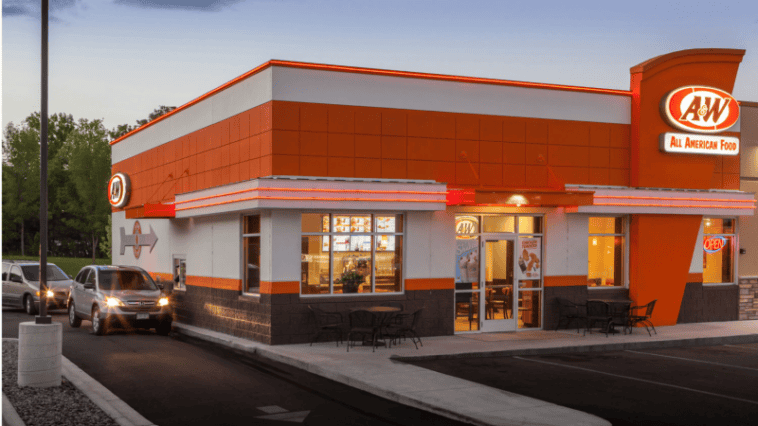
The American burger business has been having a rough stretch, and A&W Restaurants is the latest brand to feel it. The chain has shuttered at least three locations this spring due to financial pressure on the franchisees.
The first to go was a location inside the River Hills Mall in Mankato, Minnesota. Its franchisee permanently closed on April 29, posting a note on Facebook to share the news with the community. “With very saddened hearts, we have to announce that we have closed due to economic reasons. We have appreciated all you have done for us. We will miss and love y’all,!!” the statement read.
According to local reports, the Mankato store had only been around since late 2018. The operator did not lay out specifics on what made staying open impossible.
Abrupt endings in Idaho
A second closure occurred earlier in the month, in Pocatello, Idaho. The store on North Arthur Avenue locked up for good on April 2 after the franchisee’s contract was pulled by A&W corporate following a stretch of financial trouble.
Reed Rollins, the general manager at that store, said that staff only got word of the closure a few days beforehand, so suddenly that some thought it was an April Fool’s joke. A&W had announced the final day would be April 3, but strong customer turnout after the news broke caused the store to sell out of stock and close a day early.
“Yesterday, we did a $4,500-day, when we used to do like $1,300,” Rollins told the State Journal. “It was so amazing. I even teared up a little bit, because I had been here since the start.”
The Pocatello A&W, which had been open since 2016, lost its original owner in 2018. The building itself may not stay vacant for long. The Ohio-based property owner is in talks with Popeyes about turning the site into a franchise of the fried chicken chain. If a deal closes, the new restaurant could be open within three to five months.
A pattern of pruning
The Pocatello and Mankato closures are the latest in a string of challenges for A&W. Another high-profile shutdown occurred earlier this spring in St. Helena, California which had been operating for close to six decades. It served its final customers on March 31.
The owners cited thinning foot traffic, hiring difficulties, the cost of doing business in Napa Valley, and falling enrollment at the high school directly across the street.
The wider context is a fast-food burger sector split unevenly over the past year. McDonald’s posted a 2.1 percent gain in U.S. sales for 2025. Burger King, ranked third by domestic sales, also moved up, with its U.S. business growing 1.6 percent.
Wendy’s, the second-largest of the burger chains, fell behind, with U.S. sales down 5.2 percent.
The downturn at Wendy’s has translated into a planned contraction of its U.S. footprint. The company said on its fourth-quarter earnings call back in February that between five and six percent of its 5,831 American restaurants — roughly 292 to 350 stores — would be closed during 2026 under a turnaround initiative called Project Fresh.
Sources: KEYC-TV, Idaho State Journal, Wendy’s, SFGATE, Burger King, The Street, McDonald’s