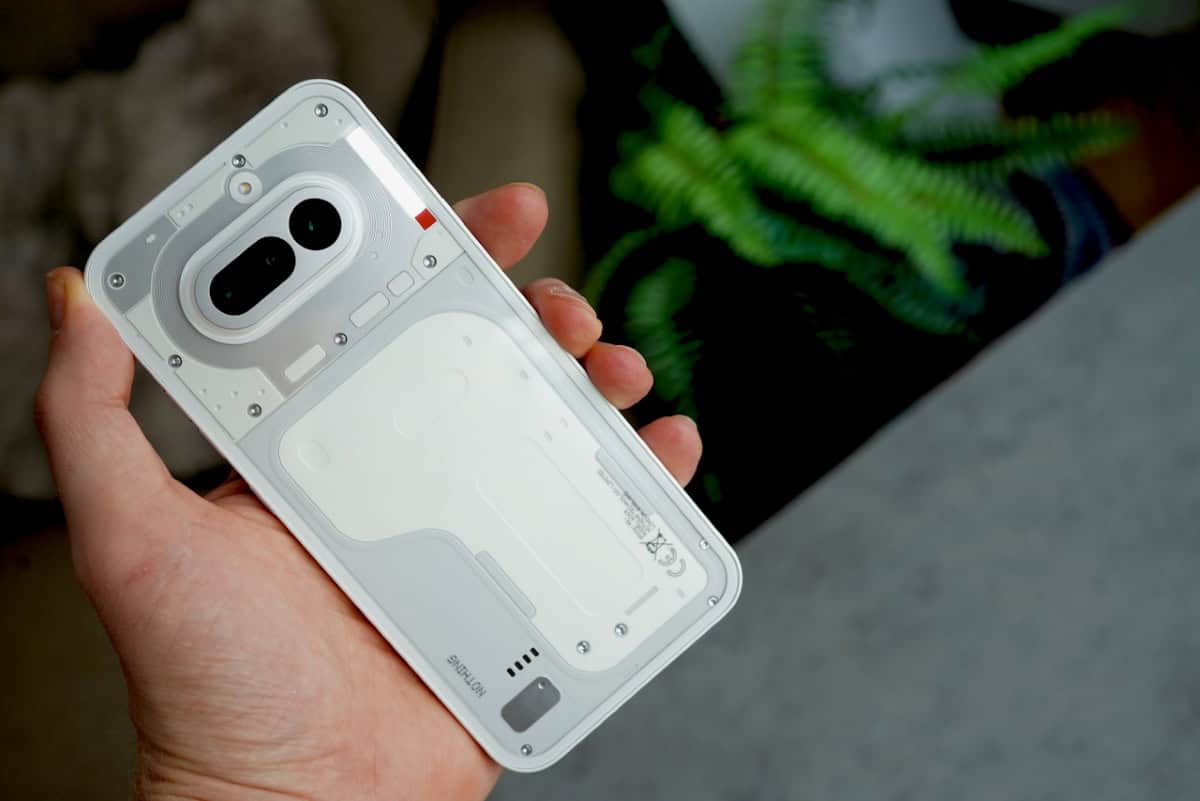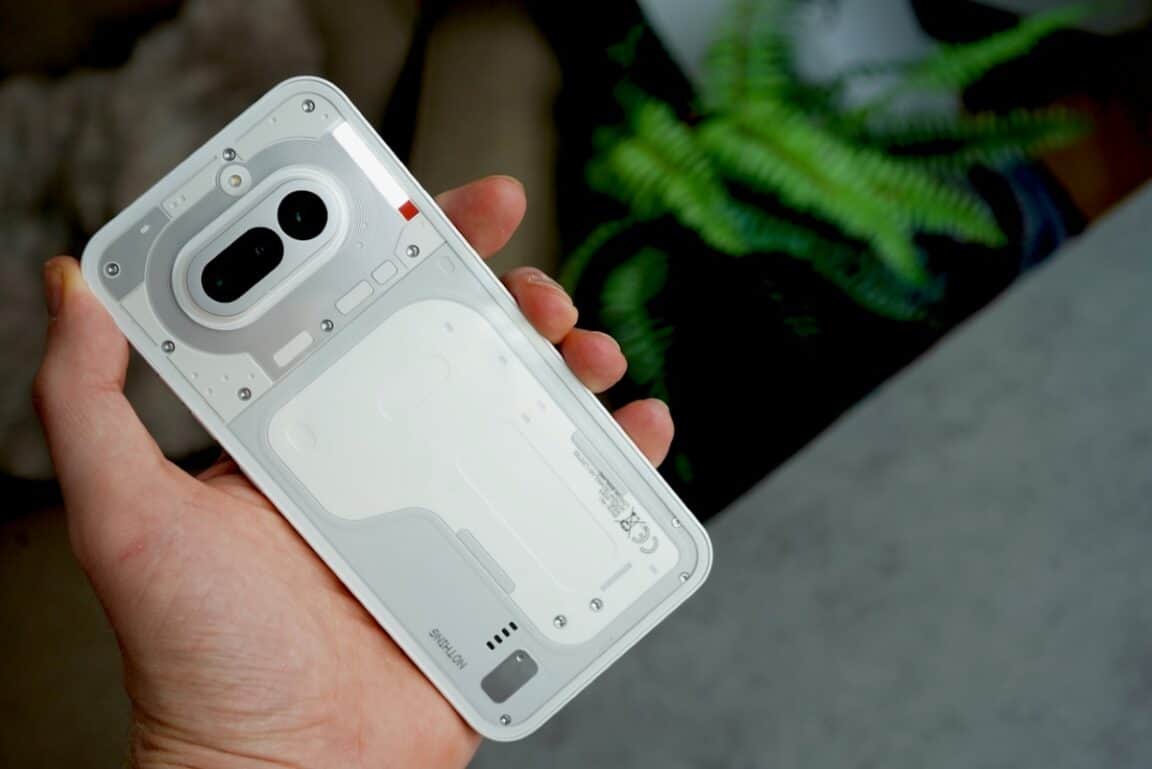
Most of the attention around Nothing’s latest phones has been focused on the Phone (4a) Pro. That makes sense on paper. It’s the one with the bigger specs, the bigger marketing push, and the one that’s actually coming to the United States.
But after spending time with the standard Nothing Phone (4a), it feels like the phone everyone’s quietly glossing over. It doesn’t try to be a spec monster or a camera powerhouse, and it’s not built for gaming benchmarks or bragging rights.
Instead, the 4a focuses on something simpler: delivering a smooth, personality-filled everyday phone experience with a great screen, solid battery life, and Nothing’s distinctive design language.
In many ways, it’s a shame it isn’t officially coming to the US, because for the right person this is exactly the kind of no-nonsense, no-compromise midrange phone that most people are actually looking for…with an impressive price tag.
Design and Glyph
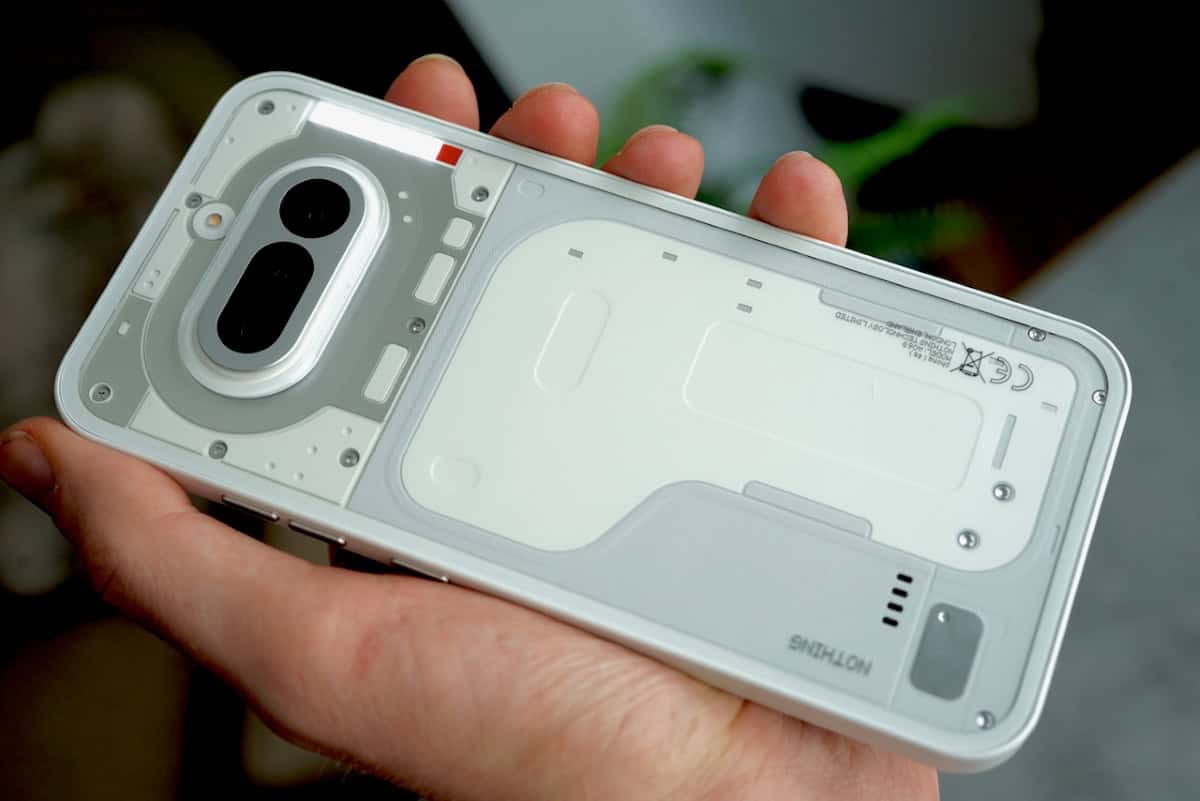
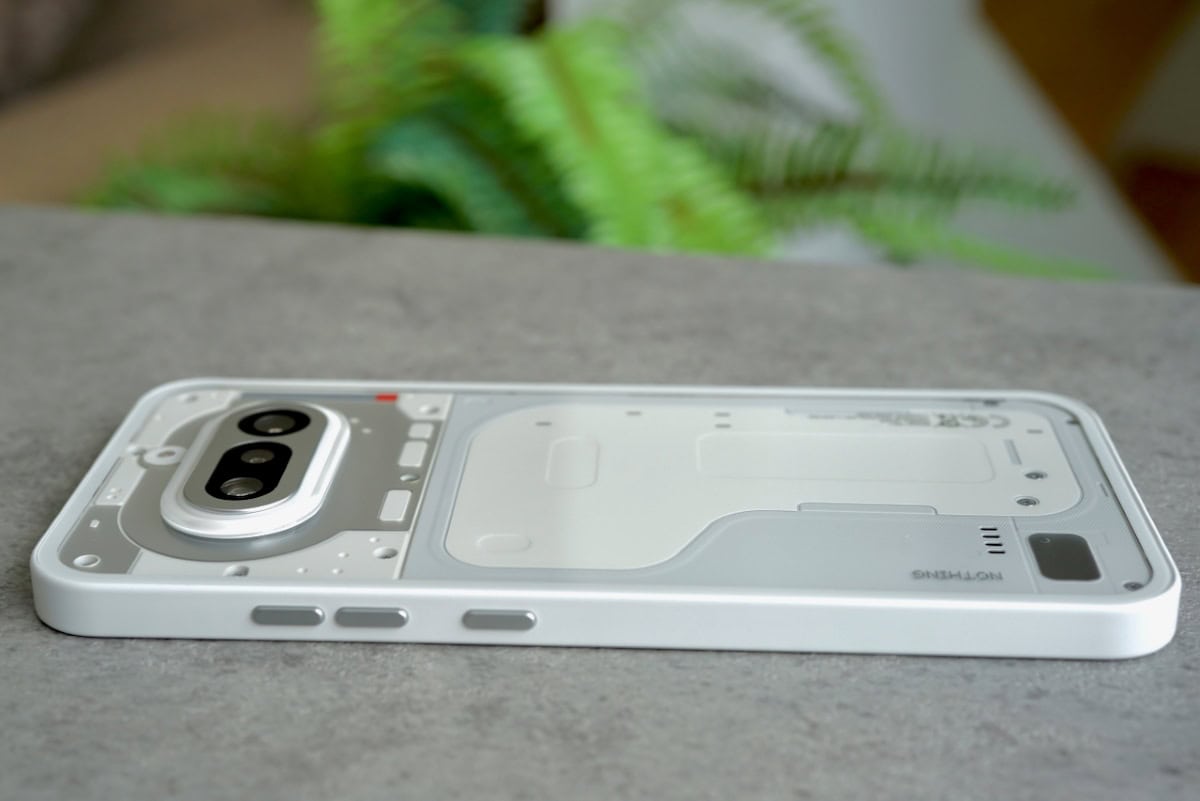
Nothing continues to stand out in a sea of generic smartphone designs, and the Phone (4a) keeps that tradition alive. The transparent back still looks great, and the centered camera layout gives the phone a really clean, balanced appearance. Even months into Nothing’s design language, it’s refreshing to pick up a phone that doesn’t look like every other Android slab.
The Glyph lighting system returns again here in a toned-down form. It’s bright (surprisingly bright, actually) and still fun to play with, but this version isn’t my favorite iteration.
Nothing keeps trying to make the Glyph system useful with notification cues and other small features, and some people will absolutely work it into their routine, but for most users it’s still more personality than productivity.
This time around, there’s an array of 63 LEDs powering six white LED notches and one red LED notch. The lights can be used to show things like volume levels or custom notification patterns, and the red LED can act as a retro-style blinking recording indicator when shooting video. Even if the practicality is limited, it’s hard not to appreciate a company that keeps experimenting with something different.
The build itself is solid overall, though the plastic frame is noticeable if you’re used to more premium devices. You can especially see it around the black border framing the display. It’s not a dealbreaker by any means, but it does remind you that this is a midrange device.
The phone also carries an IP64 rating for dust and water resistance, which adds some welcome peace of mind for a device in this price range.
Display, Performance, and Battery
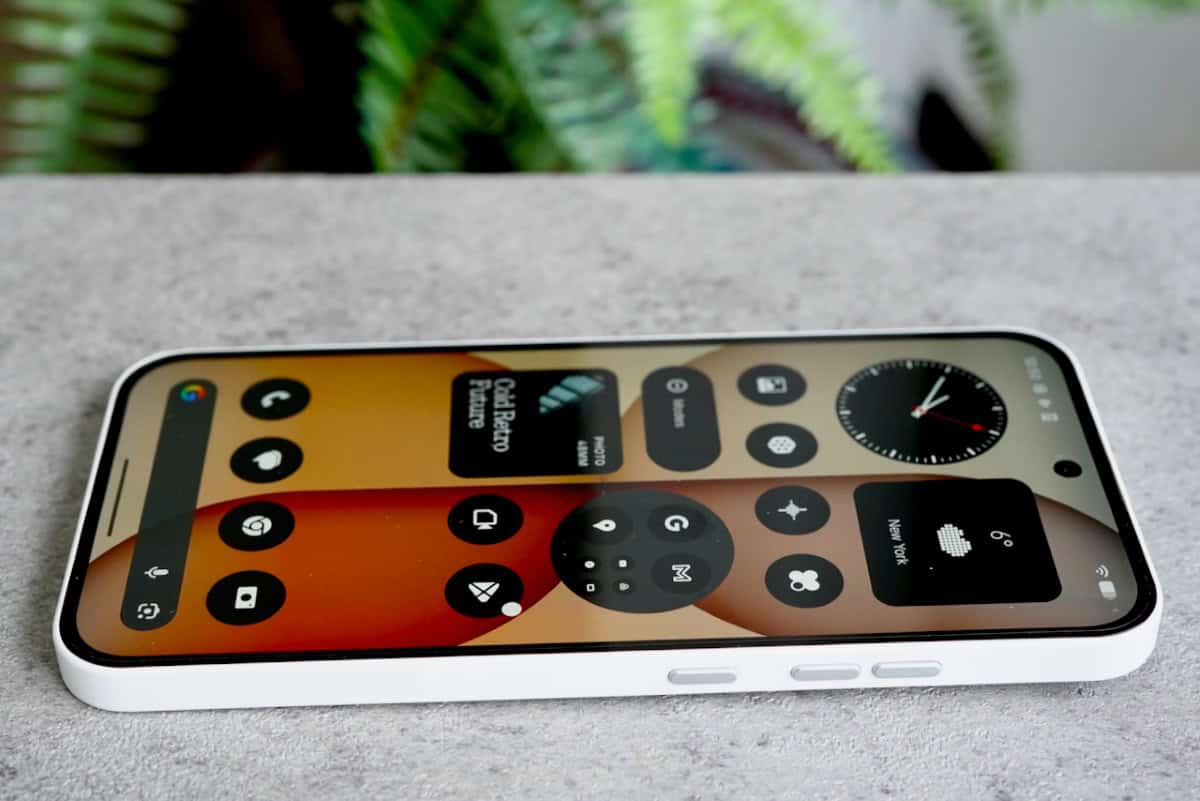
The display is easily one of the highlights of the Nothing Phone (4a). The 6.78-inch AMOLED panel runs at a 1.5K resolution with a 120Hz adaptive refresh rate, and it gets extremely bright outdoors thanks to a peak HDR brightness rating of around 4500 nits.
Colors look great, contrast is excellent, and there’s very little to complain about in everyday use. I kept the refresh rate set to the dynamic (smart) mode which toggles 120Hz as needed rather than forcing it full time, and the experience was consistently smooth with no noticeable stutters or glitches. In practice, the screen doesn’t leave much to be desired.
Performance follows a similar theme. The Phone (4a) runs on Qualcomm’s Snapdragon 7s Gen 4 platform, which isn’t designed to chase flagship benchmarks but feels more than capable for everyday use.
My unit came with 12GB of RAM, which likely helps keep everything feeling especially fluid. Even with multitasking—like running TikTok in a floating window while browsing the web—the phone never seemed to struggle.
For reference, Geekbench scores landed around 1243 single-core and 3311 multi-core, which puts it firmly in the “solid everyday performer” category rather than a benchmark chaser. In real-world use, the phone feels smooth and responsive, and it rarely breaks much of a sweat. It easily keeps up with what most people expect from a phone in 2026.
Battery Life
Battery life is another strong point. The Nothing Phone (4a) packs a 5,080mAh battery, which helps it comfortably get through a full day of typical use, and lighter usage can stretch closer to two days. Charging is fairly quick thanks to 50W wired fast charging, with the phone able to reach roughly 50 percent in a little over 20 minutes using a compatible charger.
There’s no wireless charging, which isn’t surprising at this price point, but the strong battery life and fast wired charging make it easy to live with day to day.
Software and Everyday Experience
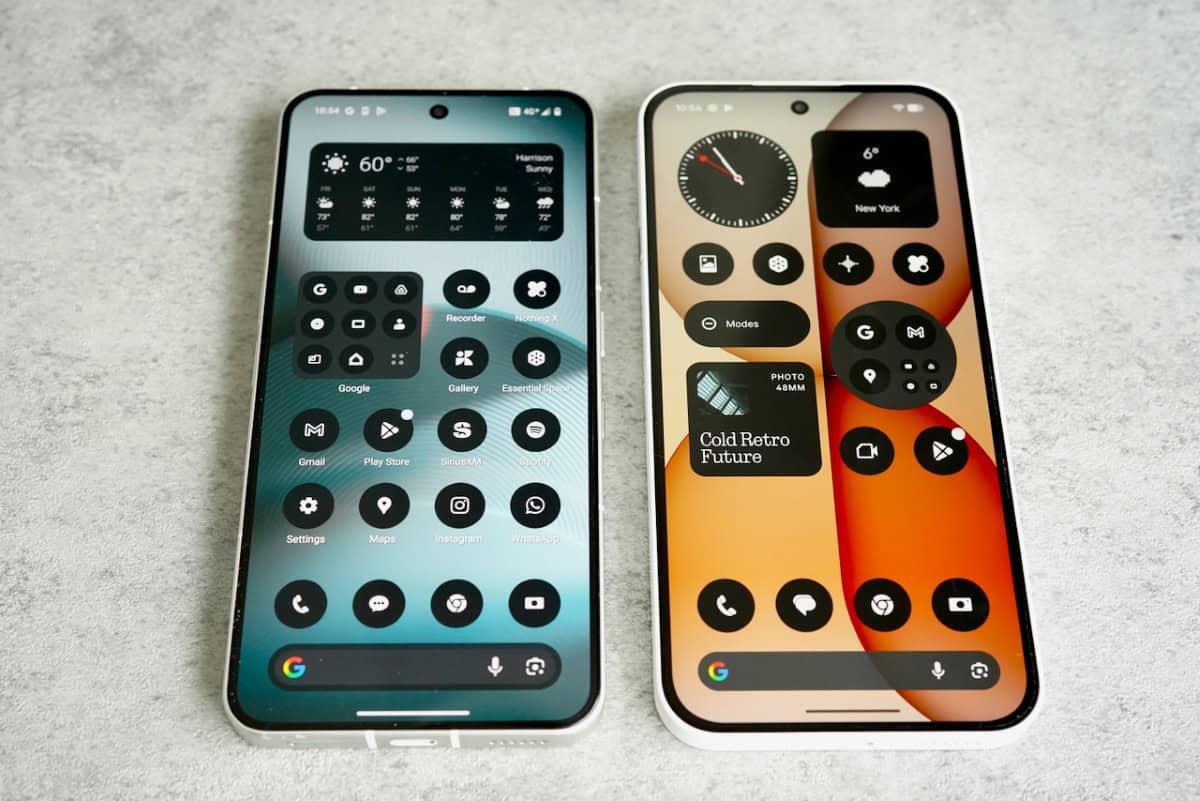
Nothing OS continues to be one of the more enjoyable Android experiences available. The interface is clean, visually distinct, and refreshingly light on bloat. The design language carries through the entire system, giving the phone a cohesive feel that many Android skins lack. There’s enough customization to help you make it your own, whether that’s Nothing style or not.
The software also keeps things simple. There aren’t endless performance tuning menus or buried settings to manage, which makes the phone feel approachable and easy to live with.
Nothing also includes Essential Search, a universal search bar that can quickly find apps, perform calculations, or surface quick answers without jumping between apps. It’s the kind of interface that feels polished without being complicated.
There are also some small modern touches, like built-in integration for both ChatGPT and Google Gemini, which is a nice addition for anyone who uses AI tools regularly. Nothing promises three Android version upgrades and up to six years of security updates, which is solid long-term support for a phone in this price range.
There are a few minor annoyances. The dedicated Essential Space button—designed to quickly capture screenshots, voice notes, and other content into an AI-organized hub—is something I still haven’t fully bought into, and I wish it could be remapped.
The lock button sits just under the volume buttons as well, which I ended up pressing by mistake more often than I’d like. The in-display fingerprint sensor, on the other hand, works perfectly—it’s fast, reliable, and completely seamless in daily use.
I also appreciated being able to dial down the haptics in the settings, which makes them feel much more refined than they do out of the box.
One disappointment is the lack of eSIM support, which feels increasingly outdated for a modern smartphone.
Camera
On the back you get a 50MP main camera with optical image stabilization, a 50MP periscope telephoto lens with roughly 3.5× optical zoom, and a Sony ultrawide camera. The front houses a 32MP selfie camera. Video recording supports 4K at 30fps, 1080p at up to 60fps, and 1080p slow motion at 120fps.
On paper it’s a surprisingly capable setup for a midrange phone, even if it’s not trying to compete directly with flagship camera systems.
The camera on the Nothing Phone (4a) is solid for everyday use, but it’s clearly not trying to compete with flagship photography systems. Colors lean natural rather than overly saturated, and dynamic range holds up well in bright scenes. Photos of people also come out nicely, even indoors, with quick shutter response and balanced exposure.
Importantly, this still feels like a modern smartphone camera by 2026 standards, not a leftover budget sensor from a few years ago. Image processing is capable, HDR is well controlled, and photos generally look balanced without being overly aggressive.
Compared with a flagship camera like the iPhone, the differences mostly show up when you look closely. The iPhone produces sharper textures and slightly stronger HDR, especially in food shots and complex indoor lighting.
The Nothing Phone (4a) tends to smooth fine detail a bit more, but the overall images still look good and capture the moment well. Unless you’re zooming in or planning to edit photos heavily, the gap isn’t nearly as dramatic as you might expect.
Video capabilities are fairly basic, with 4K recording at 30fps and 1080p up to 60fps, along with 1080p slow motion at 120fps. It’s perfectly fine for casual clips and social media, but this isn’t a phone aimed at serious mobile videographers. The camera experience overall is simple and dependable, which ultimately matters more for a phone in this category.
Final Thoughts
At around €349, the Nothing Phone (4a) ends up being surprisingly complete. It may not look or feel like a flagship, but nothing about the experience feels crippled or budget either.
The display is excellent, battery life is strong, performance is smooth, and Nothing OS remains one of the nicest Android skins to live with. For most people, this is simply a phone that will comfortably keep up with everyday use in 2026 and beyond.
At this price point, it’s an easy recommendation. For about €50 more, you can upgrade to the 12GB RAM model, the configuration I tested, which likely makes the most sense for anyone planning to keep the phone for a few years.
The bigger decision is whether to jump to the Phone (4a) Pro, which adds a faster Snapdragon chip, a higher refresh rate display, and a more premium metal build, but also pushes the price to around €499, or €549 for the 12GB RAM model.
At that level, the competition becomes much tougher, while the standard Phone (4a) still delivers nearly the same everyday experience.
As long as you’re not expecting a gaming powerhouse, a spec monster, or a professional-grade camera system, the Phone (4a) is simply a great everyday smartphone with a lot of personality—and one that most people would probably be perfectly happy using for years.