
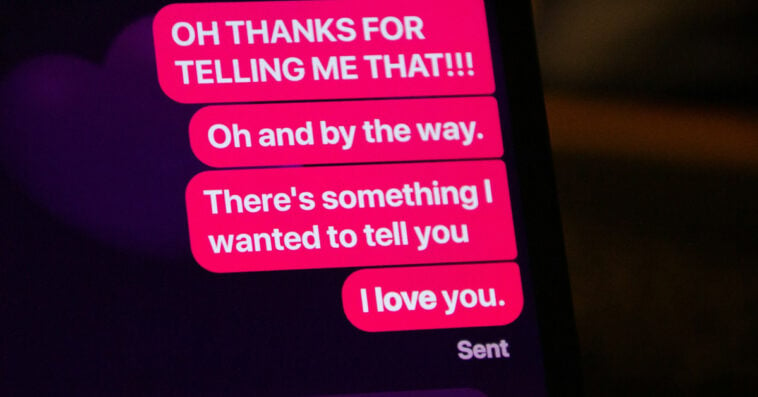
As Valentine’s Day draws near, scammers are sending flirty texts to your inbox with the goal of emptying your bank account. What starts as a seemingly innocent message from a “wrong number” can quickly spiral into clever manipulation and financial loss, with fraudsters building trust and pushing for cash transfers, gift cards, or cryptocurrency before you even realize what’s happening. So, before you reply to that “mysterious admirer,” learn the tricks, warning signs, and strategies to keep your heart and your wallet safe this February and beyond.
How the Valentine’s Day text scam works
It starts with a simple message that feels like a harmless mistake. Perhaps it’s a flirtatious greeting meant for someone else, or a frantic note about a missed medical appointment or a workplace crisis. These texts are precision-engineered to trigger your most basic human instincts: curiosity, empathy, and the polite urge to correct a stranger. This is social engineering at its most cynical, transforming your kindness into a backdoor for a high-stakes heist.
Once you take the bait and reply, the predator doesn’t vanish. Instead, they offer a charming apology for the “wrong number” and skillfully pivot the conversation to keep you talking. What begins as friendly banter rapidly evolves into an intense, digital whirlwind romance.
The trap snaps shut once the “suitor” has earned your trust, a process that can take days or even weeks. Suddenly, the conversation shifts to a “guaranteed” crypto investment, a plea for a charitable donation, or a request for emergency cash. Groomed by weeks of attention, many victims hand over their life savings or sensitive personal data without a second thought, only to have the scammer vanish, deactivate their number, and leave the victim with nothing but a trail of empty blue bubbles.
Even if you don’t lose a dime, the damage might already be done. By simply hitting “send” on a reply, you confirm to an automated system that your number is active and that you are willing to engage with strangers. This lands you on a “sucker list”, a valuable database of verified targets that is packaged and sold to criminal syndicates worldwide for future, more aggressive attacks.
How to protect yourself from the Valentine’s Day text scam
Falling for a “wrong number” text is easy, but protecting yourself is even easier if you have a strategy. Here is how to handle a mystery message without compromising your security or your bank account.
1. Investigate before you interact
Before your thumb hits the “reply” button, perform a quick background check. If the message is generic, doesn’t use your name, or comes from an unrecognized area code, treat it as a red flag. Copy the number and paste it into a search engine or a dedicated spam-reporting site. Often, you’ll find the number already flagged by other users or linked to overseas suspicious activity. If the search results look sketchy, let the mystery stay a mystery.
2. The ‘Triple-Threat’ response: block, delete, report
Once you’ve identified the text as a trap, don’t just ignore it—extinguish it. Use your phone’s native “Report Spam” or “Junk” feature. This does more than just clear your inbox; it feeds vital data to carriers and agencies like the Federal Trade Commission (FTC) to help track and dismantle these criminal networks. After reporting, block the contact and delete the thread to remove any temptation to look back.
3. Fortify your inbox
Prevent the scams from reaching you in the first place by enabling built-in filters.
- On iPhone: Navigate to Settings > Apps > Messages and toggle on Filter Unknown Senders.
- On Android: Ensure Google’s automatic spam protection is active to shunt suspicious texts into a separate folder.
For a deeper layer of defense, consider a data removal service or manually opting out of major data broker sites to pull your personal information off the public market.
4. Resist the urge to troll
It’s tempting to send a witty comeback or try to outsmart a scammer, but engagement is a losing game. Even a sarcastic reply confirms that your line is active and manned by a real person. This small interaction makes your number a “high-value target,” leading to an influx of even more sophisticated attacks. These scammers have endless time and resources; don’t give them yours.
5. Never click the bait
Treat every link from an unknown sender like a digital landmine. These URLs are often gateways to phishing sites designed to scrape your passwords or install malware on your device. If you’ve already interacted or accidentally clicked a link, don’t panic—act. Visit IdentityTheft.gov immediately for a step-by-step recovery plan tailored to your specific situation.
Source: PCMag