
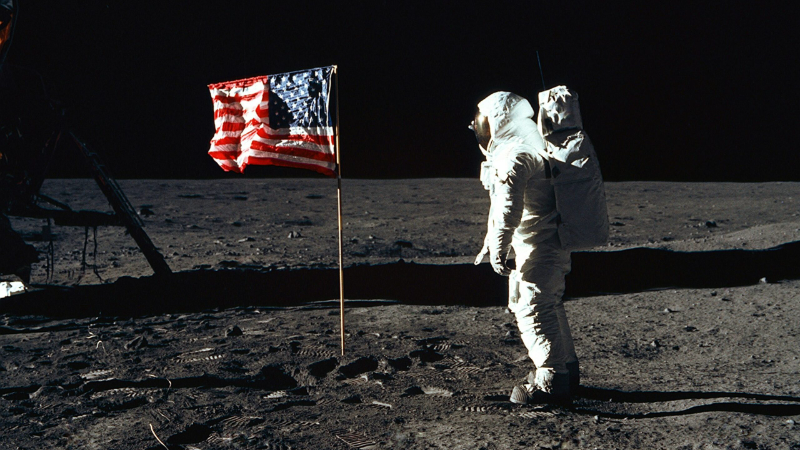
Following a major agency-wide overhaul recently announced at the Kennedy Space Center, NASA plans to launch four Artemis missions before the end of President Donald Trump’s current term.
If the schedule holds, astronauts could return to the lunar surface as soon as 2028, something that hasn’t happened since Apollo 17 in 1972.
NASA Administrator Jared Isaacman outlined the plan in an interview this week, describing a faster and more frequent launch cadence than the program had previously followed.
The Incremental Roadmap
The next step comes first. Artemis II, the mission that will send astronauts around the Moon without landing, is expected to launch in early April 2026 after engineers finish addressing a helium leak in the Space Launch System rocket. That flight will be the first crewed Artemis mission.
From there, NASA’s timeline moves quickly.
Artemis III is targeted for mid-2027, followed by Artemis IV and Artemis V. Those later missions are expected to include lunar landings, part of the broader goal of establishing a sustained human presence on the Moon.
Isaacman maintains that the revised schedule doesn’t represent a delay but a restructuring of the program. Instead of spacing missions years apart, NASA intends to add more standardized flights.
“You can’t launch a rocket this complex every three years and expect to get it right,” he said, pointing to the long gap since the previous Artemis test mission in 2022.
Shifting the Agency Culture
The Artemis program itself was first introduced during Trump’s first term in 2017. Its goal is to return American astronauts to the Moon and build a permanent lunar presence that could eventually support missions deeper into space.
Isaacman, who became NASA administrator last December, has made that objective a central focus of his early tenure. The 43-year-old billionaire previously commanded a commercial mission that conducted the first privately funded spacewalk in 2024.
Part of the challenge, he said, is rebuilding internal expertise at NASA after years of relying heavily on outside contractors. The agency still works with major partners, including Boeing, SpaceX, Blue Origin, and Lockheed Martin, but Isaacman wants more critical operations handled directly by NASA staff.
Launch control, mission control, and other core systems, he argued, should remain in-house.
The agency believes it already has the resources needed to meet the new timeline. Industry partners and congressional leaders with space oversight have also signaled support for the plan, Isaacman said.
If the schedule holds, the Artemis missions would mark the first human return to the Moon in more than half a century and the beginning of what NASA hopes will be a permanent foothold beyond Earth.
Sources: NASA, White House Executive Order, AOL, NASA Artemis II Mission Update