
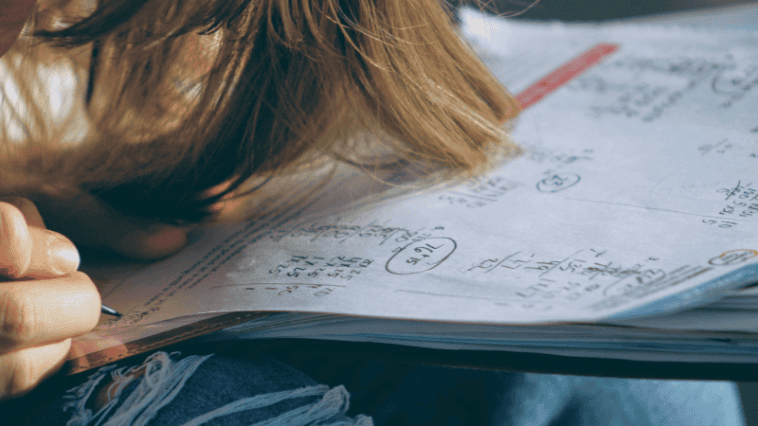
Richard Borcherds, an acclaimed mathematician who won the Fields Medal (often described as the Nobel Prize of mathematics) in 1998 and has taught at UC Berkeley for years, has stopped grading homework for correctness.
His reason is simple: with AI, he can no longer tell who actually did the work. He told The Daily Californian that there’s “no point” in marking assignments that a chatbot can finish in seconds.
His fix for now is to hand out full marks to anyone who turns their work in on time, regardless of what’s on the page. He knows that’s far from ideal and says he hasn’t thought of a fairer alternative.
The timing lines up with a big claim from OpenAI. The company says its AI agents cracked the Navier-Stokes problem, a puzzle about the math behind moving air and water that nobody had managed to settle in roughly 90 years, though the proposed proof remains under academic review.
For Borcherds, that kind of progress raises a harder question about what happens to people in his field. Not long ago, he figured math would be one of the last areas AI could touch. That view has gone out the window. Now, when young people ask whether math is still worth pursuing as a career, he finds himself without an answer.
Berkeley as a whole hasn’t landed on one answer either. There’s no single rule for the whole campus, so it’s mostly left to individual instructors, who’ve been told to write their own AI guidelines into the course syllabi.
The university has given a couple of AI detection tools a try, including the plagiarism platform Turnitin and the writing tool Rumi. Anne Marie Richard, an assistant vice provost at Berkeley who oversees academic tech, however, notes that none of them has been trusted enough yet to become the go-to option.
Borcherds isn’t optimistic about where this goes. “If AI continues to improve at the present rate,” he warned, “then, in a few years, there’ll be nothing human mathematicians can do that AI can’t do better.”
There’s also the fact that the mathematician’s experience is backed by data. National surveys show student use of AI for homework climbing sharply, reaching 62% in a late-2025 RAND Corporation study of U.S. students, while broader undergraduate surveys show AI adoption for coursework exceeding 85% to 90%.
Other researchers have voiced similar unease. Theoretical computer scientist Scott Aaronson of UT Austin wrote that human mathematicians are “forevermore dethroned as the main theorem-proving entities on planet earth,” while an internal survey of MIT math PhD students reported by The Boston Globe found that 71% said their chances of continuing in academic mathematics had decreased due to AI
Sources: The Daily Californian, OpenAI, Academic Senate Berkeley, HEPI, International Mathematical Union, Inc., Quanta Magazine, The Boston Globe, RAND