
For about 40 minutes yesterday, Artemis II went fully off the grid as the Orion spacecraft named Integrity for this lunar mission slipped behind the Moon and NASA lost contact with the crew in a planned communications blackout caused by the Moon itself blocking radio signals between the spacecraft and Earth.
No chats with Mission Control. No reassuring telemetry. No quick “everything’s fine” ping back to Houston. Just four astronauts, one spacecraft, and the far side of the Moon, the ultimate no-service zone or the galaxy’s fanciest airplane mode.
But what unfolded during that silence wasn’t empty, it was extraordinary. While Earth waited, the crew wasn’t idle; they were witnessing and documenting scenes destined to become some of the most iconic images of modern spaceflight.
At closest approach, Orion passed about 4,067 miles above the lunar surface at around 7:00 p.m. EDT. At that point it was screaming along at about 60,863 mph relative to Earth, though only about 3,139 mph relative to the Moon as lunar gravity bent its path around the far side. Outside the windows and still at breathtaking speed, the Moon looked nothing like the familiar face seen from Earth. The terrain was harsher, darker, more chaotic, a world of jagged craters, deep scars, and ancient lava plains stretching into shadow.
And then came the moment that elevated this from historic to almost poetic. From their unique vantage point, the astronauts experienced a solar eclipse in deep space, the Sun slipping behind the Moon, casting an eerie, otherworldly glow across the spacecraft. No crowds. No noise. Just a silent alignment of celestial bodies unfolding in total isolation.
“It was like the light just disappeared… and then came back in this incredible way,” said Reid Wiseman, commander of Artemis II.
Astronauts Wiseman, Glover, Koch and Hansen spent roughly seven hours during the flyby photographing the lunar surface and recording observations about its geology.
Among the mission’s 30 designated science targets was the Orientale basin, an enormous crater nearly 600 miles across that spans both the Moon’s near side and far side. The basin is thought to have formed about 3.8 billion years ago when a massive object slammed into the lunar surface.
The crew also examined younger impact craters scattered across the Moon. Koch pointed out that many of these smaller markings appeared surprisingly bright.
“What it really looks like is like a lampshade with tiny pinprick holes,” Koch said. “They’re so bright compared to the rest of the moon.”
One of the crew’s favorite scenes was the jagged topography along the Moon’s terminator, the dividing line between its illuminated side and the side cloaked in darkness.
“Boy, I am loving the terminator,” Glover told Mission Control. “There’s just so much magic in the terminator — the islands of light, the valleys that look like black holes. You’d fall straight to the center of the moon if you stepped in some of those. It’s just so visually captivating.”
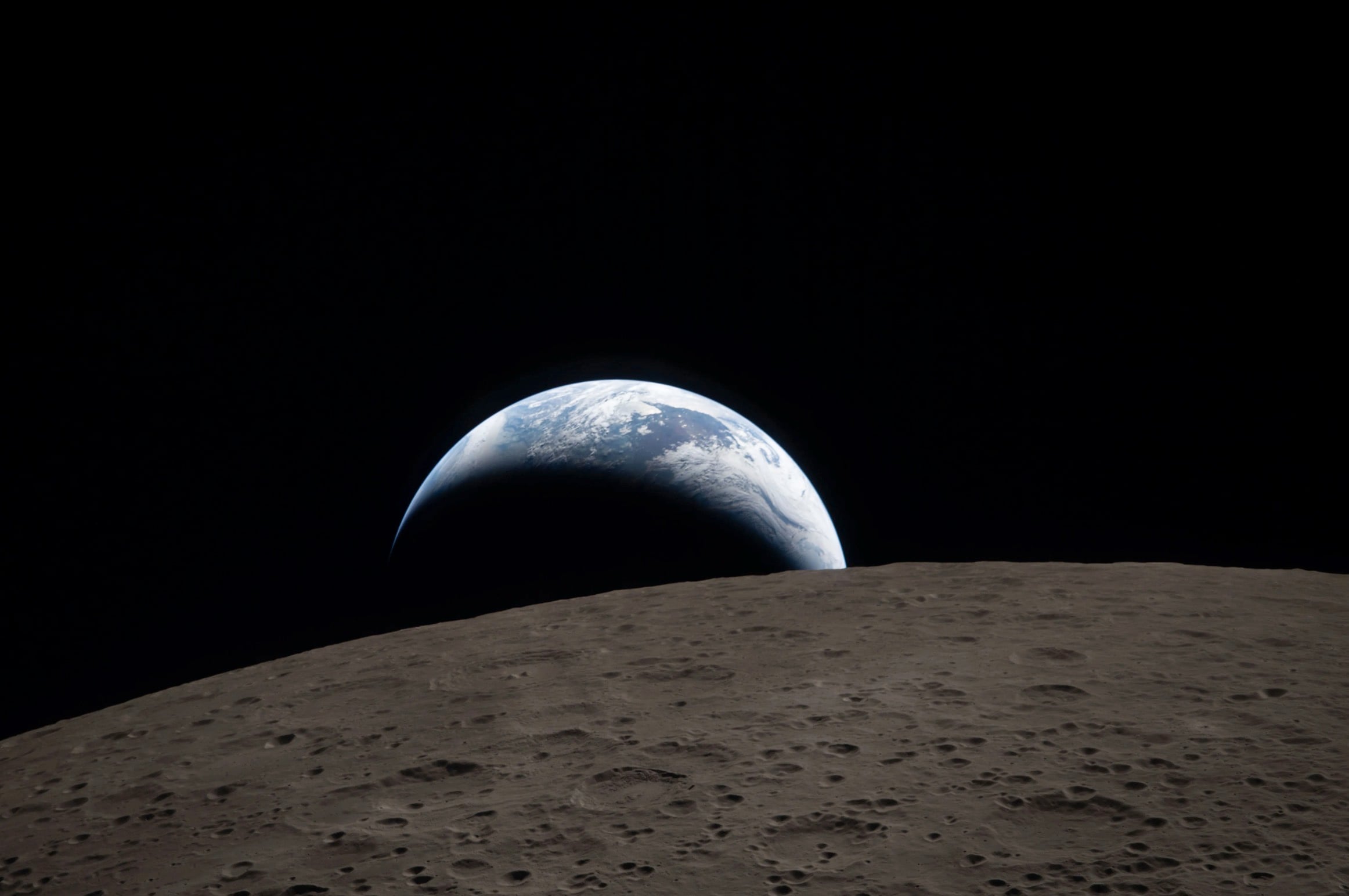
As the images began to stream in, the stunning, high-resolution photographs made clear that even the astronauts’ awestruck words could barely do the moment justice. How do you describe scenes no human eyes have witnessed? In truth, you almost can’t, you can only look.
The incredible images served as a reminder of just how far Artemis II had gone. In fact, the mission set a new record, reaching 252,756 miles from Earth, surpassing the distance achieved by Apollo 13.So no, unlike E.T. for 40 minutes Artemis II couldn’t phone home, but in that time, it circled the Moon, watched a private eclipse, and came back with images that feel less like mission data and more like scenes from a movie we’re only just beginning to understand. I can’t wait for the sequel.