
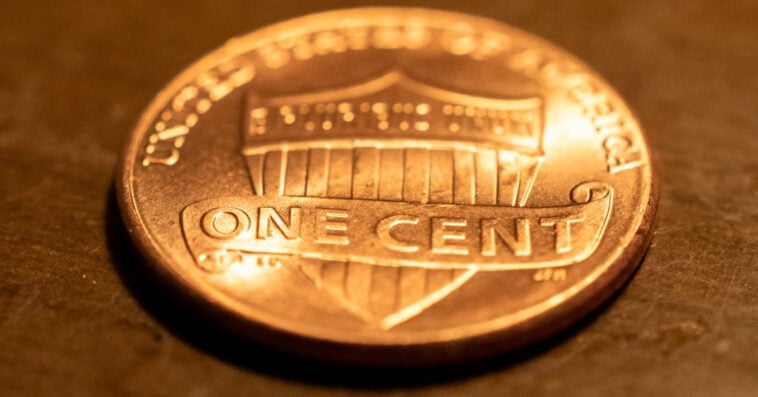
The familiar clink of pennies hitting change jars has officially gone silent. For the first time in over two centuries, the United States Mint has pressed its final batch of one-cent coins — marking the end of an era many Americans never imagined would come. But what drove the U.S. to pull the plug on the nation’s most basic unit of currency?
U.S. Mint retires 1-cent coin after 230 years
The U.S. Mint officially brought an end to penny production on Wednesday, retiring the 1-cent coin that has been part of American life for 230 years.
“God bless America, and we’re going to save the taxpayers $56 million,” Treasurer Brandon Beach declared at the U.S. Mint in Philadelphia before pressing the button that struck the final penny.
The last batch was carefully placed on display for journalists, with a few coins set to be auctioned off.
Officials noted that most production had already ceased over the summer, but the final minting carried a sense of ceremony. Workers stood silently on the factory floor as the last coins rolled out, and when the final pennies emerged, the room erupted in applause and cheers.
Billions of pennies will remain in circulation and continue to be accepted as legal tender, but no new ones will ever be made. As Beach pointed out, the last time the U.S. discontinued a coin was in 1857, when the half-cent met its end.
Why the U.S. Mint stopped making pennies
Rising costs and a dwindling value prompted President Donald Trump to order the end of the penny. The 1-cent coin had become largely symbolic, no longer reflecting its worth in everyday transactions.
“For far too long the United States has minted pennies which literally cost us more than 2 cents,” Trump wrote in an online post in February. “This is so wasteful!”
When first introduced in 1793, a single penny could purchase a biscuit, a candle, or a piece of candy. Today, most pennies are relegated to jars or drawers, and each one costs nearly four cents to produce.
Supporters of retiring the coin pointed to several benefits: cutting production costs, speeding up transactions at cash registers, and following the example of other countries that have phased out their lowest-denomination coins. Canada, for instance, discontinued its penny in 2012.
Criticism surrounding the penny’s phaseout
As the production of pennies drew to a close, some retailers raised concerns over the sudden shortage and the lack of official guidance on handling transactions. Many said the phaseout felt abrupt and left businesses scrambling for solutions.
Some stores began rounding prices down to avoid shortchanging customers, while others asked shoppers to bring exact change. A few took a more inventive approach, offering small prizes, like a free drink, in exchange for piles of pennies.
“We have been advocating abolition of the penny for 30 years. But this is not the way we wanted it to go,” said Jeff Lenard of the National Association of Convenience Stores last month, reflecting the frustration among business owners.
The penny’s enduring legacy
Despite their obsolete monetary value, pennies hold a special place in the hearts of collectors and historians as tangible pieces of American history. Frank Holt, an emeritus professor at the University of Houston who has studied coinage, expressed regret over their retirement.
“We put mottoes on them and self-identifiers, and we decide — in the case of the United States — which dead persons are most important to us and should be commemorated,” he said. “They reflect our politics, our religion, our art, our sense of ourselves, our ideals, our aspirations.”
Beyond historical significance, many Americans cherish pennies for sentimental reasons, seeing them as symbols of luck or simply enjoying them as collectibles.
Source: AP News