

Remember the dream of a modular smartphone? We’ve seen many companies try and fail to build one successfully over the years, but TECNO is stepping up at MWC 2026 with a modular concept that actually looks like it has serious potential. Their new Modular Magnetic Interconnection Technology is designed to ditch the “static masterpiece” for a device that grows with you through hardware expansion.
The standout feature for this modular phone concept is its size. Most modular phone attempts end up looking like a bulky science project that no one actually wants to carry around, but TECNO’s base smartphone is just 4.9mm thin. Even when you snap on the 4.5mm power bank module, the total thickness remains comparable to a standard phone in 2026.
The design comes in two distinct flavors: a clean silver-aluminum ATOM edition and a bold and our favorite, a geeky-inspired MODA aesthetic.
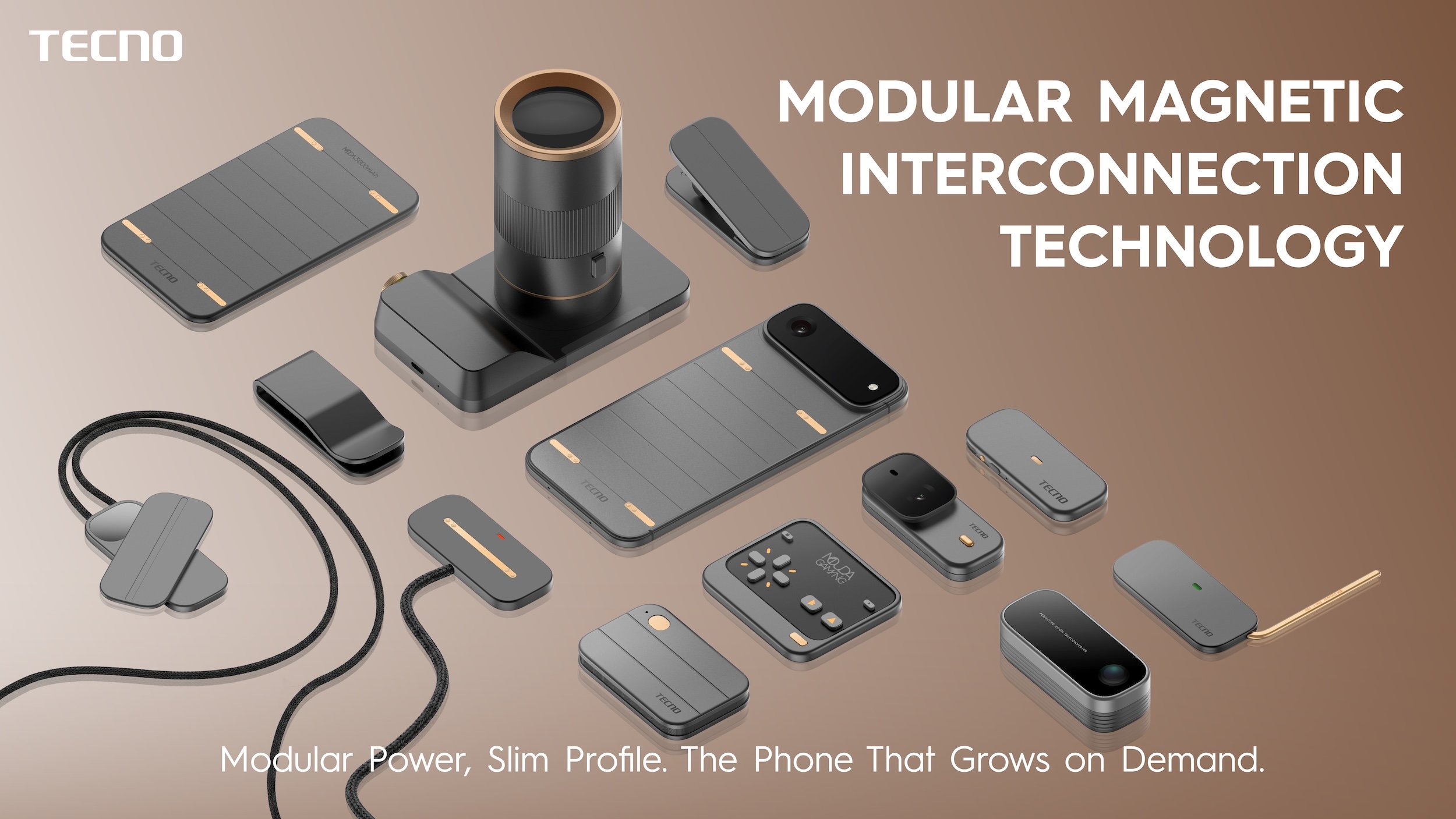
The ecosystem currently boasts about 10 high-performance modules designed to meet shifting user needs. That includes an Action Camera for creators and a Telephoto Lens that uses the phone’s display as a low-latency viewfinder. There is even an ultra-thin power bank that effectively doubles your usable battery life while seamlessly supplying energy to other attached accessories.
To make this work, TECNO isn't just relying on magnets – they’ve engineered a hybrid architecture using a rectangular magnetic array for the grip and physical pogo-pin connectors for efficient power delivery.
Data transmission between the phones and the modules is handled wirelessly, switching between Wi-Fi, Bluetooth, and mmWave to keep things lag-free.
While this is all still in the concept phase, it’s just about the most slickest vision of a modular phone concept we’ve seen yet. It’s certainly a bold experiment in returning the power of choice to the user, and if they can actually bring this to the mass market without the usual modular growing pains, it could be the shake-up the industry desperately needs.