
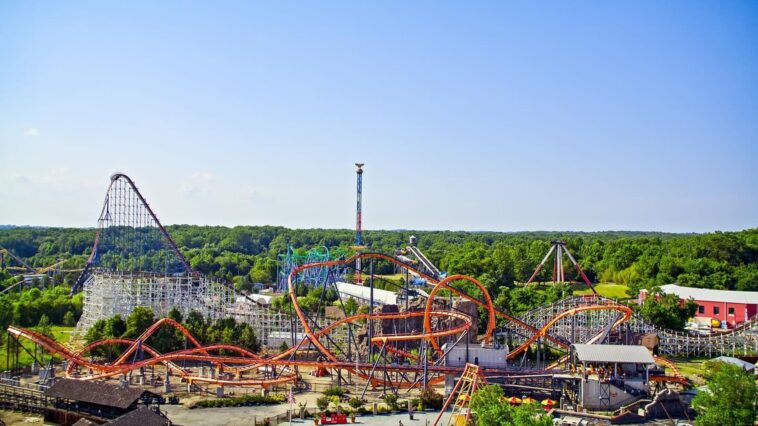
Six Flags America in Bowie, Maryland, just rode its last roller coaster into the sunset, and it’s a bummer no matter how you spin it.
After more than 50 years of screaming kids, sunburned parents, and overpriced funnel cakes, the park officially closed on Sunday, November 2. The company posted a somewhat melancholic farewell on social media: “Thank you, Six Flags America fans, for 50 years of family fun. We will always cherish the memories made together.” Followed by a blue heart emoji, which we’re guessing is what passes for corporate sentimentality these days.
Why it had to close
The closure is part of Six Flags Entertainment Corporation’s ongoing efforts to deal with mounting debt and financial restructuring. CEO Richard A. Zimmerman didn’t mince words in a May press release, stating the park “is not a strategic fit with the company’s long-term growth plans.”
He added that “marketing the property for redevelopment will generate the highest value and return on investment.” The land that hosted generations of families will likely be sold off and transformed into something more commercially viable—condos, warehouses, or whatever the market demands.
The closure affects both Six Flags America and the adjacent Hurricane Harbor water park—over 100 rides, shows, slides, and roller coasters in total. About 70 full-time employees got the short end of the stick here, though the company promises severance and benefits to “eligible associates,” with the word “eligible” doing some heavy lifting here.
From safari park to Six Flags to… shopping mall?
Here’s a bit of history for you: this property started life in 1974 as The Largo Wildlife Preserve, a drive-thru safari park. The kind you’d cruise through in your station wagon while ostriches pecked at your windows. It got converted into a proper Six Flags park in 1999, giving the DC metro area its own slice of theme-park glory.
For a quarter-century, it served as the region’s answer to the bigger, flashier parks down south. Not the fanciest Six Flags property, sure, but it was ours.
The bigger picture is messier
This closure doesn’t exist in a vacuum. Six Flags merged with Cedar Fair in July 2024, creating a mega-corporation that now operates over 20 parks across North America. But bigger hasn’t meant better—the company reported a net loss of over $100 million in just the second quarter alone. Zimmerman himself announced he’s stepping down by year’s end, which tells you everything about how well that’s going.
In a particularly 2024 move, Kansas City Chiefs tight end Travis Kelce recently joined as an investor, declaring himself “a lifelong Six Flags fan” who wants to “make Six Flags special for the next generation.” Noble sentiment, but it didn’t exactly extend to keeping the Maryland location open.
What happens to the rides?
Six Flags says they haven’t decided what happens to the attractions yet—relocation to other parks or selling to other operators are both on the table. So there’s a chance that the coaster you rode every summer might end up in New Jersey or California—comforting, we suppose, in a Ship of Theseus kind of way.
The takeaway
Theme parks are expensive to run, and the pandemic fundamentally changed how families spend their entertainment dollars. Add mounting corporate debt, declining attendance, and shifting demographics, and suddenly that land becomes worth more in its emptiness than in its operations.
For the families who made Six Flags America part of their summer traditions, who have decades of photos with cartoon characters and memories of first roller coaster rides, this closure marks the end of an era. Fifty years is a good run by any measure, but it doesn’t make watching it end any easier.
Source: AOL