
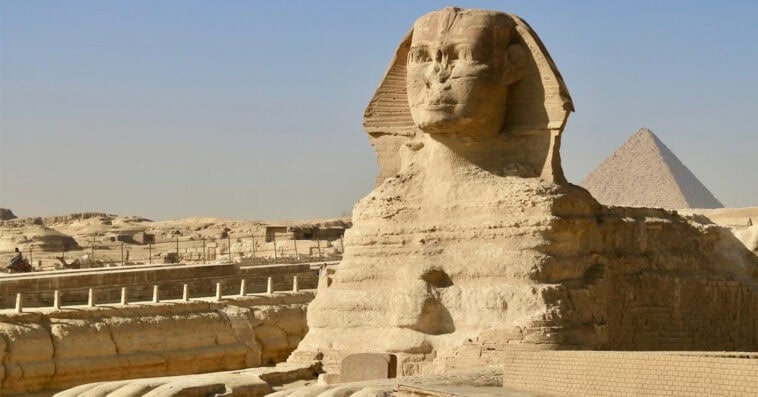
Deep beneath the sands of the Giza Plateau, a mystery may be stirring that could rewrite the story of ancient Egypt. Scientists are buzzing over radar scans and unusual geometric patterns that hint at a hidden structure eerily resembling the Great Sphinx — a potential twin lying buried for millennia. Could this be a long-lost monument or merely a trick of the Earth? As researchers work to uncover the truth, the world waits to see if history’s most famous statue has a shadowy counterpart hidden in the sand.
For centuries, the Great Sphinx has stood as the lone sentry of the Egyptian desert, but groundbreaking new research suggests we’ve only seen half of the story. Italian researchers believe they have detected a massive subterranean citadel and a potential “twin” Sphinx hidden deep under the Giza Plateau.
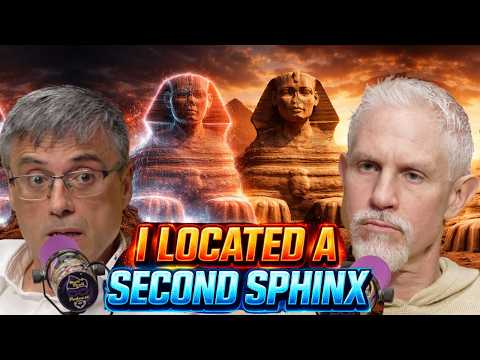
Radar engineer Filippo Biondi shared this archaeological bombshell on the Matt Beall Podcast, stating: “There is something very huge that we are measuring” beneath the world-famous site.
Here is the evidence suggesting that a second guardian is waiting to be uncovered.
The geometry of a ‘ghost’ Sphinx
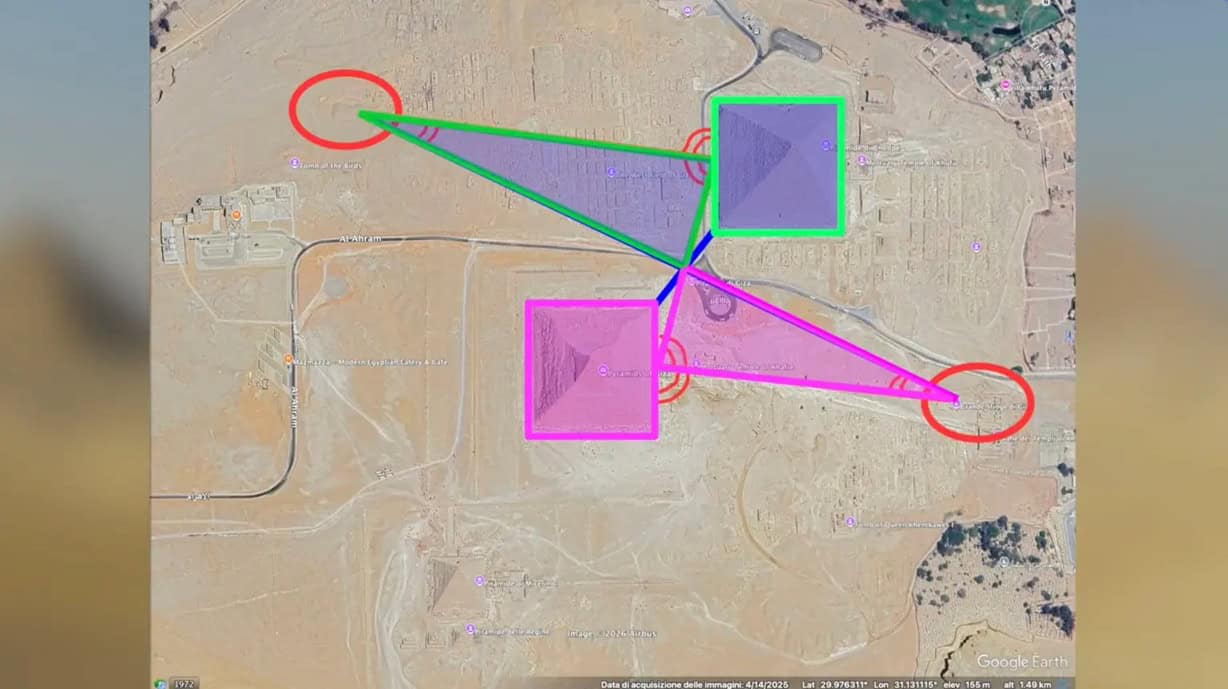
The theory began with a literal game of connect-the-dots. By analyzing the alignment of the existing pyramids and the Great Sphinx, Biondi’s team discovered that tsahe structural lines point directly to a mysterious, parallel mound. This “feline facsimile” appears to be a mirror image of the monument we know today.
Satellite imagery has identified a specific dune, approximately 108 feet tall, that fits the bill perfectly. According to Biondi: “The first Sphinx sits slightly below the surrounding surface, in a shallow depression, so it is possible the second Sphinx could be hidden beneath this higher mound.”
A foundation of sand, not rock
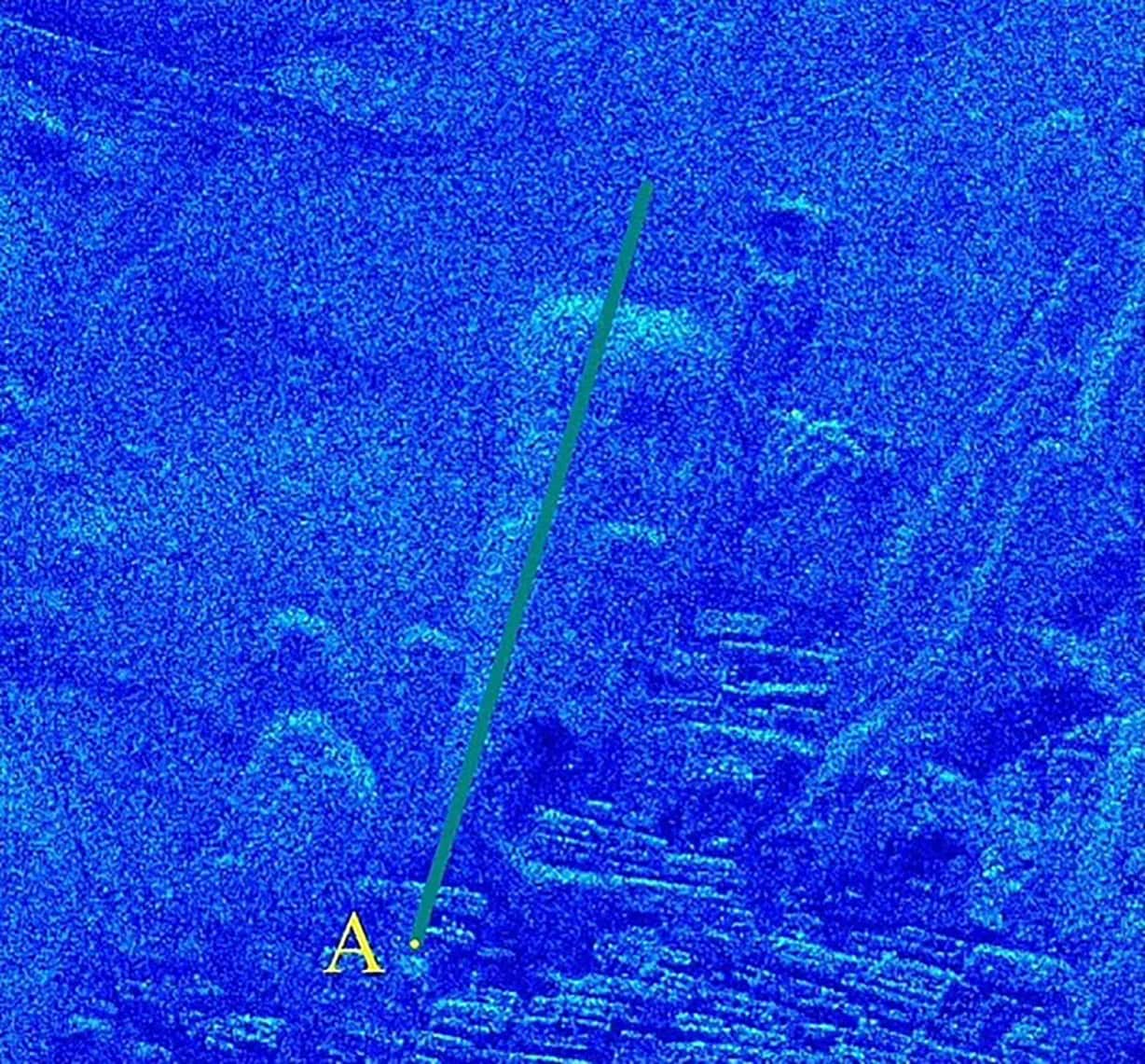
One of the strongest arguments for a buried statue is the composition of the ground itself. Unlike the impenetrable bedrock found in other parts of the plateau, this specific mound is made of hardened sand. This material would have made it significantly easier for ancient builders to encase or bury a massive structure, either by design or through the natural passage of time.
Clues carved in stone: the Dream Stele
Ancient Egyptian art rarely happened by accident. Biondi points to the Dream Stele — a massive granite slab nestled between the paws of the known Sphinx — as a historical smoking gun. The stele features carvings of two Sphinxes facing one another.
This monument was erected by Pharaoh Thutmose IV around 1401 BC to legitimize his rule. The hieroglyphics tell a story of a deity appearing to the prince in a dream, promising him the throne if he cleared the sands covering the statue. If the artwork is a literal reflection of the plateau, it suggests a second Sphinx was always part of the landscape.
Using advanced radar to peer through the earth, the team scanned the area between the Sphinx and the Pyramid of Khafre. What they found wasn’t just empty space, but a complex architectural network. Biondi claims they discovered “vertical shafts, horizontal passages” that point to an “underground megastructure.”
These subterranean tunnels reportedly mirror the known shafts beneath the visible Sphinx. Biondi notes this “incredible symmetry” and the “precise geometrical correlation” between the sites has made him roughly 80% confident that a second masterpiece lies beneath the surface.
Other figures who proposed a second Sphinx
Biondi isn’t the first to hint at a hidden twin of the Great Sphinx. Egyptologist Bassam El Shammaa first proposed the idea over a decade ago, drawing on ancient Egyptian records and mythology. Some of these texts describe a lightning bolt striking the Sphinx, which El Shammaa suggested could symbolize a second monument that may have been destroyed after being cursed by a powerful Egyptian god.
In 2021, Egyptian tourism official Reda Abdel Halim reportedly told local media that evidence for a second Sphinx had been found. According to his description, the hidden statue measured 246 feet high, with a head 67 feet tall and hands stretching over 50.8 feet — proportions strikingly similar to the visible Sphinx.
Skeptics cast doubt on the second Sphinx
Not everyone is convinced by the claims of a hidden twin Sphinx. Egypt’s former Minister of Antiquities, Zahi Hawass, has expressed skepticism, arguing that extensive excavations of the Giza Plateau have uncovered no evidence to support such theories.
Biondi emphasized the importance of further study before drawing any conclusions. “We are still analyzing the data,” he said, adding that he is currently awaiting permission from Egyptian authorities to examine the mysterious mound more closely.
Sources: New York Post, Matt Beall Podcast