
In a year that has left both diners and industry insiders stunned, 2025 will be remembered as a watershed moment for America’s once-unshakable restaurant scene. From beloved casual eateries to iconic bar-and-grill chains, a wave of bankruptcy filings has swept through the sector, forcing household names — alongside lesser-known but still significant players — to confront mounting debt, rising costs, and shifting consumer tastes in bankruptcy court. Read on to discover 10 major restaurant chains that went bankrupt in 2025 and find out whether they were able to bounce back and carve out another life in the dining scene.
Hooters
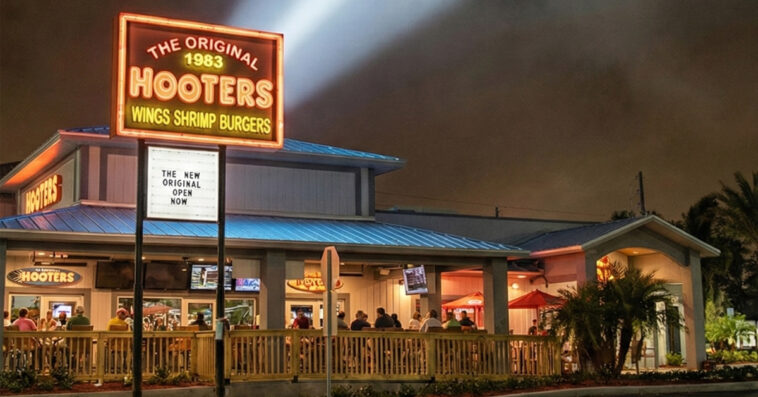
Hooters of America, the well-known casual dining chain famous for its chicken wings and distinctive branding, filed for Chapter 11 bankruptcy protection on March 31, 2025, seeking to restructure its operations amid mounting financial difficulties. At the time of the filing, the company was carrying approximately $376 million in debt. As part of its bankruptcy plan, Hooters proposed selling its corporate-owned locations to a group of existing franchisees — including some linked to the original founders — transitioning the chain to a pure franchise model and aiming to streamline costs and stabilize the brand.
By late 2025, Hooters had indeed emerged from bankruptcy court, with the sale of most of its company-owned restaurants completed and new ownership focused on revitalizing the brand. The original founders and franchise partners took back control of many locations with plans to refresh menus and reinforce the chain’s identity while maintaining ongoing operations.
Bar Louie
Bar Louie, the Dallas-based casual gastropub chain known for its handcrafted cocktails and bar-centric menus, filed for Chapter 11 bankruptcy protection on March 26, 2025 amid ongoing financial struggles and shifting industry dynamics. At the time of the filing, the company reported assets between $1 million and $10 million against liabilities of $50 million to $100 million and had already shuttered a number of underperforming locations in an effort to stabilize its finances.
Unlike some chains that simply restructured and kept most operations unchanged, Bar Louie’s bankruptcy eventually led to a sale of the brand and its remaining restaurants. In October 2025, multi-brand operator Sun Holdings, through its affiliate Louie Restaurants, acquired Bar Louie out of bankruptcy, preserving a portion of the chain’s footprint (about 39 locations) and positioning it for a leaner future under new ownership.
DMD Ventures
DMD Ventures, a Davie, Florida-based franchisee that operated multiple Twin Peaks restaurant locations, filed for Chapter 11 bankruptcy protection on January 6, 2025, when affiliated entities including DMD Florida Development 2, LLC and DMD Florida Restaurant Groups C and D, LLC submitted voluntary petitions in the U.S. Bankruptcy Court for the Southern District of Florida. The filings came as the company faced significant financial pressure, including an ongoing $12 million lawsuit by a major creditor, the Florida Restaurant Franchise Group, and liabilities that greatly exceeded its reported assets.
Throughout 2025, the Chapter 11 cases progressed in court as DMD worked through its reorganization, and later in the year Twin Hospitality Group announced plans to acquire several Florida Twin Peaks locations from DMD Ventures.
Planta
Planta, the upscale plant‑based restaurant concept known for its creative vegan dishes and stylish atmospheres across North America, filed for Chapter 11 bankruptcy protection on May 12, 2025, when its parent company CHG US Holdings and 17 affiliates submitted voluntary petitions in the U.S. Bankruptcy Court in Delaware as part of a bid to restructure in the face of mounting financial strain. At the time, the chain — which had grown rapidly to nearly two dozen locations — reported liabilities between $10 million and $50 million against minimal assets while seeking in‑court relief to reorganize and stabilize operations.
Planta was able to emerge from bankruptcy later in 2025 through a strategic asset sale approved by the court: a newly formed entity affiliated with Anchorage Capital Group acquired the brand and key assets for about $7.8 million, preserving a smaller footprint of about eight restaurants across the U.S. and Canada.
Bertucci’s
Bertucci’s, the Massachusetts‑based Italian restaurant chain once celebrated for its brick‑oven pizza and pasta, filed for Chapter 11 bankruptcy protection on April 24, 2025, marking its third such filing in seven years as it struggled to stay afloat amid prolonged financial challenges. The company attributed the latest filing to shifting consumer demand away from traditional casual‑dining brands, rising operational costs, inflationary pressures, and declining sales.
Bertucci’s Chapter 11 outcome remains uncertain. The chain has not yet exited Chapter 11 as a fully reorganized entity but is using the process to renegotiate leases, reduce costs, and pivot toward a new fast‑casual concept called Bertucci’s Pronto in hopes of adapting to changing consumer preferences.
Abuelo’s
Abuelo’s, the Texas‑based Mexican casual‑dining chain once known for its handcrafted Tex‑Mex fare and courtyard‑style restaurants, filed for Chapter 11 bankruptcy protection on September 2, 2025. At the time of its filing, Abuelo’s and its parent company, Food Concepts International, listed assets and liabilities in the range of $10 million to $50 million as the company continued to shrink from its peak of around 40 locations to just about 16 restaurants across several states. A full emergence from bankruptcy or long‑term turnaround plan has not yet been publicly announced, making its ultimate post‑bankruptcy future still in flux as of late 2025.
Bravo Brio Restaurants
Bravo Brio Restaurants LLC, the Orlando‑based parent company of Bravo! Italian Kitchen and Brio Italian Grille, filed for Chapter 11 bankruptcy protection on August 18, 2025. The company, which listed between $50 million and $100 million in both assets and liabilities, cited ongoing inflation, rising food and labor costs, higher interest rates and softening discretionary consumer spending — especially in shopping centers with declining foot traffic — as core reasons for its financial distress.
Bravo Brio’s Chapter 11 process is ongoing into late 2025, with the company negotiating a consensual reorganization plan with its senior lender that could transfer ownership and help stabilize operations while also rejecting several unprofitable leases as part of its restructuring efforts.
Iron Hill Brewery
Iron Hill Brewery & Restaurant, the beloved Delaware‑born brewpub chain known for its award‑winning beers and casual dining, abruptly closed all of its locations on September 25, 2025, after facing ongoing financial struggles that made continued operations unsustainable. Nearly three decades after its founding in 1996, locations across Pennsylvania, Delaware, New Jersey, South Carolina and Georgia were locked and employees were notified that the business would be filing for bankruptcy as part of the closure process.
Rather than seeking to reorganize under Chapter 11, Iron Hill filed for Chapter 7 bankruptcy in early October 2025, a liquidation process in which the company owes more than $20 million to creditors and had only about $125,000 in cash on hand at the time of its filing. Because of the Chapter 7 filing and the full closure of all locations, Iron Hill as an operating restaurant chain did not emerge from bankruptcy, marking the end of its run — although there are reports that a buyer has moved to acquire several of the former locations’ assets, which may lead to future re-openings under new ownership rather than a revival of the original brand.
Razzoo’s Cajun Café
Razzoo’s Cajun Café, the Texas‑based casual dining chain known for its Cajun‑inspired menu, filed for Chapter 11 bankruptcy protection on October 1, 2025. In court filings, the company cited a combination of declining consumer spending, shifting diner preferences toward convenience and delivery, aggressive discounting by larger competitors, burdensome lease obligations and high operating costs, as well as seasonal pressures such as lower crawfish prices that hurt its peak business period. At the time of its filing, Razzoo’s listed assets and liabilities between roughly $10 million and $50 million.
Razzoo’s Chapter 11 outcome remains unknown, with the filing intended to give it time to reorganize and stabilize operations while pursuing a potential sale or financing. A Dallas‑based hospitality group, M Crowd Restaurant Group, has emerged as a leading bidder to acquire Razzoo’s out of bankruptcy for about $18.8 million — a move that could preserve some restaurants and jobs, but which still requires court approval and finalization.
Opa Restaurant Group
Opa Restaurant Group, the California‑based operator of Opa! Authentic Greek Cuisine, filed for Chapter 7 bankruptcy on September 19, 2025. The filing showed both assets and liabilities in the relatively small range of $100,000 to $500,000, and followed years of financial struggles as the chain shrank from a peak of about seven locations to just five remaining restaurants amid rising costs and softening sales. Because Chapter 7 bankruptcy leads to liquidation rather than restructuring, the company did not emerge from bankruptcy as an ongoing business.
Source: The Sun U.S.