
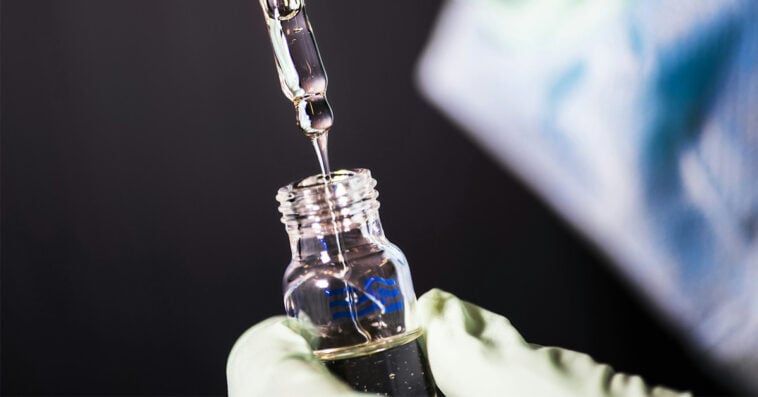
The next time you pick up a prescription, its secret to success might not have been discovered in a lab on Earth, but on a station orbiting 250 miles above it. While it sounds like science fiction, the unique weightlessness of space allows scientists to grow medicines with a level of precision impossible to achieve on our planet. As regulators begin laying the groundwork for space-made drugs, we stand on the verge of a medical revolution that could transform the treatment of everything from a simple headache to advanced cancers. Curious about how your medicine could soon have a cosmic origin? Keep reading.
How the UK is pioneering space-made pharmaceuticals
The United Kingdom is positioning itself as a global leader in an extraordinary new sector: the manufacturing of life-saving pharmaceuticals in Earth’s orbit. Through a strategic partnership between the Medicines and Healthcare products Regulatory Agency (MHRA) and the UK Space Agency (UKSA), the final frontier is being reimagined as a high-tech laboratory for drug production.
Working alongside UKSA, the Regulatory Innovation Office (RIO), and the Civil Aviation Authority (CAA), the MHRA has outlined its support for in-orbit manufacturing (IOM) of pharmaceuticals. Traditional manufacturing on Earth is governed by gravity, which can interfere with the delicate ways chemicals bond. However, IOM allows for the creation of materials that offer “superior quality and performance compared to those manufactured on Earth.” This initiative falls under the broader umbrella of In-Orbit Servicing, Assembly, and Manufacturing (ISAM) — a field the UK government has prioritized for “national security, growth, and leadership.”
To turn this vision into a commercial reality, the MHRA is collaborating on the so-called PHARM study. This mission is designed to map out the legal and safety requirements for space-based labs. The primary question is whether existing terrestrial regulations can be adapted for the stars or if an entirely new framework is required.
- Investment: £250,000 has been awarded to the UK start-up BioOrbit to lead this study.
- Goal: Create an end-to-end mission to manufacture drugs in microgravity that can be scaled for commercial use.
By establishing these guidelines now, the UK is moving faster than any other nation in the regulatory space. “BioOrbit’s PHARM study ensures that we can produce drugs in space under the same regulation as drugs made on Earth – which will be a world first,” says BioOrbit CEO Dr. Katie King.
Currently, the MHRA stands alone; no other national medicines regulator in the world has a dedicated pathway for medicines made in orbit. This head start could ensure that the next generation of miracle drugs carries a “Made in Space” label, verified by UK standards.
Which drugs could be made in space?
The current study is focused on designing an IOM system to crystallize biologic drugs, including those used in cancer treatments, under microgravity conditions. Scientists say that weightlessness in space allows the formation of “more perfect, reproducible protein crystals for drug formulations,” something that “cannot be achieved on Earth.”
The MHRA told C+D that protein crystals produced in microgravity can grow with “improved solubility, stability, and higher purity formulation.” They also noted that complex proteins that are “very difficult, if not impossible to crystallise in terrestrial conditions” can “more easily be crystallised” in orbit.
This breakthrough opens the door to more precise drug formulations for protein-based medicines, such as insulin and vaccines. Researchers hope that space-made drugs could ultimately be “more robust and effective” for patients on Earth, potentially improving treatment outcomes and expanding the capabilities of biologic therapies.
How costly is space-based drug manufacturing?
According to the MHRA, producing drugs in orbit doesn’t require sending entire production lines into space. Instead, missions deploy small, self-contained crystallisation payloads. Many of these missions rely on “fully autonomous spacecraft” that operate without human intervention, eliminating the need for crewed flights to conduct IOM.
Aerospace companies are now offering more frequent, low-cost rideshare launch opportunities, making access to space increasingly affordable for pharmaceutical experiments. The MHRA described these advances in space infrastructure as “key enablers” that make “microgravity manufacturing a viable option,” opening the door to a new era where medicines can be developed in orbit without prohibitive costs.
When will space-made drugs be available?
While several proof-of-concept missions have successfully demonstrated that drug crystallisation can occur in orbit, the MHRA confirmed that no medicines are currently produced in space “at commercial scale,” emphasizing that the sector remains “at an early stage.” Experts suggest that moving from experimental missions to fully operational, commercial production could take several years, depending on technological progress, regulatory approvals, and investment in orbital infrastructure.
Source: C+D