
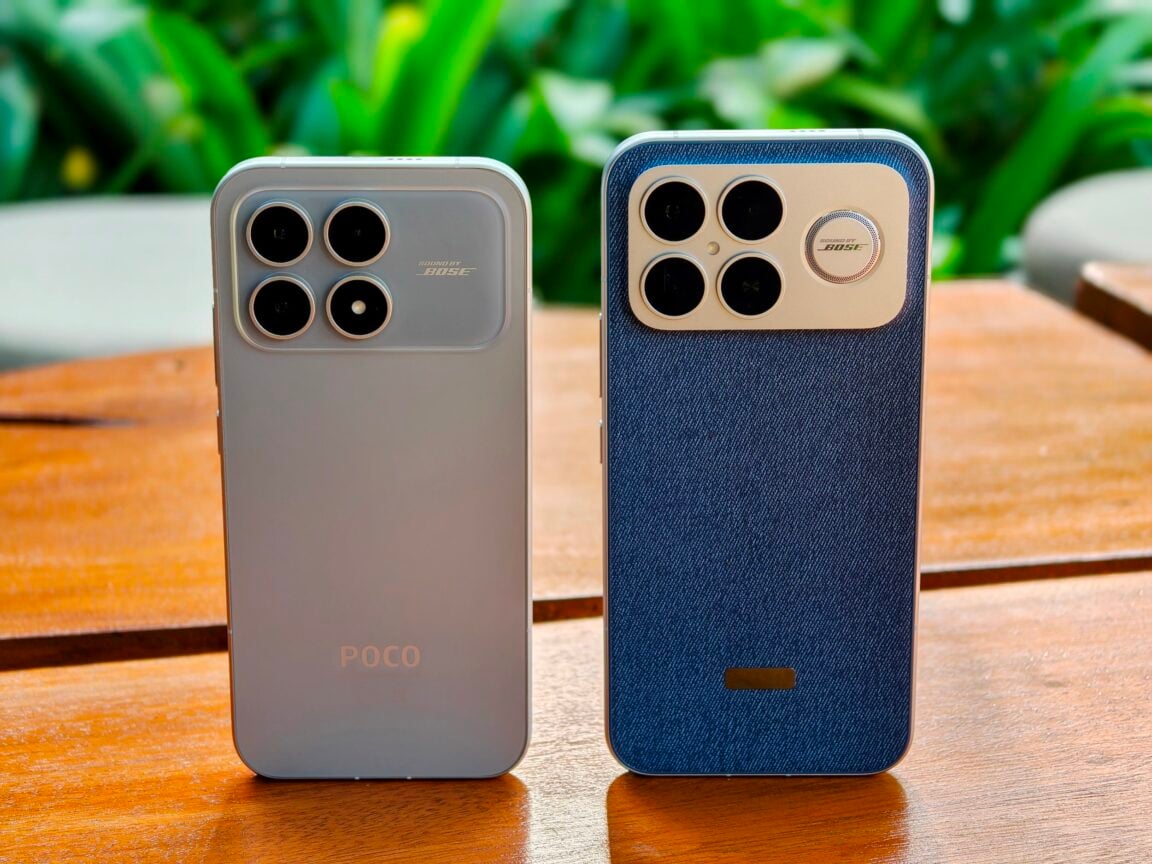
POCO has a great track record for delivering flagship-level performance without asking flagship prices. For years now, they’ve been the brand that phone enthusiasts point to when someone says you need to spend top dollar for top-tier specs. But what they unveiled in Bali this week is a change in direction That is because the F8 Ultra and F8 Pro aren’t just powerful phones priced aggressively; they’re POCO’s declaration that they’re ready to compete directly with the premium flagship smartphone brands on every front.
The most telling sign of this shift? Poco has partnered with Bose. When you partner with one of the most respected names in audio engineering into the development process, you’re not just building another value flagship – you’re making a statement about who you want to be compared to.
The F8 Ultra: Taking no prisoners
The F8 Ultra is packed with hardware that makes it clear POCO isn’t compromising anywhere with this new flagship. They went with a dual-chipset approach, pairing the powerful Snapdragon 8 Elite Gen 5 with the VisionBoost D8 chipset That second chip pushes gaming performance beyond what the main processor handles, allowing games to run at 120 FPS with enhanced resolution and HDR even when they weren’t designed for it.
Keeping all this power under control is a 3D dual-channel, dual-layer IceLoop cooling system. It uses a two-layer design targeting both the motherboard and processor separately, even accounting for camera module heat.
Audio that actually delivers
POCO’s Ex Head of Product Marketing, Angus Ng explained to us that people use their phones 70% of the time for watching movies and playing games, yet the typical phone speaker is horrible. Despite all of that, most smartphone companies haven’t been focused on making a phone speakers sound better than a tin can – until now.
That’s where the Bose partnership steps in and has resulted in an impressive triple-speaker setup with 2.1-channel architecture. Implementing proper bass response and stereo separation in a smartphone chassis is genuinely difficult, but I can verify they succeeded here. Unlike most phones which have weak sounding speakers, the F8 series is good enough to replace small portable bluetooth speaker.
The phone comes with two sound profiles – “Dynamic” for bass-heavy content and “Balanced” for vocal clarity.
Display innovation
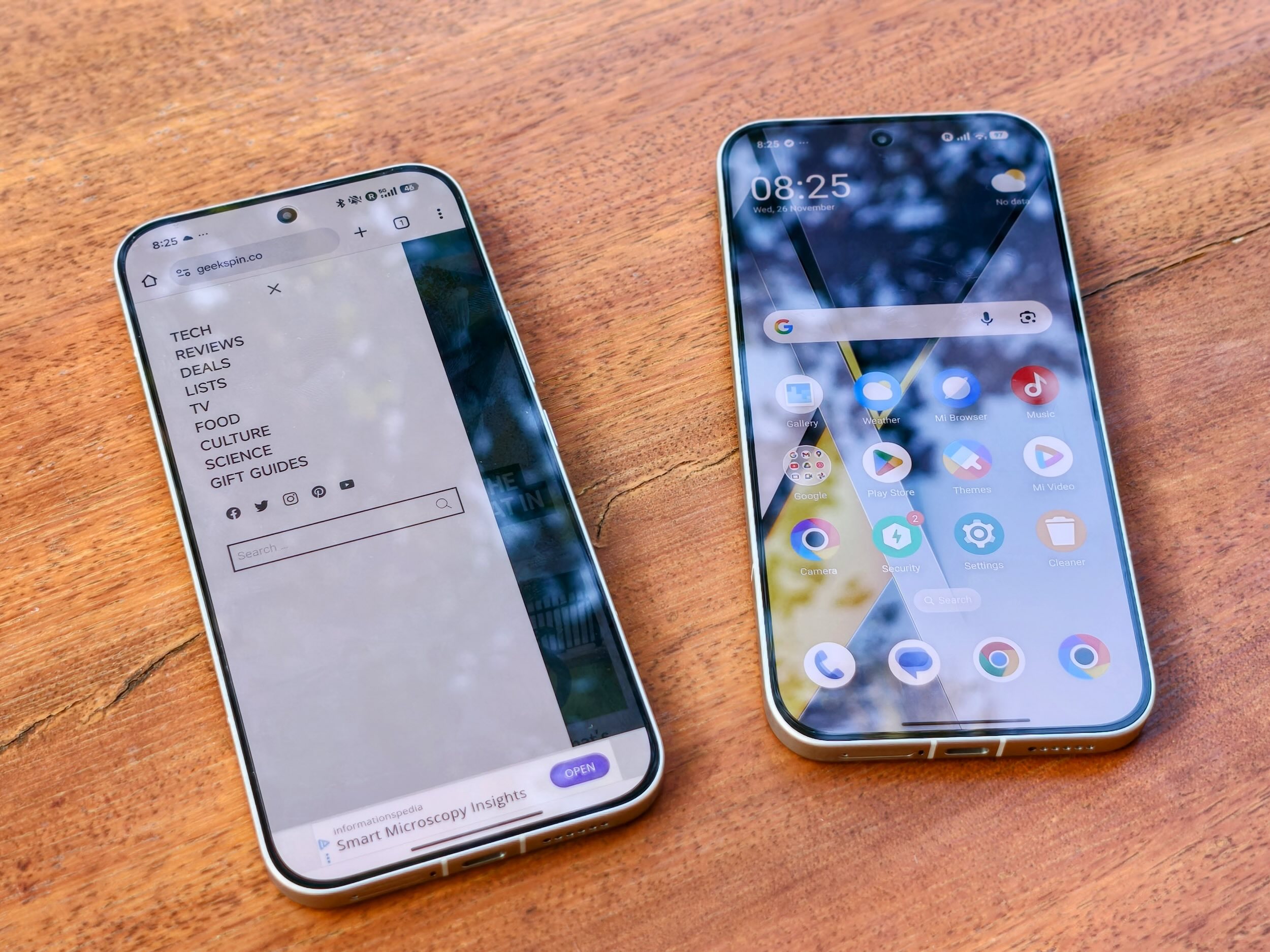
POCO’s introducing the HyperRGB AMOLED display on both F8 models. Unlike typical 2K OLED panels, this uses a full RGB subpixel structure where every red, green, and blue subpixel is actually used, not shared in a PenTile arrangement. The result? Visual quality comparable to 2K while consuming 19.5% less power than their predecessor, the F7 Ultra.
The F8 Ultra’s 6.9-inch screen features bezels of just 1.5mm on three sides and 1.68mm on the bottom – the narrowest POCO’s ever achieved.
Improved camera hardware
The F8 Ultra features a 50MP Light Fusion 950 sensor with OIS, built on a 1/1.31″ sensor with larger pixels for 43% better light sensitivity. The 1G+6P lens setup includes multiple specialized coatings to reduce flare and preserve edge-to-edge quality.
The standout is POCO’s first 50MP 5x periscope telephoto lens – it offers true optical zoom at 5x, in-sensor zoom to 10x, and digital to 20x. It includes Motion Capture for keeping fast-moving distant subjects sharp, and Super Moon Mode that activates automatically when shooting the moon at 20x.
The software brings 1440P dynamic shots with EIS and HDR, plus new positive and negative film filters for stylized looks that go beyond standard filter effects.
Battery and build
The 6,500mAh battery is the largest in any F Series device to date, paired with super fast 100W wired charging (38 minutes to full) and 50W wireless charging.
That denim blue finish though
Let’s talk about the Denim Blue variant for the F8 Ultra, because this is where POCO really shows they’re thinking differently about premium design. While most manufacturers play it safe with boring glass backs in black, white, or maybe a gradient or vegan leather finish if they’re feeling adventurous, POCO went ahead and created something that actually looks interesting.
The Denim Blue uses Xiaomi’s third-generation nano-tech material, and before you ask – no, there’s no actual denim fabric involved. But the texture and aesthetic captures a streetwear-inspired vibe. It’s a seriously bold move that says this phone doesn’t need to look like every other flagship to be taken seriously.
That said, it’s also practical. The nano-tech surface is built to resist dirt and wear, so that distinctive texture shouldn’t deteriorate after a few months in your pocket or bag. It’s also an eco-friendly manufacturing process.
But the real genius is how it differentiates the F8 Ultra in a sea of sameness. Walk into any phone store and you’ll see rows of devices that look nearly identical from the back – smooth glass, similar colors, maybe a camera bump in the corner. The Denim Blue F8 Ultra? You’ll spot it immediately. It has serious personality without sacrificing the premium feel that the aluminum alloy frame and IP68 rating deliver.
For anyone who remembers when phones actually looked different from each other, when manufacturers took design risks instead of copying Apple’s homework, this feels so incredibly refreshing. The Black variant with its glass fiber construction and matte-gloss finish is there for people who want a traditional, more minimalist look, but the Denim Blue is for everyone who’s tired of flagship phones looking like they came from the same factory.
The F8 Pro: The sweet spot
The F8 Pro shares core technology with the Ultra – same HyperRGB display (22.3% less power than F7 Pro), Sound by Bose audio, and Xiaomi HyperOS 3 – while hitting a more accessible price point.
The Snapdragon 8 Elite Mobile Platform handles everything most users need, and it’s enhanced by WildBoost Optimization that predicts demanding scenes to prevent frame drops. The large 6,210mAh battery delivers 16+ hours of use with 100W charging that can reach to full in just 37 minutes.
First telephoto on a POCO Pro
The F8 Pro marks a milestone for the F series – it’s the first Pro device with a dedicated telephoto camera. The 50MP sensor provides 2.5x optical zoom for portraits and 5x lossless zoom for detail shots, plus telephoto motion capture. The 50MP main camera uses the Light Fusion 800 sensor with OIS for challenging lighting conditions.

The design introduces POCO’s first one-piece milled glass back – carved from a single 2mm glass block through 41 processes. It combines a frosted panel with glossy camera area that is wrapped in a micro-curved metal frame. At 199 grams with a 6.59-inch display, it balances size with comfort very well and it’s also IP68 certified.

The bigger picture
POCO says they have shipped 93 million units across 98 markets since 2018, ranking #35 in the 2025 Kantar BrandZ Top 50 Chinese Global Brand Builders.
The F8 Series represents POCO’s most confident step yet – matching the established players on performance while adding features like Sound by Bose technology and that distinctive Denim Blue design that set them apart.
POCO’s been proving for years that you don’t need to overpay for flagship performance. With the F8 Series, they’re proving they can compete on every other dimension too – design, audio, camera systems, the complete package.
The F8 Ultra (12GB+256GB, 16GB+512GB) comes in a choice of Denim Blue and Black while the F8 Pro (12GB+256GB, 12GB+512GB) comes in a choice of Titanium Silver, Blue, and Black. Both tablets come in Grey and Blue. We’ll update this story as soon as we have pricing.
Pricing
Pricing for the POCO F8 Ultra begins at $729 USD for the 12GB2/256GB model, but there’s a special early bird price of just $679. The 16GB/512GB model will retail for $799 with an early bird price of $729. The Poco F8 Pro will retail for $579 for the 12GB/256GB model (early bird $529) and $629 for the 12GB / 512GB model (early bird $579).
These prices are a bit higher than POCO’s previous flagship prices, but considering that the specs have been leveled up to be able to be able to compete with premium flagships, the POCO F8 series still remains a very good value.