
New York City’s new school phone ban is doing what lawmakers hoped: fewer distractions, calmer hallways, more face-to-face conversation.
It’s also exposing something else.
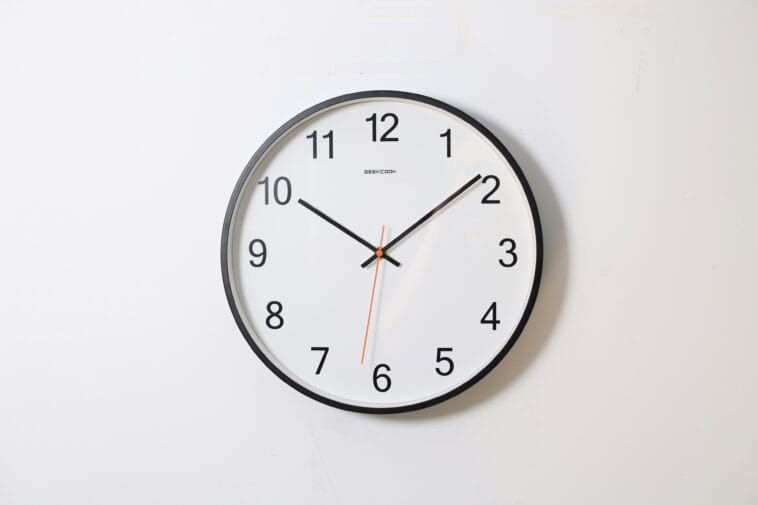
Some students don’t know how to read the clocks on the wall.
At Cardozo High School in Queens, assistant principal Tiana Millen said the change became obvious almost immediately. Students are getting to class faster now that phones are gone, but many still stop to ask what time it is.
“That’s a major skill that they’re not used to at all,” Millen said.
Teachers across the city told Gothamist the same thing. Without phones in their hands, students are looking up — and realizing they can’t always make sense of the answer.
“The constant refrain is, ‘Miss, what time is it?’” said Madi Mornhinweg, a high school English teacher in Manhattan. “It finally got to the point where I started saying, ‘Where’s the big hand and where’s the little hand?’”
According to the city’s education department, students are taught to read analog clocks in early elementary school. A spokesperson for NYC Public Schools said students learn concepts like “o’clock,” “half-past,” and “quarter-to” in first and second grade.
But several students say the skill faded simply because they stopped using it.
“They just forgot that skill because they never used it,” said Cheyenne Francis, 14, outside Midwood High School in Brooklyn. “They always pulled out their phone.”
Others pointed out that the clocks themselves don’t always help. Broken or incorrectly set wall clocks are common, students said, which only reinforces the habit of asking instead of checking.
Teachers say the issue isn’t new. Long before the phone ban, educators were already noticing that fewer students relied on analog clocks. A 2017 study in Oklahoma found that only one in five children ages 6 to 12 could read one. In England, some schools began replacing analog clocks with digital displays years ago.
“It’s underutilized,” said Travis Malekpour, a teacher at Cardozo. He said he now works time-reading and calendar skills into his math lessons where he can.
Experts say the trend reflects a broader shift rather than a sudden failure.
Kris Perry, executive director of Children and Screens: Institute of Digital Media and Child Development, said it’s not surprising that students raised in a fully digital environment haven’t practiced analog skills much. The open question, she said, is whether that represents a loss or simply a swap.
Teachers are quick to note that while some traditional skills may be rusty, students are fluent in others. Coding programs, robotics clubs, and digital tools are now standard in many schools.
Mornhinweg said she recently struggled to open a PDF after a software update. Her students stepped in without hesitation.
“I was freaking out,” she said. “They were like, ‘Miss, it’s fine. This is what you do.’ I felt really old.”
For now, the phone ban is staying. And for many schools, that means an unexpected lesson is back in rotation — one that ticks by second hand, minute hand, and hour hand, whether students are ready or not.
Source: Gothamist