
New York’s advertisers just woke up to a quiet but real shift in the rules, the kind that arrives without fanfare and still rearranges how a whole industry has to behave.
Under the new law, which took effect Tuesday (June 9), anyone hoping to slip an AI-generated face into a commercial without admitting as much now finds themselves crosswise with state law.
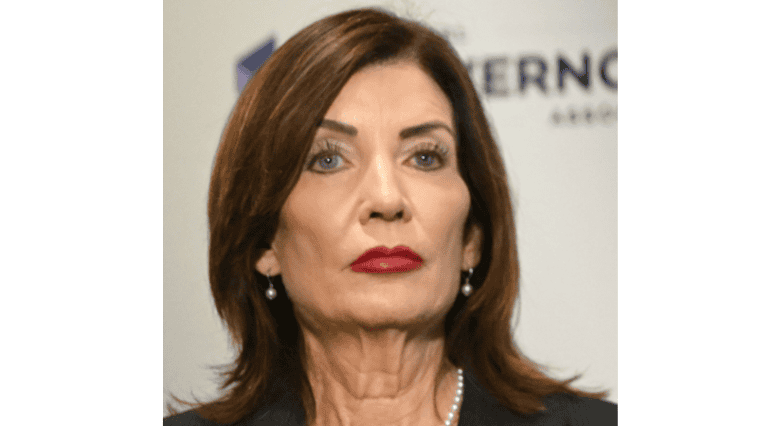
The measure, which New York Governor Kathy Hochul signed in December last year, is being cast by her office as the first of its kind anywhere in the country. It represents an attempt to bring some transparency into a corner of advertising that has become increasingly populated with manufactured faces.
At the center of it sits a term that sounds almost cinematic, a “synthetic performer,” as the statute frames it, which means “digitally-created media that appear as a real person,” the sort of conjured stand-in that has been creeping into the spots where a flesh-and-blood actor once stood.
Should an advertiser use one of these digital figures without “conspicuously” owning up to it, the penalty lands fast, $1,000 for the first offense and a steeper $5,000 for each subsequent violation.
Hochul pitched the measure as a question of who holds the reins, keeping her phrasing blunt, stating, “In New York, we are setting the rules of the road instead of letting AI run the show.”
Loopholes, alliances, and a national tug-of-war
The law is far from airtight, with exemptions carved out deliberately. This means that films, television programs, streaming series, and video games (when the synthetic performer is part of the core production, not an advertisement) all escape its reach. Audio spots have also been spared, as is AI, used solely to translate scripts between languages.
Not everyone welcomed the change, however. The American Association of Advertising Agencies, the heavyweight trade body better known as the 4As, opposed the bill as it moved through the legislature. In a blog post, the group cautioned that the rule would wind up “injecting compliance uncertainty into the advertising process” while saddling any brand that buys airtime in the state.
Broadcasters carried a narrower kind of unease. The New York State Broadcasters Association (NYSBA), which thawed a little once the aforementioned exemptions were stitched in, still bristles at the definition of “synthetic performer” and regards it as too broad. Its president, David Donovan, despite the hesitance, told The Associated Press that local stations are ready to comply.
The loudest support came from SAG-AFTRA, the actors’ union, fresh off ratifying a new agreement with studios and streamers that tightens guardrails around AI-generated performers.
None of this is unfolding in a vacuum. Statehouses across the country have been busy passing AI rules of their own, some chasing job security for ordinary workers while others address privacy, safety, and deepfake risks.
Adding to all this is a federal shadow that looms. Mere days after Hochul signed the bill in December, President Trump handed down an executive order urging states to ease off AI regulation, warning that a thicket of clashing local rules could hinder American AI firms and let China slip ahead in the race. Detractors attach something far less noble to the order, viewing the move as a gift to the tech industry to roam free with little oversight.
Sources: NYS Senate, Bill Effective Date, Trump Executive Order, Legislation Signing, AP News