
For the first time since the Apollo era, NASA isn’t just looking to visit the Moon — it’s preparing to move in. A bold new roadmap recently unveiled by the agency details a phased approach to building a permanent lunar home, shifting our status from celestial tourists to long-term residents by the 2030s. From the strategic selection of the ice-rich South Pole to the cutting-edge technology required to survive the freezing lunar night, the era of deep-space living is closer than you think. Read on to find out exactly how NASA plans to build this ultimate campsite and what it will take for humans to survive on the Moon.
NASA moves into Phase I of its moon base development plan
Fresh off the heels of the record-breaking Artemis II mission, NASA is wasting no time. The space agency has officially kicked off “Phase I” of its ambitious lunar base, locking in hundreds of millions of dollars in contracts with four American companies to start building and shipping the hardware.
The goal? Get the gear to the Moon before the astronauts even arrive.
The delivery lineup
NASA is targeting the Moon’s South Pole for its new setup. Here is who is building the first wave of equipment:
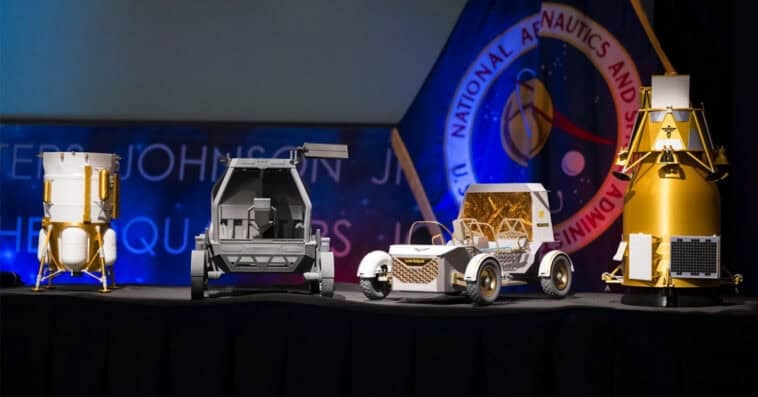
- The heavy lifters: Jeff Bezos’ Blue Origin is building two massive cargo landers.
- The rides: These landers will deliver advanced lunar buggies (officially called “lunar terrain vehicles”) built by Astrolab and Lunar Outpost.
- The Scouts: Firefly Aerospace, fresh off a successful lunar landing last year, is tasked with sending the very first drones to fly in the ultra-thin lunar atmosphere.
What comes next?
If all goes according to plan, this robotic welcoming committee will be waiting on the lunar surface before the first human boots touch the ground, currently scheduled for 2028.
NASA is using a step-by-step approach to get us there:
The recent milestone (April): The four-person Artemis II crew flew around the Moon, traveling further into the cosmos than any Apollo mission ever did.
The next step (Mid-2027): The upcoming Artemis III mission will keep astronauts closer to home. The crew will stay in Earth’s orbit to practice a crucial skill: docking NASA’s Orion spacecraft with the high-tech crew landers being built by Blue Origin and Elon Musk’s SpaceX.
The grand finale (2028): Once the orbit rehearsals are complete, NASA aims to land two astronauts on the lunar surface as early as 2028, officially kicking off a new era of space exploration.
Building a permanent home and future economy on the Moon
Once the initial gear is dropped off, NASA’s vision for the Moon gets truly ambitious. The agency has laid out a clear plan to transition from short visits to a fully functioning, long-term lunar community over the next decade.
Phase II: Laying the power grid (2029–Early 2030s)
Starting in 2029, NASA will shift its focus to building heavy infrastructure. Just like building a new neighborhood on Earth, the first step is getting the utilities hooked up. This phase centers on constructing a reliable lunar power grid to keep equipment running through the freezing, two-week-long lunar nights.
Phase III: Moving in for good (The 2030s)
By the 2030s, the mission enters its third phase: constructing specialized, permanent habitats. This is when astronauts will finally be able to unpack their bags and stay for extended periods.
“Then we’ll be able to say, ‘Hey, we’re permanently here and we’re not giving it up,’” said NASA’s moon base program executive Carlos Garcia-Galan.
Setting the boundaries: The ‘MoonFall’ perimeter
Carlos Garcia-Galan envisions a massive base sprawling over hundreds of square miles. To keep things organized, NASA plans to use drones — dubbed MoonFall — stationed at the corners of the base to mark its outer perimeter.
NASA Administrator Jared Isaacman explained that these territory markers are all about safety and respect, ensuring different countries don’t accidentally interfere with each other’s equipment. He expects other spacefaring nations to show the same courtesy.
Why are we going back to the Moon and staying for good?
According to Isaacman, this isn’t just a science project. The Moon Base mission has three major goals:
- Kickstart a lunar economy: Creating jobs, business opportunities, and trade beyond Earth.
- Conduct groundbreaking science: Learning more about our solar system from a unique vantage point.
- The ultimate stepping stone: Using the Moon as a training ground to lay the foundation for the first human expedition to Mars.
The message from NASA leadership is clear: the space race is back on, and it’s moving fast. “For those waiting patiently, the grand return is close at hand and we will not slow down,” Isaacman said. “We are really just getting started.”