
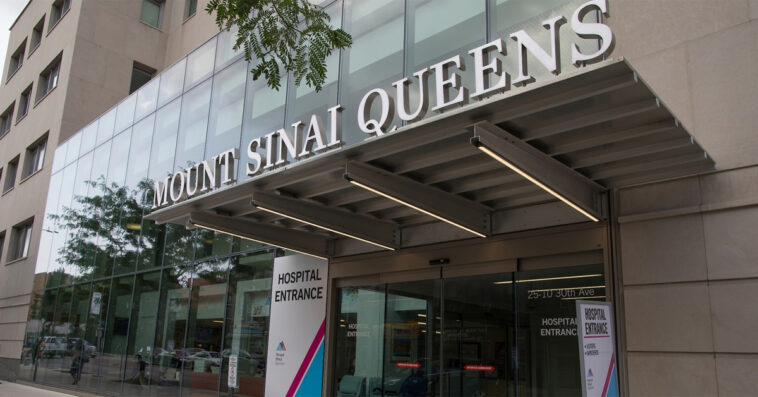
New York’s healthcare landscape is poised for a high‑tech shake‑up as Mount Sinai Health System partners with secure identity firm CLEAR to introduce face‑scan‑based check‑in across its hospitals and clinics. By replacing traditional patient check‑in methods with a digital identity that relies on biometrics and seamless authentication, Mount Sinai aims to cut wait times and streamline access to care. Read on to discover how this collaboration is set to transform your next doctor’s visit—and why the way you access medical care in the city may never be the same.
Mount Sinai adopts CLEAR1 to streamline patient and staff check-ins
In a landmark move for New York City’s medical infrastructure, the Mount Sinai Health System is officially ditching the paperwork for a more digital approach. Through a new partnership with CLEAR, Mount Sinai is set to revolutionize how New Yorkers interact with healthcare by implementing CLEAR1, a unified identity platform designed to streamline access for both staff and patients.
As one of the largest academic medical systems in the New York metropolitan area, Mount Sinai impacts the lives of hundreds of thousands each year, spanning seven hospitals, more than 400 outpatient locations, over 600 research and clinical laboratories, its nursing school, and its renowned school of medicine and graduate education. With CLEAR1, Mount Sinai intends to give patients and employees a modern, streamlined way to verify their identity when accessing systems or checking in for care. This means that whether a patient is checking into a clinical lab or an employee is logging into a secure network, their identity remains seamless and portable across the entire Mount Sinai ecosystem.
Key highlights of the partnership
- First in the city: Mount Sinai becomes the inaugural New York City health system to adopt the CLEAR1 platform.
- Scale of impact: The rollout will affect hundreds of thousands of New Yorkers.
- Streamlined access: The goal is to replace clunky, traditional identification methods with a modern, high-tech experience that follows the user from one facility to the next.
What the higher-ups have to say
The collaboration is being hailed as a vital step toward bridging the gap between high-end security and user convenience.
“CLEAR’s mission is to make everyday experiences safer and easier by connecting people to their secure identity,” said Caryn Seidman Becker, CEO of CLEAR. “There’s no more meaningful place to deliver on that promise than in health care, and we’re especially proud to do it with Mount Sinai here in our New York City backyard.”
Beyond the patient experience, the integration serves as a significant upgrade to the hospital’s back-end defense systems.
“At Mount Sinai, digital innovation is how we make care safer, simpler, and more connected for the communities we serve,” explained Lisa S. Stump, MS, FASHP, Chief Digital Information Officer at Mount Sinai. “By collaborating with CLEAR, we are strengthening our cybersecurity and infrastructure networks, while also making it easier for patients and employees to securely access the care and services they need.”
This transition represents a major milestone in the “digitization of the patient,” suggesting that the future of New York healthcare is one where your face, not your insurance card, is your primary key to care.
How does CLEAR1 work?
CLEAR is the same company behind the expedited airport security lanes. But unlike its airport service, which focuses on physical travel, CLEAR’s CLEAR1 is a digital identity-as-a-service platform designed to unify a person’s identity across various high-stakes sectors, including healthcare. Here is the step-by-step logic of the system:
- One-Time enrollment: A user completes a high-assurance verification process that includes a
“liveness” selfie and a scan of a government-issued ID. - Multi-dimensional verification: The platform cross-checks hundreds of identity signals, such as biometric matches, document authenticity, and authoritative data sources, to ensure the person is who they claim to be.
- Seamless access: Once verified, the user’s identity is portable. They can check in at a hospital kiosk, log into a patient portal, or verify their identity with a provider using just a quick face scan (biometric match) on a tablet or smartphone.
CLEAR1 in healthcare settings
In medical environments, CLEAR1 acts as a bridge between the physical and digital worlds. It is particularly effective because of its deep integration capabilities.
CLEAR1 distinguishes itself in healthcare by embedding directly into foundational systems, including Electronic Health Records, patient portals, and clinician tools. This integration simplifies once-tedious tasks like account creation, secure access, and password recovery. By bridging digital portals with physical check-in points, like lobby kiosks and handheld tablets, CLEAR1 has successfully boosted digital check-in rates, slashed the number of duplicate medical records, and reclaimed thousands of staff hours that can now be redirected toward actual patient care.
How CLEAR1 protects sensitive healthcare data
To handle sensitive medical data, CLEAR1 meets rigorous federal security benchmarks. It is certified by the Kantara Initiative for:
- NIST IAL2 (Identity Assurance Level 2): Ensures a high level of confidence that the applicant’s identity is real, requiring either remote or in-person identity proofing with verified evidence.
- NIST AAL2 (Authenticator Assurance Level 2): Requires multi-factor authentication, such as a biometric scan combined with a trusted device, to prevent unauthorized account access.
These standards are the “gold standard” for trusted healthcare data exchange, ensuring that while the process feels simple for the patient, it remains fortified against identity theft and fraud.
Source: Mount Sinai