
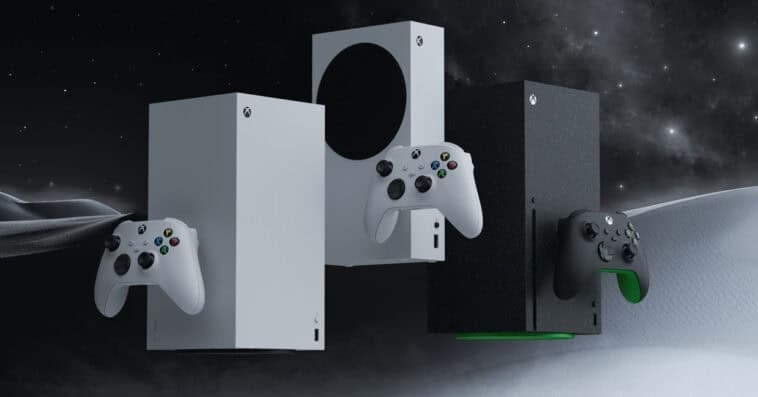
If you’ve been holding off on buying a new Xbox, that hesitation is about to become incredibly expensive. Microsoft is officially raising Xbox prices by as much as $150, turning what used to be standard gaming hardware into a serious financial investment. While a price hike this massive might look like a simple corporate cash grab on the surface, the real story is much more alarming. Read on to discover exactly why the console market is fracturing, which specific models are being hit hardest, and what it could mean for gamers and the broader console market moving forward.
Apple and Microsoft sound the alarm
The ripple effect across the consumer electronics sector hit with full force on Thursday. Just hours after Apple sent shockwaves through the market by raising prices on its lineup of MacBooks and iPads, Microsoft followed suit with its own historic announcement.
The double-whammy underscores a painful new reality for consumers: the era of relatively stable hardware pricing is over, driven entirely by an unforgiving global supply chain. In an interview with The Wall Street Journal (via CNBC), Apple CEO Tim Cook candidly admitted that price increases across the board had simply “become inevitable.”
The new Xbox price tag breakdown
For gaming fans, the sticker shock will become an official reality on August 1. Microsoft is aggressively restructuring its pricing architecture across its entire current-generation lineup, pushing hardware costs up by a staggering $100 to $150.
Under the new pricing model, the entry-level 512GB Xbox Series S will jump by $100, moving from its original $399.99 price point up to $499.99. Buyers looking for more internal storage will feel an even bigger sting; the 1TB version of the Series S is set to increase by $150, forcing consumers to shell out $599.99 instead of the previous $449.99.
The premium tier faces a similarly steep climb. The all-digital 1TB Xbox Series X will see its price tag inflated by $150, shifting from $599.99 to $749.99. Meanwhile, the flagship 1TB Xbox Series X equipped with a physical disc drive — which previously sat at $649.99 — will now max out at a historic $799.99.
For context, the Series X originally launched in late 2020 at a baseline of $499.99, meaning Microsoft’s top-tier console has now endured a massive $300 lifetime price jump.
In tandem with these historic increases, Microsoft also confirmed it is completely sunsetting the high-tier 2TB Xbox Series X Galaxy Black Special Edition, which originally made its debut in 2024.
The root of the problem
This isn’t Microsoft’s first time adjusting the dials. The tech giant acknowledged that it has been fighting a losing battle against backend manufacturing economics for quite some time.
“Last October, we increased Xbox console price by $20-$70 in the U.S.,” the company stated in an official blog post.“We hoped another price increase would not be necessary, and we have spent the last several months working with suppliers on options.”
Those options, however, evaporated. Microsoft revealed a terrifying metric regarding the core components that make these consoles run: “Unfortunately, console storage and memory prices have increased by more than 2.5x, and we expect another doubling by the fall of 2027.”
The AI gold rush squeezes out everyday gamers
How did storage and memory suddenly get so expensive? The answer lies in the ongoing Artificial Intelligence boom. Massive silicon fabrication houses and memory manufacturers like Micron and SK Hynix only have a finite amount of factory capacity. Right now, tech infrastructure giants are offering staggering premiums for high-bandwidth memory (HBM) to build advanced AI servers, such as those housing Nvidia’s market-dominating graphics processing units (GPUs).
Faced with a choice between low-margin console memory and highly lucrative AI components, chipmakers are prioritizing the AI infrastructure. They are intentionally raising prices to capitalize on historic enterprise demand, leading to immensely wider profit margins for themselves — but leaving consumer tech companies holding a massive bill. This supply-side pressure is what is straining everyday buyers looking to pick up basic smartphones, tablets, laptops, and gaming rigs.
Why consoles bleed when other gadgets borrow time
While the entire tech world is feeling the heat, the gaming ecosystem is unique in its vulnerability. Most consumer gadgets are engineered with built-in profit margins, but video game consoles have historically broken even or been sold as “loss leaders” — hardware intentionally sold for less than it costs to make, with the expectation that corporate margins will be recovered through software sales, ecosystem subscriptions, and microtransactions.
Xbox highlighted this fragile economic tightrope directly in its announcement: “The entire consumer electronics industry is struggling with the current components crisis, but the effects are particularly hard on consoles. Unlike phones, computers, speakers, and other consumer devices, consoles are typically not sold at a profit, but instead for less than they cost to make.”
When component costs spike two-and-a-half times over, an already subsidized piece of hardware becomes an unsustainable financial black hole for its creator. With Sony having already raised PlayStation 5 prices multiple times worldwide to combat the same economic pressures, the golden era of cheap, heavily subsidized console generations appears to have officially drawn to a close.