
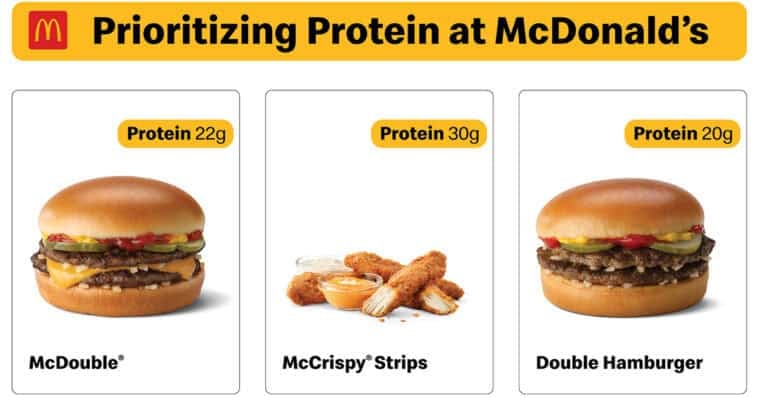
Just when you thought fast food couldn’t get any more tailored to your fitness goals, McDonald’s rolled out new “protein callouts” designed to make high-protein choices easier to spot. However, not everyone is buying it. The badges, now appearing on more than a dozen menu items across the McDonald’s app and kiosks, highlight the grams of protein in fan favorites, tapping into the booming demand for protein-packed meals. But instead of applause, the update has sparked a wave of online skepticism, with customers questioning whether the numbers actually add up. So, what is behind the confusion? Are these labels a helpful nutritional tool, or are they simply a form of marketing fabrication?
McDonald’s makes high-protein choices easier to spot
Capitalizing on the global fitness trend, McDonald’s has officially entered the “macro-tracking” arena. Starting April 21, the fast-food giant began rolling out specialized “protein callouts” across its digital platforms, targeting customers who prioritize protein in their daily diets.
The update introduces visual markers to more than a dozen menu items, though you won’t see them on the traditional overhead boards. Instead, McDonald’s describes these callouts as “visual ‘badges” that make it quick and easy to spot protein options any time of day.” These badges are currently exclusive to the McDonald’s mobile app and in-store self-service ordering kiosks.
According to a company news release, the initiative was launched “to make it even easier for fans to find menu options that align with their protein goals.” By highlighting specific nutritional data upfront, the chain hopes to simplify the decision-making process for health-conscious diners.
The new feature covers 17 different McDonald’s menu items, spanning breakfast, lunch, and dinner favorites. These include:
- McCrispy Strips: 30 grams
- 10-piece Chicken McNuggets: 23 grams
- McDouble: 22 grams
- Double Hamburger: 20 grams
- Egg McMuffin: 17 grams
- Snack Wraps: 17 grams
- Filet-O-Fish: 16 grams
- Sausage Burrito: 13 grams
- Egg Biscuit: 11 grams
By focusing on these longtime classics, McDonald’s aims to prove that high-protein choices are available throughout its existing menu. As the company puts it, the badges are “designed to make the ordering experience clearer and simpler for those looking for protein.”
Why McDonald’s protein badges are sparking confusion
The rollout of McDonald’s new labeling system didn’t just spark interest. It also ignited a wave of digital detective work. Almost immediately after the protein badges went live, users on X (formerly Twitter) began scrutinizing the figures, leading to a flurry of viral posts questioning the company’s math.
The skepticism centered on apparent inconsistencies between similar menu items. For instance, the gap between single and double-patty sandwiches left many scratching their heads. One observant user pointed out a confusing discrepancy: “Why doesn’t the double [cheeseburger] have double the protein (or close to it)? I know cheese not doubling is a factor, but is that driving the entire 12g difference?”
Other critics pointed out what appeared to be simple data entry errors or glaring omissions in the app’s database. While some users joked about the missing macros — with one person quipping, “I have a feeling they forgot the beef”— others were genuinely confused by which items made the cut and which were left out.
The frustration grew as diners noticed that high-protein staples were mysteriously missing their badges. As another user noted, “My favorite sausage biscuit doesn’t have a protein callout in the app, when certainly sausage has some protein.” This lack of consistency has led many to wonder if the new system is a reliable nutritional guide or just a half-baked marketing attempt.
McDonald’s has yet to comment on these criticisms.
Sources: Fox News, McDonald’s