
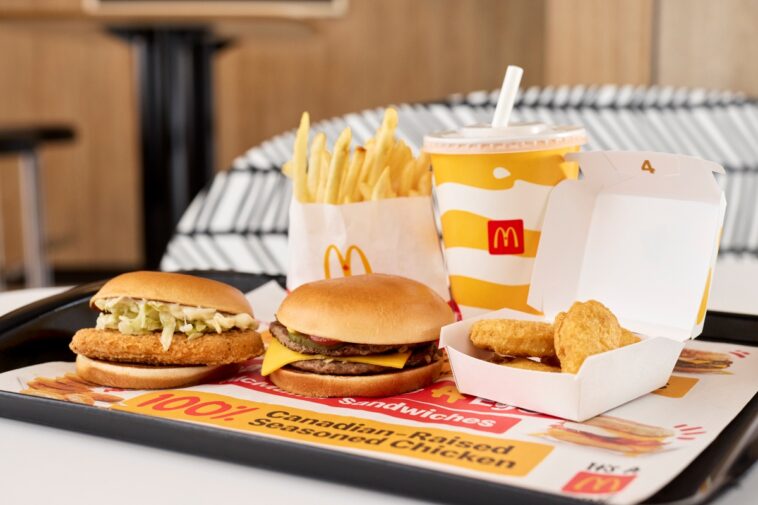
McDonald’s Canada is doing something that feels almost impossible right now: holding the line on prices. While the rest of the fast-food world keeps inching costs higher, the chain just made a promise to freeze what it’s charging for the next year.
The fast food giant up in The Great White North will freeze the price of a small McCafe coffee at $1 and cut the cost of its McValue meals to $5 through 2026, the company said Tuesday.
The value meal was priced at about $6 when the lineup launched in 2024, while the $1 small coffee was introduced in July of that year. The changes take effect immediately.
What You Get for Five Bucks
The $5 meals include a Junior Chicken, McDouble, or chicken snack wrap, each paired with small fries and a fountain drink.
The deal also extends to breakfast, with four options including a sausage McMuffin, breakfast burrito, bagel with cream cheese, or a sausage McGriddle, each bundled with a hash brown and a small coffee.
Annemarie Swijtink, who became CEO of McDonald’s Canada in September 2025, said the decision reflects growing financial pressure on customers.
“Canadians are facing challenges and are insecure financially,” Swijtink said. “What we are doing is listening and giving them what they want.”
The move comes as global prices for ground beef and coffee continue to rise, driven by reduced cattle herds, climate impacts, and crop disease. Those pressures have pushed fast-food prices higher across the industry, prompting backlash from customers who say meals no longer feel affordable.
McDonald’s Canada, in a press release, said it was able to hold prices because of its scale and long-standing supplier relationships, some of which date back more than 50 years.
Other fast-food chains in Canada have also leaned into value deals in recent months, including Tim Hortons, Wendy’s, and Burger King, as competition for price-sensitive diners intensifies.
For an industry that spent the better part of three years raising prices faster than customers could keep up, this reversal signals something bigger. Consumer pushback works (well, sometimes anyway). The question now is whether other markets will follow Canada’s lead or if this stays a uniquely Northern experiment in damage control.
Sources: McDonald’s Canada, CBC Canada