
Lenovo is getting creative at CES 2026, showing off a handful of concept devices that could change the way we think about some of our favorite gadgets in the year to come.
In addition to a tantalizing new take on the gaming laptop, Lenovo is showing off their ideas for an improved rollable display laptop, a pair of AI glasses, and a home computing device that could help usher in an era of more personalized AI assistants.
Lenovo ThinkPad Rollable XD Concept Laptop
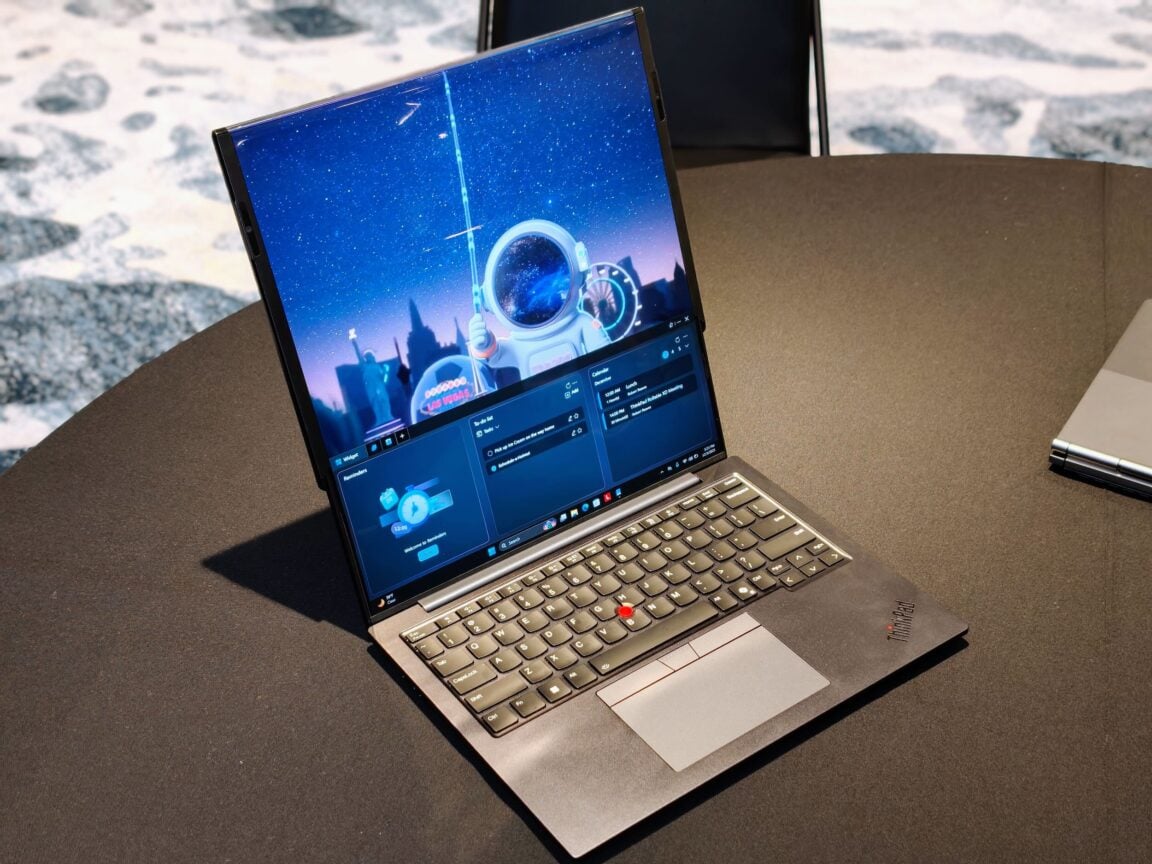
Lenovo is on a rollable display kick. They started with last year’s ThinkBook Plus Gen 6, a laptop with an OLED display that could extend vertically to give the 14-inch laptop a 16.7-inch extended screen size. Cool laptop, but when not in use, the extra screen was rolled up and hidden away within the laptop’s chassis — and someone at Lenovo decided that was wasted potential.
The ThinkPad Rollable XD Concept at this year’s CES wraps that extra bit of display around the back of the laptop, providing a small outward-facing display that can be rolled upward to extend the user-facing display when needed. It gives the rollable concept even more versatility. Instead of just being able to increase screen size, users now have the option to use the extra bit of display for outward-facing uses — for example, shops that use laptops for their point-of-sale systems can use the outward facing display to show customers promotions or rewards information. Or, it could be a presentation aid in meetings to display charts, graphs, or other supporting information. We’re excited to see what other implementations Lenovo and users can think of, because it seems like there’s a lot of potential here.
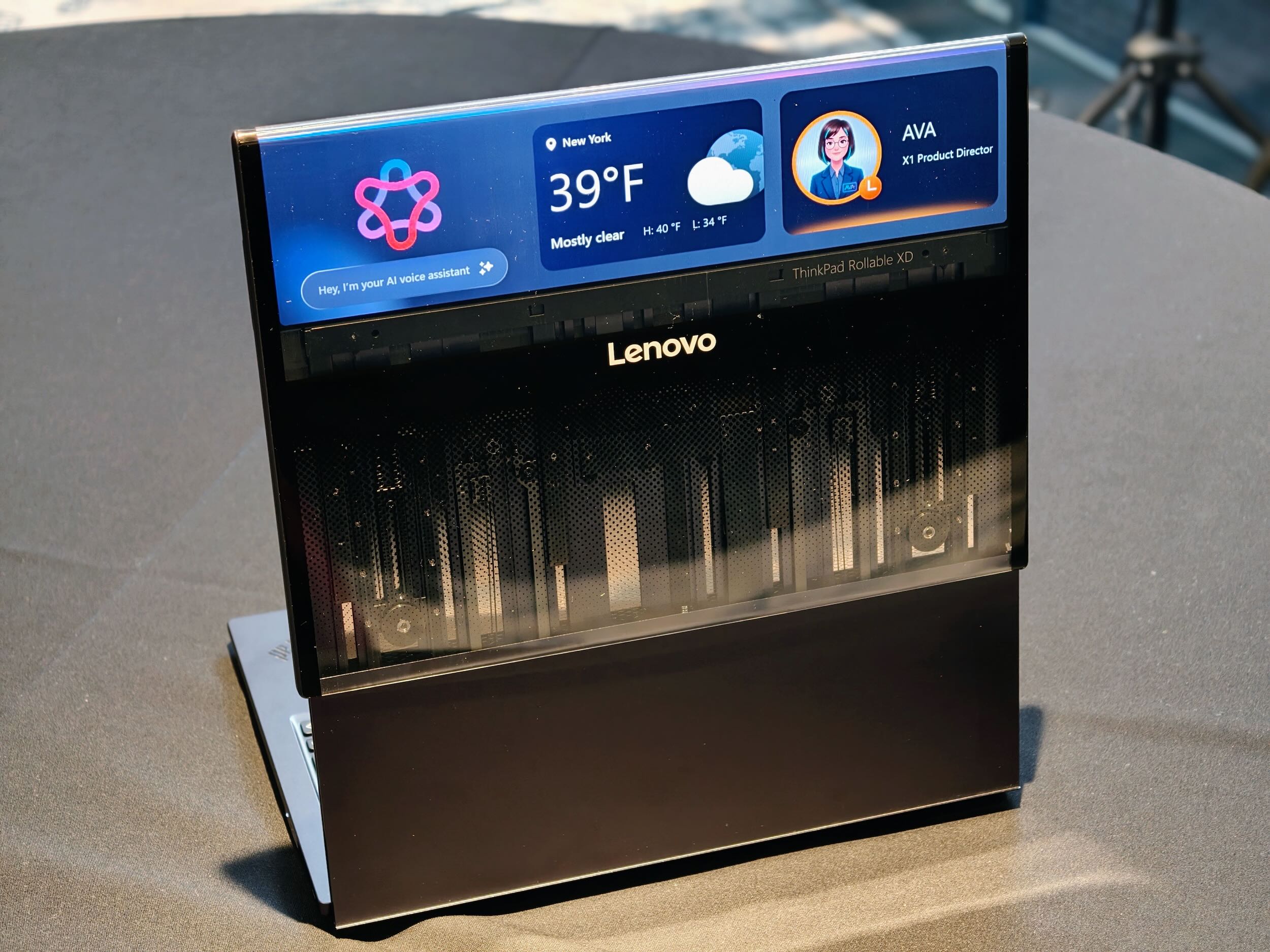
The concept device on the show floor is a smaller 13.3-inch device, which turns into a 16-inch device when the display is fully extended vertically. When the extra display is facing outward, it takes up only a part of the back of the laptop, but takes up enough space to display useful information large enough for others to see easily. The outward display can also function when the laptop lid is closed, allowing the device to be used as digital signage even when not in use.
The ThinkPad Rollable XD Concept is just an idea for now, but Lenovo has a habit of adding extended display concepts to the ThinkBook Plus line in short order, so we wouldn’t be surprised to see something like this hit the market before too long.
Lenovo AI Glasses Concept
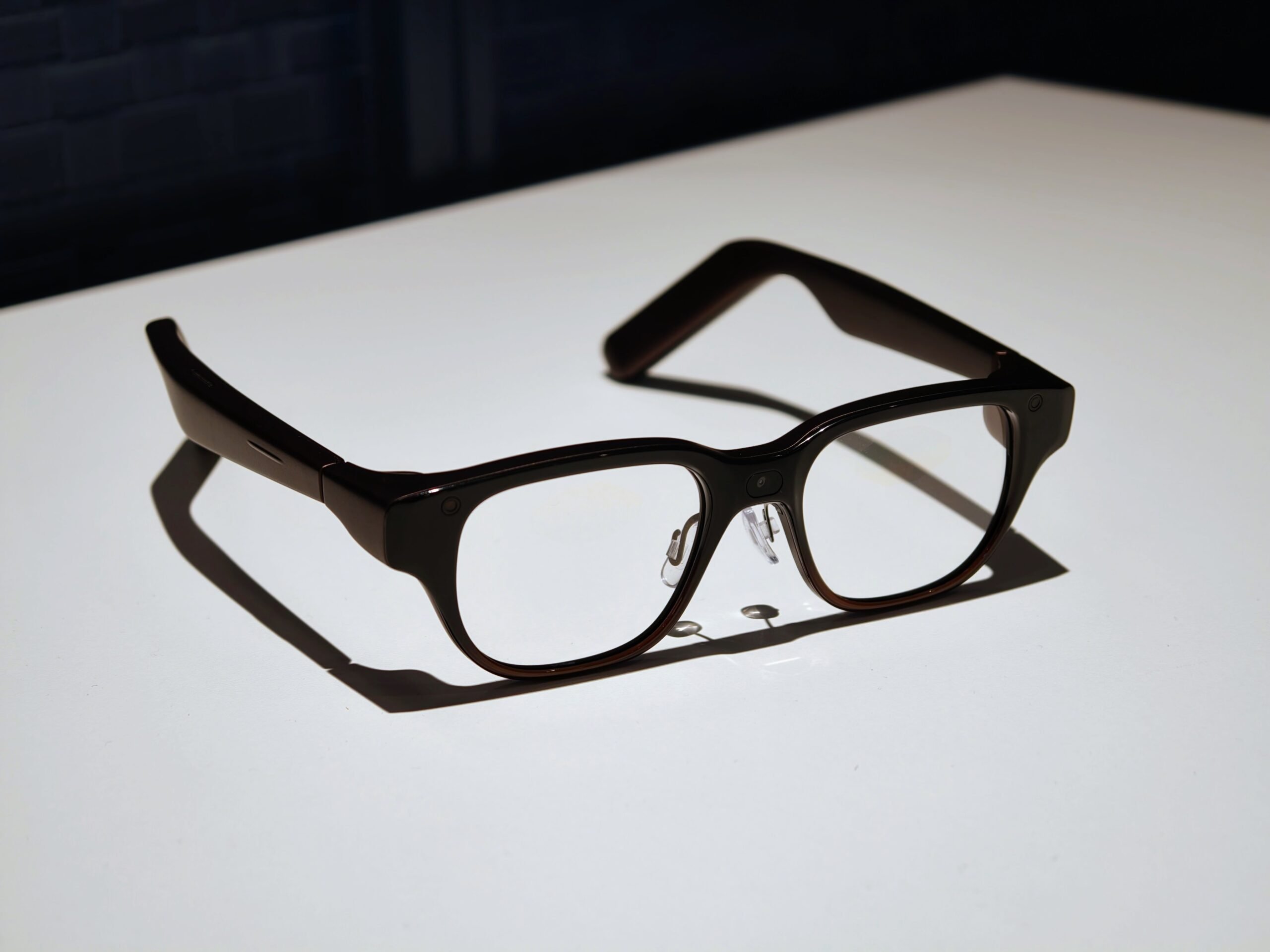
Lenovo pushed into Meta Ray-Bans territory with their own AI glasses concept at the show. The glasses immediately pass the eye test — rather than looking unsightly, the glasses look like an unassuming pair of thick-rimmed glasses. Within those glasses are displays, speakers, and microphones, which help make them a useful companion to your smartphone, laptop, and whatever other devices you have in your arsenal. The whole package weighs just 45 grams, making the glasses light and comfortable to wear for long periods.
Rather than operating alone, these AI glasses rely on a connection to another device — preferably, as many Lenovo devices as possible. Along with the concept glasses, Lenovo announced Qira, their own AI platform that can take data and your activity across all your devices to create an AI device that doesn’t miss anything. It’ll help if you end up working on a project using a bunch of different applications on a bunch of different devices — Qira can help Lenovo’s AI bring all that work together and help you present it more effectively.
By being connected with all your devices, the glasses can also flash calendar reminders and notifications in front of you. The glasses can also provide either text or audio real-time translations for work meetings that span multiple countries and languages, or act as your own personal teleprompter when it’s your turn to present.
Lenovo says their AI Glasses Concept last eight hours on one charge, covering an entire workday (well, an entire workday for some folks, anyway). Time will tell if Lenovo is able to extend that battery life without making the glasses substantially heavier, because a longer battery life sounds like it could really put these glasses over the top.
Lenovo Personal AI Hub Concept
Your average AI prognosticator will tell you that the real future in AI is small — rather than the large language models that see the most use these days (like ChatGPT), smaller edge models promise to be more localized and personalized, by only using data that is yours and relevant to you personally. The other side of that coin is the promise of more privacy, with your data staying private on your own AI server, rather than being harvested by large language models with or without your consent.
These kinds of local AI servers are being used by businesses now, and the Lenovo Personal AI Hub Concept wants to take them into homes. This concept is a mini-server housing two ThinkStation PGX AI workstations using the NVIDIA GB10 Grace Blackwell superchip, giving this box more than enough power to run some heavy-duty AI models locally, rather than relying on a cloud-based large language model. There’s also a transparent touch screen, which you’ll use to connect the hub to all your home and mobile devices and get to building out your AI models.
So, why? Well, you’ll definitely get more out of something like this the more tech you have in the home, in particular smart home devices. The Personal AI Hub would have the potential to learn your habits and the reasoning behind them over time, eventually allowing you to offload management of your whole home tech setup to your own personal home AI. Basically, we’re trying to get to the future where the home AI knows when to turn the coffee maker on every morning. That’s the theory, anyway!
This concept is a little further afield from the concepts we’re used to seeing from Lenovo, so we’re not sure when to expect something like this as a commercially available device. It’s something we’ll be keeping our eyes on in the year to come.