
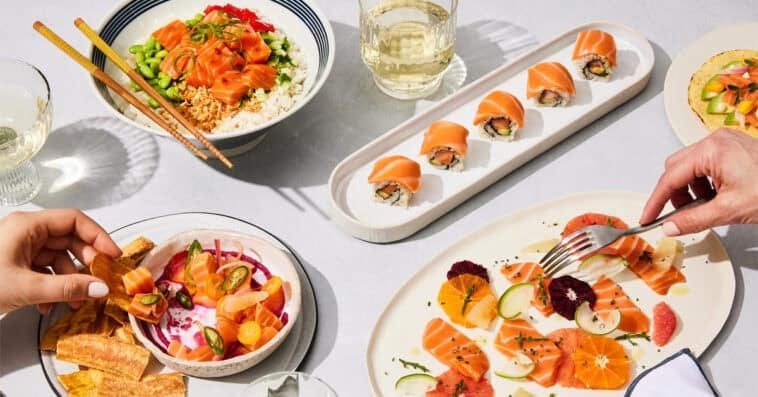
What if the next piece of salmon on your plate never came from the ocean or a fish farm? That future has officially arrived in the United States as FDA-cleared, lab-grown coho salmon makes its debut at select fine dining restaurants, giving diners a chance to taste seafood cultivated directly from fish cells. Here’s how this breakthrough became possible, where it’s being served, and why it could reshape the future of seafood despite ongoing controversy.
Wildtype brings cultivated seafood to restaurant tables
A new chapter in food technology has officially reached American diners. San Francisco-based startup Wildtype has begun serving its cultivated coho salmon at four restaurants across the U.S., becoming the first company to commercially offer cell-grown seafood after receiving clearance from the U.S. Food and Drug Administration (FDA).
The launch gives customers their first opportunity to order salmon produced from real fish cells instead of seafood harvested from oceans or raised through conventional aquaculture. It also marks one of the biggest commercial milestones yet for the cultivated protein industry, which has spent years working toward regulatory approval and public acceptance.
FDA review cleared the way
Wildtype reached the milestone after completing an extensive FDA safety review that began in 2022. Throughout the process, the company submitted multiple updates and additional safety data before the agency issued its “no questions” letter in May 2025.
The FDA concluded that Wildtype’s manufacturing process produces cultivated salmon that is as safe to eat as conventionally produced salmon, allowing the company to move forward with commercial sales in the U.S.. The decision made Wildtype the first business authorized to bring cultivated seafood to the American market.
Where diners can try lab-grown salmon
Wildtype’s cultivated coho salmon made its restaurant debut at Kann, the acclaimed Portland, Oregon, restaurant led by James Beard Award-winning chef Gregory Gourdet. The restaurant became the first dining destination in the country to serve the FDA-cleared cultivated seafood, initially offering the salmon as a limited-time menu item on select evenings.
The response helped pave the way for broader availability, with Wildtype gradually expanding its restaurant partnerships and bringing its cell-cultivated salmon to more diners nationwide. The product has since become a regular menu offering at Kann and has expanded to three additional restaurants, bringing the total number of U.S. dining locations serving Wildtype’s salmon to four.
Among the first expansion locations is barmini by José Andrés in Washington, D.C., the acclaimed cocktail and culinary laboratory founded by renowned chef José Andrés. Wildtype’s salmon has also expanded to The Walrus and the Carpenter in Seattle, Washington, the celebrated oyster bar from chef Renee Erickson, and Kingfisher Bar and Grill in Tucson, Arizona.
For now, however, cultivated salmon remains a specialty menu item rather than an everyday grocery purchase. Production is still limited, and manufacturing costs remain significantly higher than those of traditional seafood, making restaurant partnerships the company’s initial focus. Wildtype plans to gradually increase production and expand into more foodservice locations before eventually pursuing retail availability.
How cultivated salmon is made
Unlike plant-based seafood substitutes designed to imitate fish, Wildtype’s product is genuine salmon created from real fish cells.
Those cells are grown inside carefully controlled bioreactors before being formed into sushi-grade cuts intended to closely match the flavor, texture, and nutritional qualities of traditional salmon. Because the product never enters the ocean, it also avoids some of the common concerns associated with wild-caught seafood, including mercury contamination, parasites, and pressure on declining fish populations.
Wildtype says its cultivated salmon is designed to provide the same omega-3 fatty acids and rich taste that consumers expect from conventional salmon while offering a more controlled production process.
Regulatory roadblocks and the road ahead
Wildtype’s commercial launch comes as cultivated meat and seafood continue to generate both excitement and controversy across the U.S.
Although the FDA has cleared several cultivated protein products for sale, the regulatory landscape remains divided. Some states have enacted or proposed legislation banning the sale of cell-cultivated meat and seafood, highlighting an ongoing national debate over the future of food production.
Even so, Wildtype’s arrival on restaurant menus represents a significant step for the emerging industry, offering consumers a glimpse of how seafood could be produced in the years ahead.
Sources:
Air Guide
Food & Wine