
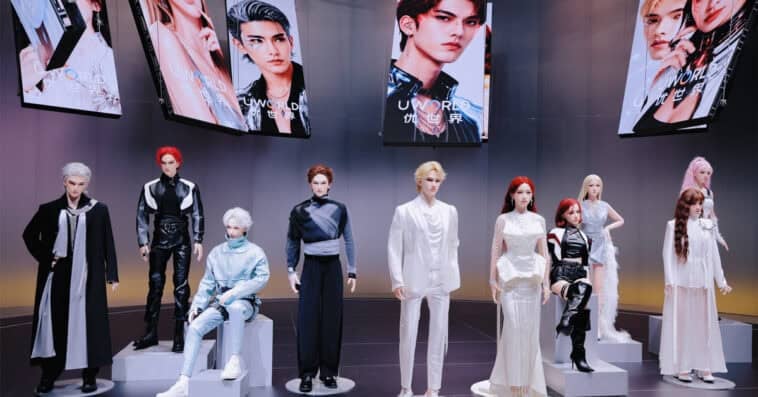
What if your most loyal companion isn’t human at all? A Chinese tech company has unveiled a new line of hyper-realistic humanoid robots designed for lifelong companionship, capable of being customized to resemble a loved one and programmed to never betray you. As thousands rush to pre-order these synthetic confidants, a chilling question arises: are we solving loneliness, or stepping into a sci-fi future that feels unsettlingly real?
A new era of AI companionship
In a bustling launch event in Shenzhen, Chinese robotics pioneer UBTech officially unveiled the U1—a groundbreaking humanoid robot billed as the world’s first full-sized, ultra-realistic companion built for mass production. Wrapped in lifelike synthetic skin and packed with advanced sensors, the U1 is designed to do what data alone cannot: alleviate human loneliness through artificial emotional intelligence.
Equipped with high-definition eye cameras, chest sensors, and sensitive microphone arrays, the U1 navigates human interaction by actively reading facial expressions, tracking vocal tones, and recognizing users’ fluctuating emotions over time.
“Our bionic robots can accompany you for a lifetime,” said Michael Tam, head of UBTech’s consumer brand UWorld, during the launch presentation. “It will never betray you, will always be loyal to you, and will love you unconditionally.”
The U1 is not a one-size-fits-all machine. UBTech is offering buyers the unprecedented ability to fully customize the robot’s face, hairstyle, and wardrobe. This allows the android to mimic a favorite fictional character, a mainstream celebrity, or even a deceased or distant loved one.
However, synthetic devotion comes with a premium price tag:
- The Standard U1 Model: Starts at 119,800 yuan (approximately $17,600). It features a four-hour battery life and can move its head, eyes, and mouth to mirror natural human expressions.
- The U1 Ultra Version: A premium, highly advanced iteration priced at a staggering 990,000 yuan (approximately $145,700).
Despite the high cost, consumer demand has exploded. UBTech revealed it has already secured over 13,300 pre-orders, with the first wave of deliveries scheduled to ship out to homes this September.
Emotional support, not housework
While the U1 may look human, UBTech has established clear boundaries regarding its utility. The company explicitly stated that the robot is not an automated housekeeper; it cannot cook, clean, or run errands. Furthermore, the firm clarified that the machine is strictly intended for platonic companionship and is not designed for intimate or sexual relationships.
Instead, the U1 functions as an emotional anchor and caregiver, targeting single individuals and an aging population. Its integrated AI system is optimized to:
- Engage in fluid, personalized conversations.
- Log individual behavioral preferences over time.
- Detect subtle physical cues of stress or exhaustion.
- Provide vital health reminders, such as schedules for medication.
Recognizing the severe privacy anxieties surrounding always-on home cameras and microphones, UBTech emphasized that security is baked into the hardware. The company assured consumers that all user data processed by the U1 is strictly encrypted and will never be harvested to train its broader artificial intelligence models.
China’s robotics boom and the uncanny valley
The debut of the U1 arrives amid a massive, state-backed surge in China’s automation landscape. The nation has rapidly transformed into the global epicenter of robotics development. According to data from Barclays, China accounted for a staggering 85% of all global humanoid robot installations last year. Government figures further highlight this aggressive growth, revealing that more than 140 domestic companies have collectively introduced over 330 distinct humanoid robot models to the market.
Analysts suggest that companion androids could soon secure a highly lucrative and socially vital niche within mental wellness sectors and elderly care facilities.
However, market experts warn that widespread societal adoption still hinges on a delicate psychological threshold: overcoming the “uncanny valley.” If these machines look and act almost perfectly human but fall just short, they risk triggering deep-seated unease and discomfort in the very humans they were built to comfort. Whether UBTech’s promised loyalty can bridge that psychological gap will be put to the ultimate test this September.
Source:
The Business Standard