
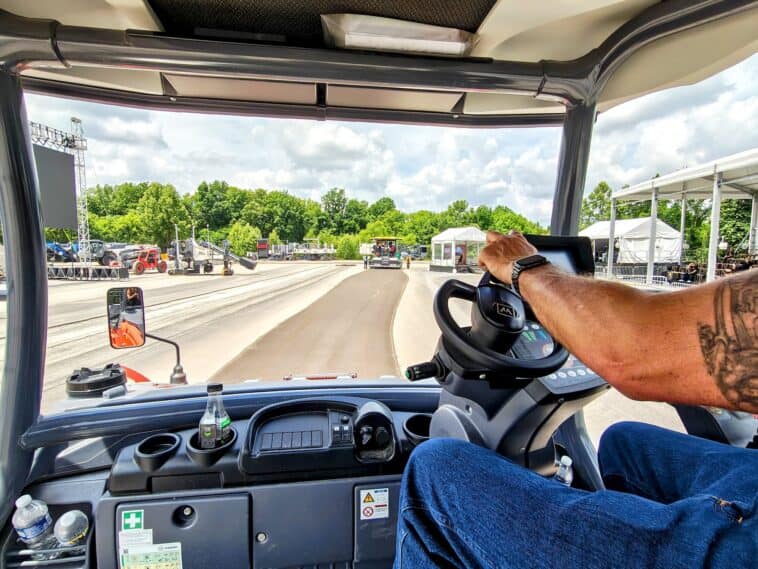
If you’ve hit a pothole hard enough to rattle your teeth lately, you’re not imagining things. American roads are in rough shape – roughly 40% of our 4 million miles are rated poor or mediocre. The catch is that fixing them is getting harder, not easier. The U.S. construction sector is projected to need close to 700,000 more workers by 2031, and more than 20% of the crews out there today are already over 55 years old. So the real question isn’t whether we need to rebuild our roads. It’s who’s going to do it, and how.
That “how” is where things get interesting – and why I found myself checking out a milling machine outside Nashville last week, watching it chew through old pavement like it was nothing.
The demo was at Wirtgen’s headquarters, where John Deere rolled out the heavy hitters of its roadbuilding lineup. Deere bought the Wirtgen Group back in 2017, and the pitch now is that these machines don’t just work, they talk to each other, so crews can work more efficiently without cutting corners.
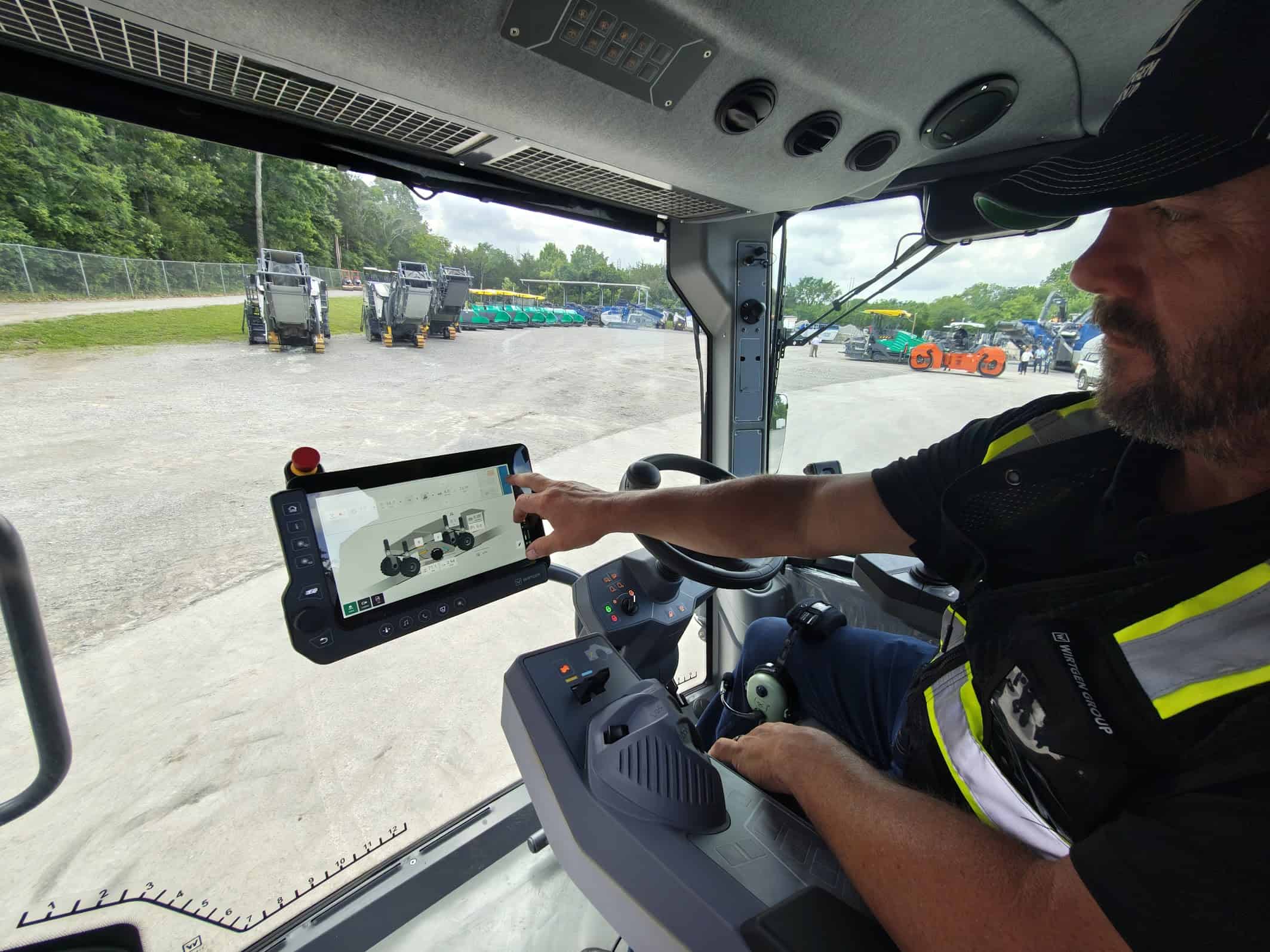
First up was the Wirtgen W210XF, the milling machine that strips off old asphalt and concrete before a road gets repaved. What struck me wasn’t the noise or the brute power. It was how smart the thing is. A system called Mill Assist reads real-time data to keep it running efficiently, trimming fuel use and emissions while it works. The experience makes you feel like you’re sitting on a giant computer that happens to eat roads for a living.
Then I hopped over to Deere’s Vögele Asphalt paver, the machine that lays the fresh asphalt down behind it. This one leans on automated steering and screed controls, plus Deere’s AutoTrac tech, which keeps the paver tracking straight and holding its paving width. Riding it felt less like construction and more like watching a very precise printer run a road off a digital model. There’s even satellite guidance from StarFire GNSS, keeping everything lined up as it goes.
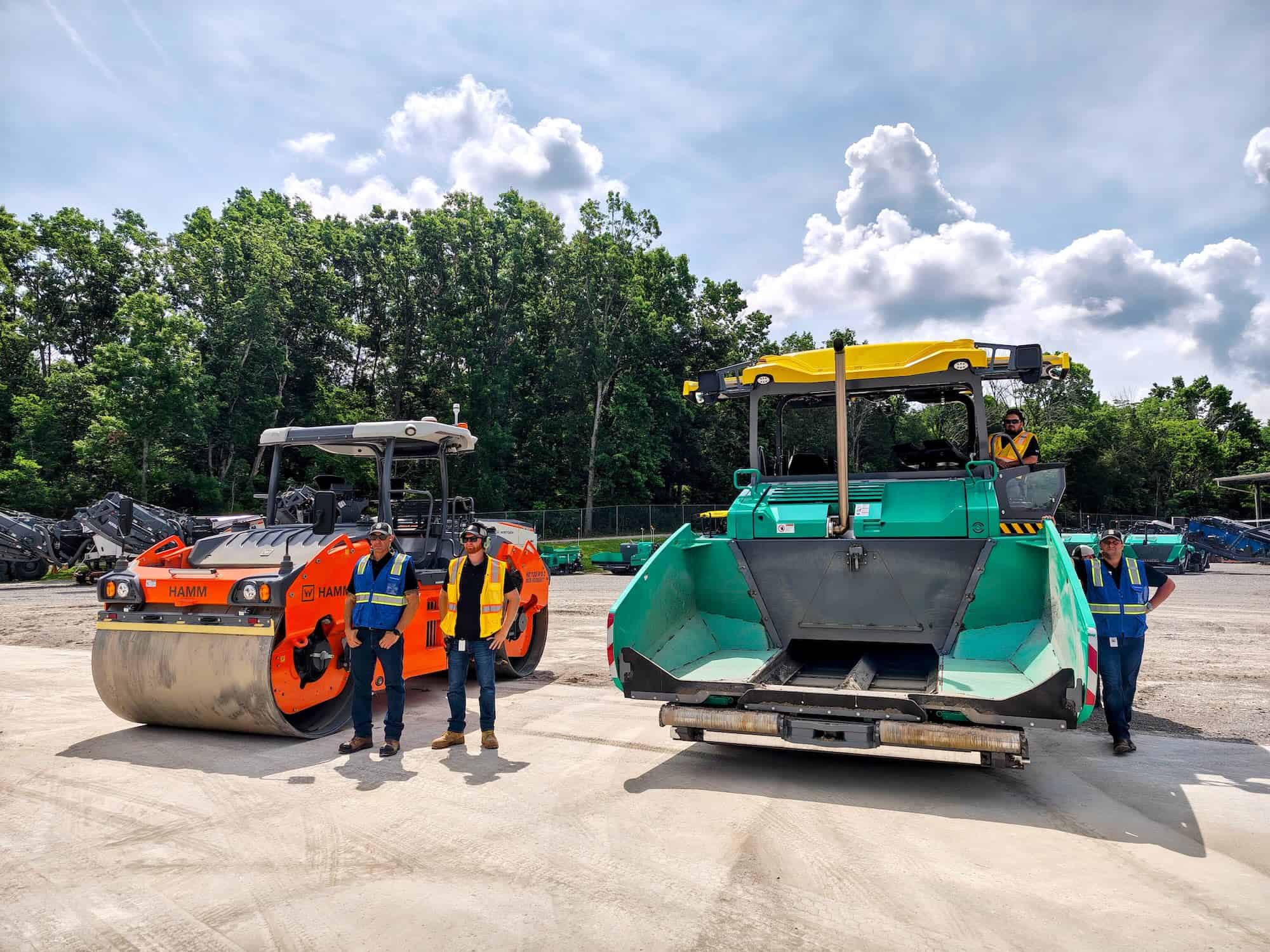
Rounding out the trio is the Hamm double drum roller, which packs the asphalt down to the right density so the road actually lasts. It monitors compaction in real time, so crews aren’t guessing. And all three machines feed into the John Deere Operations Center, a cloud platform that lets contractors track performance and pull documentation even while a job is still happening.
I honestly came in expecting big yellow equipment. I left thinking about who’s going to rebuild our roads, and how. Part of the answer, it turns out, is machinery smart enough to help crews work more efficiently without giving up quality.
The next time you cruise over a stretch of fresh, smooth asphalt, there’s a decent chance that automated equipment like this laid it down – and you’ll never know it was there. That’s kind of the point.
Sources: Polco