
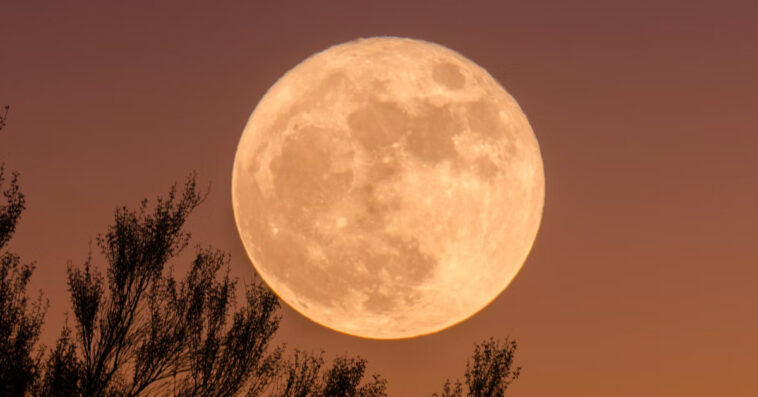
The sky, usually reserved for twinkling stars, is about to be stolen by a luminous spectacle as the final full moon of 2025 rises on Thursday night. While we’ve enjoyed a full year of stunning lunar performances, this moonrise is extra special. This full moon will appear noticeably larger than most others and glow with an intensity that makes it a must-see for skywatchers and dreamers alike. Whether you’re a seasoned astronomer or someone who simply appreciates a beautiful night sky, this lunar event promises a breathtaking finale to the year’s celestial show.
What makes 2025’s final full moon so meaningful
The final full moon of 2025 will make its grand appearance early in the month, rising on Thursday, December 4 at 6:14 p.m., according to the Old Farmer’s Almanac. Not only does this mark the last full moon of the year, but it also caps off a three-month streak of supermoons that have treated skywatchers to dramatic, larger-than-life moonrises.
Known as the “Cold Moon,” December’s full moon earns its name from the deepening chill that settles in as winter approaches. The Old Farmer’s Almanac notes that the term comes from the Mohawk people, reflecting the frigid conditions that define this time of year. It’s also been called the “Long Night Moon” by the Mohican, a nod to its rise during the lengthiest nights of the year near the winter solstice. Across Indigenous cultures, December’s full moon carries an array of evocative names, including the Drift Clearing Moon, Frost Exploding Trees Moon, Moon of the Popping Trees, Hoar Frost Moon, Snow Moon, Winter Maker Moon, Moon When the Deer Shed Their Antlers, and Little Spirit Moon — each offering a poetic glimpse into how different communities have observed and understood this powerful seasonal marker.
The science behind supermoon’s massive size and dazzling glow
Although there’s no strict scientific definition for a “supermoon,” the Natural History Museum notes that these lunar showstoppers typically appear about 14% larger and shine roughly 30% brighter than an average full moon. This striking difference is tied to the moon’s elliptical orbit around Earth. Because the moon doesn’t travel in a perfect circle, it sometimes drifts farther away — a point known as apogee, which can result in a smaller “micromoon.” At other times, it swings closer to Earth at perigee, making the moon look noticeably larger and more luminous. When a full moon aligns with this closest point, we’re treated to the breathtaking phenomenon we call a supermoon.
How to get the best view of this Thursday’s full moon
Catching this Thursday’s full moon doesn’t require any special gear — simply step outside, look up, and enjoy the show. However, if you want to elevate the experience, a telescope or even a basic pair of binoculars can make a remarkable difference.
In a previous interview with USA Today, Tim Brothers, a technical instructor and observatory manager at MIT, explained that stargazing is always enhanced with the help of quality optics. While the moon will be bright and easy to spot with the naked eye, a closer look through magnification can reveal craters, shadows, and surface textures that transform a simple moonrise into an unforgettable skywatching moment.
When is the next full moon?
If you happen to miss December’s Cold Moon, there’s another lunar treat on the horizon. The first full moon of 2026, known as the Wolf Moon, will rise on January 3, reaching its peak brightness at 5:03 a.m., according to the Farmer’s Almanac. Like December’s finale, this January moon will also be a supermoon, promising a spectacularly large and luminous display in the night sky. For skywatchers eager to start the new year with a celestial show, the Wolf Moon offers another perfect opportunity to marvel at the moon’s grandeur.
Source: The Providence Journal