
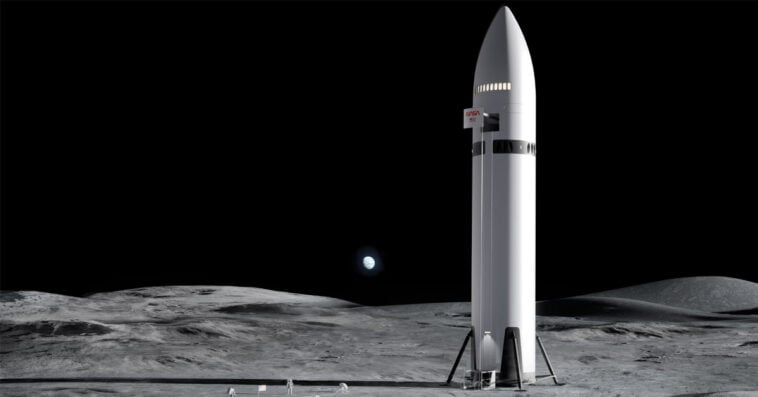
As the space race enters an electrifying new chapter, Elon Musk has just announced that his SpaceX empire will pivot from its long‑held dream of Martian domination to an even bolder and nearer‑term goal: building a self‑growing human city on the moon. With a bold ten-year countdown already underway, the moon is no longer just a pitstop; it is the new frontier for human civilization. Read on to discover how Musk plans to transform our nearest celestial neighbor into a bustling metropolis and what this pivot means for the future of deep-space exploration.
Elon Musk shifts SpaceX focus
Musk took to X on Sunday to share the news that SpaceX is pivoting its primary focus toward establishing a “self-growing city” on the Moon, effectively sidelining his long-held dreams of a Martian colony in favor of a much faster lunar timeline.
The shift is driven by cold, hard orbital mechanics. Musk noted that while Mars only becomes accessible every 26 months, the Moon is a mere two-day trip away, with launch windows opening every 10 days. This allows SpaceX to “iterate much faster” on infrastructure. He believes a lunar city is achievable in less than a decade, whereas Mars remains a 20+ year endeavor.
Despite the shift in priorities, Musk wrote that “the mission of SpaceX remains the same: extend consciousness and life as we know it to the stars.” The aerospace company isn’t abandoning its Mars ambition altogether, with Musk noting, “SpaceX will also strive to build a Mars city and begin doing so in about 5 to 7 years, but the overriding priority is securing the future of civilization and the Moon is faster.”
In a series of follow-up posts on X, Musk shared more details about SpaceX’s plans for its lunar city and Martian ambitions.
“The Moon would establish a foothold beyond Earth quickly, to protect life against risk of a natural or manmade disaster on Earth,” he wrote. “We would continue to launch directly from Earth to Mars while possible, rather than Moon to Mars, as fuel is relatively scarce on the Moon.”
He added, “SpaceX will build a system that allows anyone to travel to the Moon. This will be so insanely cool 🚀💫🤩 And Mars too.”
Factors that sparked SpaceX’s pivot
The shift in SpaceX’s trajectory isn’t just a change of heart; it’s a pragmatic pivot born from technical hurdles and ambitious new business integrations.
Musk’s roadmap to Mars has long been a moving target. As far back as 2016, he projected a landing by 2018, a date that was eventually pushed to 2022. By 2025, the narrative shifted again: SpaceX aimed to deploy five uncrewed Starships to Mars in 2026, hauling a fleet of Tesla-engineered robots. This specific window was chosen because the orbital alignment of Earth and Mars, which occurs only once every two years, would have trimmed the travel time to a swift six months.
Technical reality checks
The primary obstacle remains the Starship itself. The vessel’s development has been marred by “catastrophic failures across multiple test flights,” proving far more difficult to master than Musk initially forecasted.
Furthermore, SpaceX is under immense pressure from its commitment to NASA’s Artemis III mission. As the provider of the lunar landing craft, SpaceX is the linchpin for America’s return to the Moon. However, Starship’s developmental struggles have already forced NASA to delay the mission’s launch to at least 2028.
New SpaceX frontiers
Beyond rocket mechanics, Musk’s broader corporate empire is influencing this new direction. Two major factors have emerged:
- The xAI merger: A strategic consolidation with Musk’s AI startup.
- Orbital data centers: A massive initiative to launch a million data centers into orbit.
In a blog post earlier this month, Musk suggested that the synergy between Starship and these data centers could eventually move manufacturing off-world, potentially using the lunar surface as a base to build and launch satellites.
Source: Scientific American