
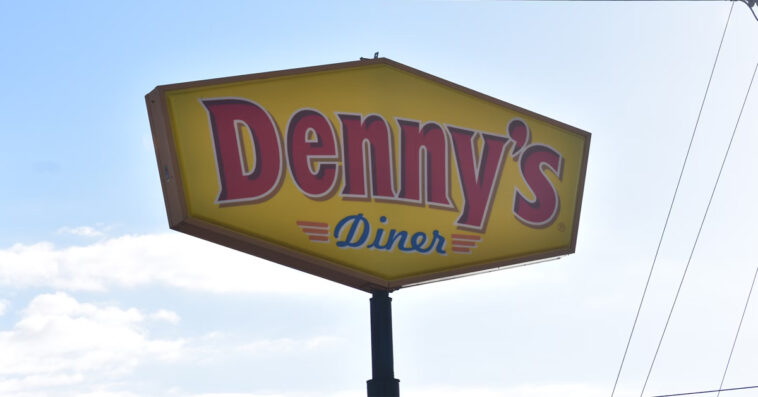
The familiar yellow-and-red Denny’s sign, a staple along American roadsides for decades, is about to change hands. In a major business move, the iconic 24/7 diner chain is being sold in a $620 million deal, marking yet another significant takeover by a private equity firm in the restaurant industry. Here’s everything we know about the deal.
Denny’s flips to new ownership
The beloved diner chain Denny’s is gearing up for a new era after announcing on Monday that it will be acquired by a consortium led by TriArtisan Capital Advisors, the private equity firm behind restaurant heavyweights like TGI Fridays and P.F. Chang’s.
Valued at $620 million, including debt, the all-cash transaction highlights investors’ growing interest in established casual dining brands. Under the agreement, TriArtisan — joined by Treville Capital and Yadav Enterprises (one of Denny’s largest franchise operators) — will purchase all outstanding shares for $6.25 each, representing a 52% premium over the stock’s last closing price.
Following the announcement, Denny’s shares surged nearly 48% in after-hours trading, signaling investor optimism as the iconic 24/7 diner prepares to transition from public to private ownership.
The deal is expected to close in the first quarter of 2026, after which Denny’s common stock will be delisted from the Nasdaq.
From coffee shop to American icon
Denny’s began its story in 1953 when Harold Butler and Richard Jezak opened a small coffee shop called Danny’s Donuts in Lakewood, California. Just two years later, Butler decided to expand beyond doughnuts, renaming the business Danny’s Coffee Shops and then, in 1959, changing the name to Denny’s to avoid confusion with a competing chain, Coffee Dan’s.
By focusing on affordable, hearty meals served around the clock, Denny’s carved out a niche as America’s go-to diner for late-night comfort food. Its famous “Grand Slam Breakfast,” introduced in the 1970s and inspired by baseball legend Hank Aaron, became a cultural staple, cementing Denny’s as the quintessential 24-hour family restaurant.
The brand’s success led to rapid nationwide expansion through the 1960s to 1980s, and by the 1990s, Denny’s had established itself as a household name with thousands of locations across the U.S. and abroad. Over the years, ownership has changed hands multiple times — from its early days as a public company under Denny’s Corporation to being part of TW Services, which later became Advantica Restaurant Group, and eventually returning to operate under Denny’s Corp.
Despite challenges, including bankruptcy scares and shifting dining trends, Denny’s has remained resilient by modernizing its menu and embracing franchise growth. Now, with its acquisition by TriArtisan Capital Advisors, Treville Capital, and Yadav Enterprises, the iconic diner once again enters a new chapter — one that could redefine its legacy in the ever-evolving restaurant landscape.
Private equity’s growing appetite for restaurant
Denny’s sale is the latest example of a growing trend reshaping the dining landscape: private equity firms snapping up well-known restaurant brands. In recent years, investment groups have moved aggressively to acquire established chains such as Subway and Dave’s Hot Chicken, betting on the enduring appeal of recognizable names and loyal customer bases. And just last month, Apollo Global Management had submitted a renewed bid to take pizza giant Papa John’s private.
The reasoning behind this buying spree is clear — legacy restaurants offer stability and brand recognition at a time when the broader dining industry is recovering from pandemic-era disruptions. For private investors, these brands present an opportunity to modernize operations, streamline costs, and ultimately resell at a profit. In some cases, firms see potential in expanding franchising networks or leveraging technology to boost efficiency and sales.
Source: Reuters