
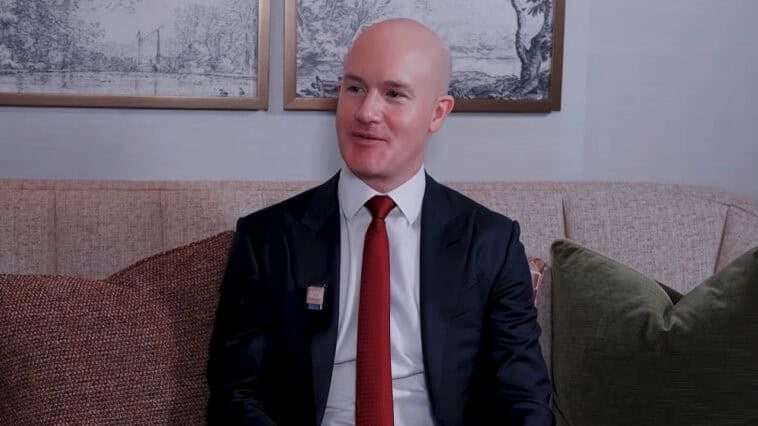
For many billionaires, giving away a fortune is seen as a responsibility — but Coinbase CEO Brian Armstrong has a very different view. Despite his estimated $8.7 billion net worth, Armstrong says he has no plans to follow the traditional path of philanthropy, arguing that many charities can actually be a “net negative on the world.” So why does one of crypto’s biggest names reject an idea that is often celebrated as a way for the wealthy to give back?
A different view of billionaire philanthropy
For generations, some of America’s wealthiest industrialists turned to philanthropy as a way to give something back—and, at times, to soften public resentment over how their fortunes were made.
Andrew Carnegie, one of the country’s richest businessmen of the late 19th and early 20th centuries, famously funded libraries across the United States and other parts of the world. John D. Rockefeller helped finance medical research, including work that contributed to the fight against hookworm. J.P. Morgan, meanwhile, donated extensive collections of books, artwork and other cultural treasures to museums and institutions.
Philanthropy became closely associated with the idea that immense wealth should come with a responsibility to society.
But that tradition may be losing some of its appeal among today’s billionaires.
While prominent figures such as Microsoft co-founder Bill Gates continue to devote enormous sums to charitable causes, Coinbase CEO Brian Armstrong has taken a decidedly different position. The billionaire says he is skeptical of philanthropy and believes charitable organizations can sometimes create more problems than they solve.
How philanthropy can do more harm than good
Armstrong recently shared his unconventional views on philanthropy during an appearance on the Katie Miller Podcast, where he challenged the widely held belief that charitable giving is inherently beneficial.
“The common view is that philanthropy is a noble cause,” Armstrong said during the podcast. “And like, Bill Gates after the DoJ thing is like, ‘I’m going to go rehabilitate my image, I’m going to do philanthropy.’”
For Armstrong, however, using massive charitable foundations for reputational rehab isn’t just self-serving — it’s inefficient and counterproductive. He argues that modern charities regularly drift away from their core missions, making them ineffective vehicles for driving real human progress.
“I guess I have sort of a contrarian view where a lot of charities and philanthropies are actually net negative on the world,” Armstrong continued. “And they get captured. It’s actually remarkably hard to find a foundation that has not gotten captured by ideology.”
His argument goes beyond simply questioning whether wealthy people give enough. Armstrong is suggesting that charitable giving itself can sometimes have unintended consequences, particularly when organizations become influenced by political, cultural or ideological beliefs.
Breaking away from Silicon Valley’s old playbook
Armstrong’s stance marks a drastic departure from the traditional expectations placed on the ultra-wealthy. Boasting an estimated net worth of roughly $8.7 billion — placing him comfortably within the top fraction of the world’s richest 1 percent — he has the capital to fund systemic global initiatives for decades.
Yet, when faced with the social pressure to set up giant charitable foundations, his stance remains unapologetic: “So far, I’ve just been like ‘I’m not going to do that.’”
As Silicon Valley’s wealth shifts from legacy software founders to crypto executives and AI leaders, Armstrong’s comments reflect a broader, more combative ideological divide. Rather than using institutional philanthropy to repair public relations or appease critics, tech’s new guard seems increasingly comfortable opting out entirely — leaving the future of billionaire-funded safety nets up in the air.
You can watch the full episode of the Katie Miller Podcast, featuring Armstrong as a guest, in the video below.

Source:
Futurism