
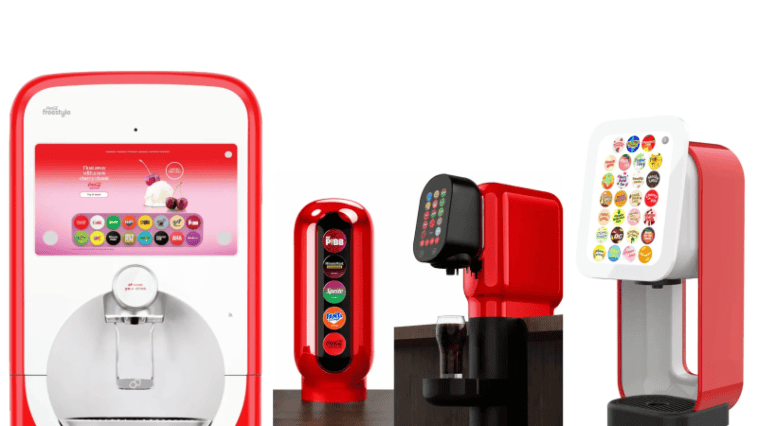
Coca-Cola has built a machine that automates the mess out of a dirty soda by adding a dairy module to its classic Freestyle dispenser.
The prototype keeps the familiar drip down the side of the cup that gives the drink its signature look while getting rid of the customization options. The entire device, which runs on a preprogrammed recipe, took about three weeks to build.
Once a regional novelty from Utah-based chain Swig, the dirty soda, which combines pop, flavored syrup, and cream, has since gone mainstream, showing up at KFC locations and grocery store shelves.
The trend works in Coke’s favor either way, since sparkling soft drinks remain its biggest category. Sprite, Schweppes and Fanta together account for 69% of the company’s overall unit case volume, and Coke’s own namesake soda made up 47% of global volume and 42% of U.S. volume in 2025.
The Atlanta experiment
The dairy prototype is one piece of a broader push happening inside Coca-Cola’s Atlanta labs, tucked into an office park away from headquarters. The company is also testing Micro Matic “mixology” dispensers with AMC Theatres to make brightly colored refreshers and developing a colorless, largely unflavored energy drink meant to launch with food service operators in the first half of 2027.
These investments come as restaurants lean harder into high-margin beverages to offset cooling in food spending.
According to the point-of-sale tracking platform, Circana, beverage-only servings outpaced both food-only and food-and-beverage combinations at restaurants during the second quarter (April through June 2026).
Recognizing this shift, major Coca-Cola clients like McDonald’s have responded by expanding their McCafe lineup in May to include refreshers and crafted sodas. This diversification of the beverage menu landed during a soft quarter for McDonald’s U.S. business, with same-store sales growth of just 0.8%.
Looking to further bolster that growth, the fast food giant also added the Red Bull Dragonberry Energizer to its menu earlier this month, a choice that might raise eyebrows given that Red Bull has no connection to Coke.
Operators may continue experimenting with drinks as a path to growth, but Coca-Cola’s newest energy drink, however, is designed with limits built in.
Employees control the pour, and a 12-ounce portion is capped at 106 milligrams of caffeine, roughly half that of a Celsius can and about the same size as a Red Bull. All this in an effort to mitigate the risk of caffeine content becoming a legal liability, as it did with Panera’s Charged Lemonade, which turned up in at least two wrongful death lawsuits.
Sources: Coca-Cola, McDonald’s, Seeking Alpha, NBC, Dragonberry Energizer, McDonald’s (Q2 2026), CNBC