
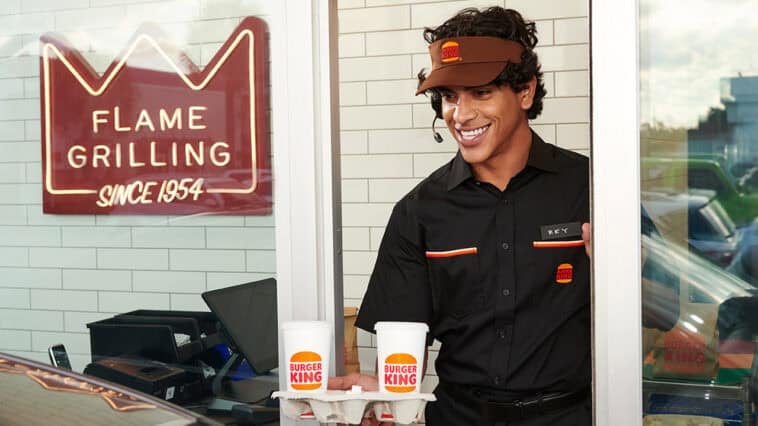
Burger King thought artificial intelligence could make drive-thru orders faster and easier, but customers aren’t exactly loving the idea of ordering from a robot. After facing backlash from diners who would rather speak to a real person, the fast-food giant is rethinking its approach to AI and how it handles drive-thru orders. The technology isn’t going away entirely, but Burger King is making changes that could reshape how customers interact with the chain at drive-thrus.
When the bot gets the boot
For several years, Burger King has been quietly experimenting with automated voice ordering at the drive-thru alongside tech partners like Google. The goal seemed simple enough: streamline operations and speed up service. However, real-world diners quickly threw a wrench into those high-tech plans.
Instead of enjoying a seamless digital exchange, many drivers found the experience off-putting, so much so that some simply drove away without ordering at all.
“We quickly realized if we force [AI to be] the only way that you can order or interact with our brand, it doesn’t go well,” explained Chakri Somisetti, Burger King’s vice president of brand technologies, during a panel at the Foodservice Technology (FSTEC) Conference. “We’ve seen that in our pilot restaurants, there are drive-offs because guests don’t want to talk to a bot.”
While the automated system isn’t being scrapped entirely, it remains active in a pilot group of about 50 to 70 locations — the company is recalibrating its strategy. The new priority? Ensuring customers always have a clear, hassle-free path to speak directly with a human employee if they prefer.
Diners still crave the human touch
Burger King’s pivot reflects a broader shift across the fast-food industry. Consumer research indicates that despite the rush toward digital automation, diners still overwhelmingly favor human interaction over artificial intelligence.
Data presented at the FSTEC conference by industry research firm Technomic revealed that ordering directly from a crew member remains the most popular choice, with 46% of consumers finding it appealing. In stark contrast, only 23% of consumers liked the idea of placing an order with an AI drive-thru bot, while an equal 46% found the concept actively unappealing.
“I’m not saying kiosks and AI ordering don’t make sense, but it is not for everyone,” said Rich Shank, vice president of innovation for Technomic. “You have to make sure that you’ve got ways of interacting with your customers that your customers will accept.”
Recognizing this reality, major competitors are also doubling down on traditional hospitality to revive foot traffic. McDonald’s recently announced an $8.5 billion investment initiative that includes dedicated hospitality training for employees, while Starbucks has seen success by revamping its cafes to feel warmer and more inviting.
Behind-the-scenes tech takes center stage
Burger King’s willingness to adjust course comes during a larger momentum surge driven by its “Reclaim the Flame” turnaround strategy. While customer-facing AI has met resistance, technology continues to play a vital role in the brand’s growth; it just looks a bit different than expected.
Over the past few years, the chain poured $400 million into unifying its data and technology foundation. Rather than forcing bots onto reluctant drive-thru customers, Burger King is increasingly directing its technological firepower toward back-of-house support for restaurant crew members.
One notable example is “Patty,” an internal AI assistant that communicates with kitchen staff through their headsets. Instead of replacing workers, Patty serves as a subtle digital coach, offering real-time operational reminders, even encouraging staff to say “please” and “thank you” during busy shifts.
Putting the guest experience first
Ultimately, Burger King’s decision to dial back its drive-thru bots highlights a disciplined approach to tech adoption: if an innovation doesn’t genuinely improve the customer experience, it gets benched.
“We always start with the charter of, what are we trying to solve, and the KPIs behind it,” Somisetti shared. “If it doesn’t actually answer what we’re trying to solve, then we don’t invest.”
For other restaurant brands navigating the tricky intersection of automation and customer service, Somisetti offered a straightforward rule of thumb:
“Invest in the experience and then invest in how to solve for the team members in the kitchen so they can focus more on making the best food for your guests.”
Source:
Nation’s Restaurant News