
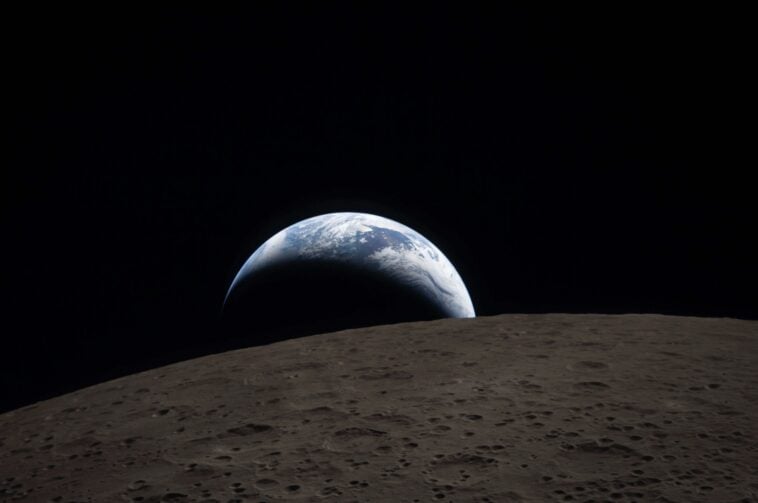
After a history-making trip around the Moon, Artemis II is now racing toward what may be the
most nerve-racking phase of the entire mission: reentry. The real white-knuckle moment comes
when NASA’s Orion crew capsule slams back into Earth’s atmosphere at nearly 24,000 mph,
turning the spacecraft into a controlled fireball, with Splashdown targeted for 8:07 p.m. EDT on
Friday, April 10, 2026, off the coast of San Diego.
This is the point where spaceflight stops being majestic and starts becoming brutally physical.
Orion will separate from its service module at about 7:33 p.m. EDT, perform a final burn to set
the proper entry angle at 7:37 p.m., then hit the upper atmosphere at 400,000 feet around 7:53
p.m. EDT. At that moment, the astronauts are expected to feel up to 3.9 Gs, while plasma builds
around the capsule and triggers a planned six-minute communications blackout. In plain
English: for several minutes, Orion will be wrapped in superheated ionized gas, moving at
almost 35 times the speed of sound, with Mission Control unable to talk to the crew.
That entry angle matters enormously. Come in too shallow and Orion could effectively skip off
the atmosphere instead of digging into it. Come in too steep and the heat load rises fast enough
to threaten the spacecraft’s protective systems. There is very little margin for error. Everything
has to happen with extraordinary precision as the capsule transitions from a spacecraft
returning from the Moon into, essentially, a blazing meteor with astronauts inside.
And yes, there is extra tension this time because Artemis I had heat shield problems.
When the uncrewed Artemis I mission returned in 2022, engineers found that Orion’s Avcoat
heat shield had lost charred material in ways they did not expect. During reentry, gases built up
inside the shield’s material and caused cracking and uneven shedding of the outer protective
layer. NASA said the crew would still have been safe had astronauts been aboard, but the issue
was serious enough to trigger a major investigation and changes for Artemis II.
Rather than replacing the entire heat shield on the Artemis II capsule, NASA adjusted the
spacecraft’s reentry conditions and return profile. In other words, this is not just a dramatic trip
home. It is also a crucial test of whether NASA has fully understood and mitigated one of the
biggest technical concerns hanging over the Artemis program.
The numbers alone explain why reentry is so unforgiving. Orion’s heat shield measures 16.5
feet in diameter, making it the largest ablative heat shield ever built for human spaceflight. It is
designed for lunar-return velocities of roughly 25,000 mph and must absorb and shed
enormous heat as the capsule barrels back toward Earth. The shield is made from 186 blocks of
Avcoat, a material specifically designed to char and erode in a controlled way, carrying heat
away from the spacecraft as it burns. Orion also uses roughly 1,300 thermal protection tiles on
other parts of the crew module to survive the descent.
But once Orion is deep enough into Earth’s atmosphere, the final braking system is not a rocket,
an engine, or some futuristic piece of hardware. It is the humble parachute.
After all the fire, speed, and violence of lunar reentry, Artemis II ultimately relies on a carefully
sequenced parachute system to bring the capsule down safely. The process starts with small
forward bay cover parachutes, which pull away protective covers from the top of the capsule so
the rest of the parachute system can deploy. Then come two drogue parachutes, which stabilize
Orion and begin slowing it at high altitude. Finally, three massive main parachutes open and do
the real heavy lifting, dramatically cutting the capsule’s speed from a dangerous plunge to a
survivable splashdown in the Pacific.
It is one of the coolest ironies of the mission. After traveling hundreds of thousands of miles
through deep space, after enduring the heat of reentry and the forces of atmospheric braking,
one of the most important systems standing between the crew and disaster is also one of the
oldest: giant space-grade parachutes.
That does not make them simple. Orion’s parachute system has to deploy in exact sequence
and under extreme conditions. If those chutes open too early, too late, or unevenly, the landing
could go very badly. But if everything works as designed, the mains will slow the capsule
enough for it to hit the ocean at roughly 20 mph, fast by everyday standards, but gentle enough
for the astronauts to walk away.
For all the Moon-glow romance of Artemis II, this is the part that gives the mission its real edge.
The crew has already made history by flying around the Moon and venturing farther from Earth
than any humans in decades. But the mission is not truly complete until Orion proves it can
bring astronauts safely home from deep space through fire, plasma, G-forces, and one final
descent under parachutes.
So while the lunar flyby gave Artemis II its wonder, reentry gives it its drama. This is the
moment when the spacecraft has to cash every check the mission has written.