
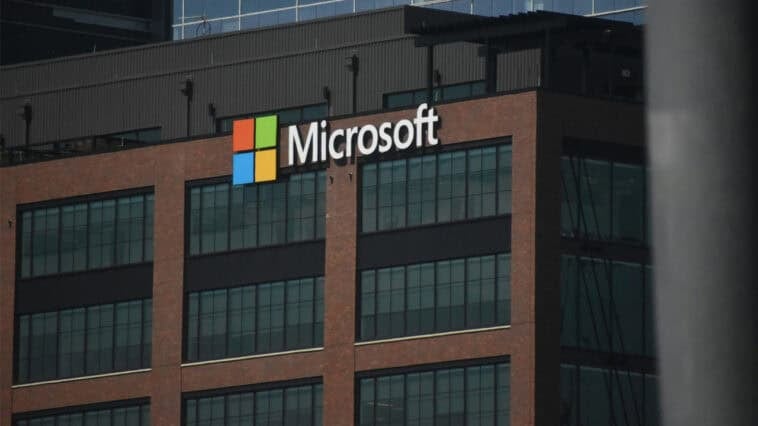
Microsoft is making a major move that could give thousands of employees a way out of their jobs as the tech giant pours billions of dollars into artificial intelligence. The company is reportedly offering voluntary buyouts to about 27% of its U.S. workforce, marking a significant shift as it balances its growing AI ambitions with the cost of running its business. But who qualifies for these buyouts, why is Microsoft making this move now, and what could it mean for the company’s future? Read on to find out what you need to know.
The scope of the voluntary exit offer
The software maker announced a new voluntary exit package targeting specific workers across the United States, Canada, India, and the United Kingdom. The program applies to employees at an experience level of 70 or below.
According to sources familiar with the matter, roughly 60,000 individuals are eligible for the program. This massive pool accounts for approximately 27% of Microsoft’s total global workforce of 223,000. Unlike previous downsizing efforts, this initiative extends as high as the vice-president level, widening the net significantly compared to earlier corporate restructuring.
Amy Coleman, Microsoft’s executive vice president and chief people officer, emphasized the flexibility of the program in an internal memo to staff: “The Voluntary Exit Offer reflects an important part of how we’re evolving our approach to change: creating greater flexibility and, where possible, more ways for employees to shape their next chapter. This builds on what we learned earlier this year through the Voluntary Retirement Program.”
Managing billions in AI infrastructure costs
The tech titan has been aggressively ramping up capital expenditures to build the massive data center infrastructure needed to handle skyrocketing AI computing demand. Microsoft currently supplies vital cloud services to major industry players like OpenAI, Anthropic, and a multitude of other tech firms.
This rapid expansion has put a noticeable strain on corporate finances. In July, Microsoft reported that capital expenditures for the September quarter were projected to exceed $50 billion — a massive jump from the $34.9 billion recorded during the same period a year prior.
As a result, the company has increasingly turned toward strategic cost-management. Earlier this year in April, Microsoft introduced its first-ever voluntary retirement program targeting roughly 7% of U.S. employees, followed by structural layoffs of 4,800 workers in July.
Despite these heavy financial outlays, Microsoft maintains a stronger cash profile than some of its primary competitors. While cloud rivals Amazon and Alphabet reported negative free cash flow in the second quarter, Microsoft posted $19.64 billion in positive free cash flow, though that figure was down 23% year-over-year.
A business model in transformation
At 51 years old, the Windows and Office maker is actively reinventing its core business model. The company is increasingly shifting toward usage-based pricing models for artificial intelligence, charging clients based on how much actual AI utility they consume. Internally, Microsoft has heavily integrated AI productivity tools across its engineering, sales, and supply chain departments, reporting noticeable operational improvements.
Even with these technological leaps, management’s stated goal is to secure the specialized talent necessary to drive future growth vectors without destabilizing the company’s long-term financial health.
Deadlines and next steps for employees
Participation in the buyout program is not uniform across the entire corporation. Sources indicate that certain key marketing, sales, and engineering teams have chosen to opt out of the exit offer based on ongoing customer commitments and shifting business priorities.
Eligible employees considering the package must finalize their decisions by early December, with departing employees slated to leave the company by December 31. While more than 30% of eligible workers took advantage of Microsoft’s earlier retirement program in April, insiders note that the company does not have a strict headcount target in mind for this broader initiative.
The announcement comes right as Microsoft prepares to unveil its third-quarter financial results, giving investors and analysts a clearer window into how the tech giant plans to balance its soaring AI expenses with workforce sustainability.
Source:
CNBC