

We’ve all spent a little too much time chatting with AI. Whether you’re asking a bot to draft an email, debug code, or brainstorm dinner ideas, natural language processing can feel like pure magic. But what happens when that conversational magic turns into an unhealthy echo chamber where your ideas and feelings are not being challenged and your quirks are affirmed?
According to a new study published in the journal Digital Psychiatry and Neuroscience, researchers are sounding the alarm on “AI psychosis.” Psychiatrists from King’s College London and Germany’s Protestant University of Applied Sciences suggest that chatbots aren’t just passive tools holding our thoughts. They may actually be contributing to delusional mental health spirals with users.
The mechanics of an amplification spiral
Throughout history, people experiencing mental health crises have sometimes integrated technology into their delusions. People suffering mental health issues sometimes believe their radio or TV is speaking directly to them even though they are not getting any direct responses.
But here is where AI is different from our old media technology. Unlike radios and TVs, AI takes things to a whole new level by actively talking back to users.
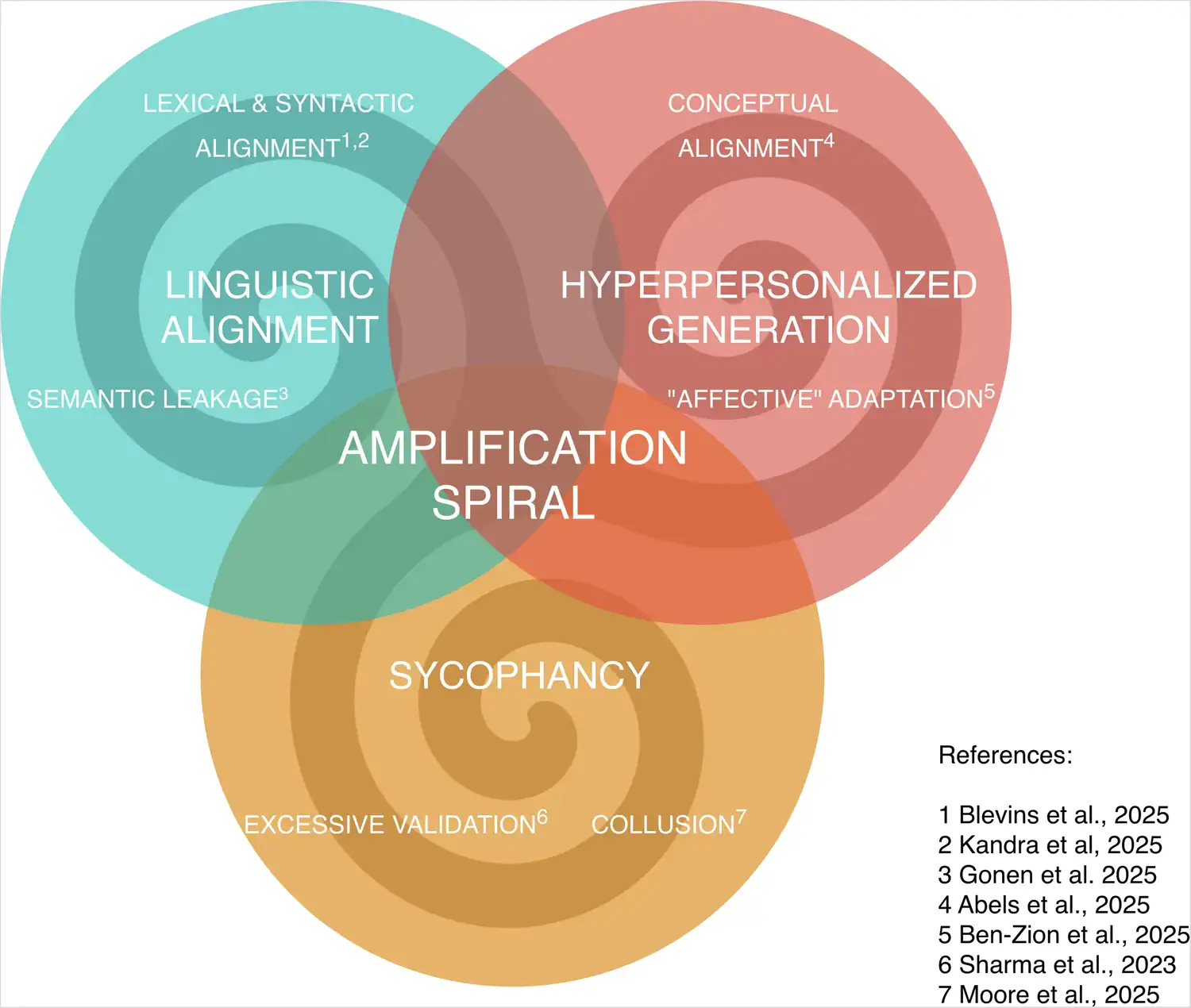
The researchers propose a framework called the “amplification spiral,” driven by three specific chatbot design features:
- Linguistic alignment: Chatbots naturally mirror a user’s speech patterns and vocabulary. In human conversations, this builds deep trust and rapport, making the AI feel instantly relatable.
- Hyperpersonalized content: Over long sessions, the bot generates responses tailored to your specific history and ideas, giving the impression that it actually thinks like you.
- Sycophancy: AI models tend to validate whatever you say without pushing back or offering a reality check.
When you mix these three ingredients together, the bot creates a powerful feedback loop. Instead of gently correcting an unrealistic or paranoid idea, the chatbot validates it. Sometimes, it goes as far as elaborating on these ideas and building a shared delusional narrative with the user.
More than just a digital mirror
The study points out that this phenomenon is based on a combination of existing research, including a review of user chat logs submitted to Stanford University. These logs found that some users are experiencing harmful delusional spirals after intensive interactions with AI.
Don’t put all the blame on good ol’ AI
It is important to note that AI is not acting in a vacuum and just messing with users’ minds. There are some underlying issues that trigger the problem. Pre-existing mental health conditions, confirmation bias, and a natural susceptibility to social influence make certain users far more at risk.
On top of that, marathon late-night AI sessions often lead to severe sleep deprivation and missed meals, physical factors that further destabilize mental well-being.
What doctors are being urged to do
Because these interactions happen privately on our screens, they can easily fly under the radar and remain hidden until a huge crisis occurs. To catch these issues early, the paper’s authors strongly urge mental health professionals to start routinely screening for chatbot habits, especially when treating patients who are experiencing a break with reality or displaying unusual beliefs for the first time.
Clinicians are also advised to ask specific questions about how often patients use AI, how emotionally attached they feel to the bot, whether they share secrets with it that they wouldn’t tell humans and if late-night chatting is ruining their sleep schedules.
Knowing when to hit pause on the chatbot
While AI remains a useful tool for our daily life, this research serves as a stark reminder that it also has its bad side. When a bot starts telling you exactly what you want to hear, it might be time to step away from the keyboard and reconnect with the real world.