
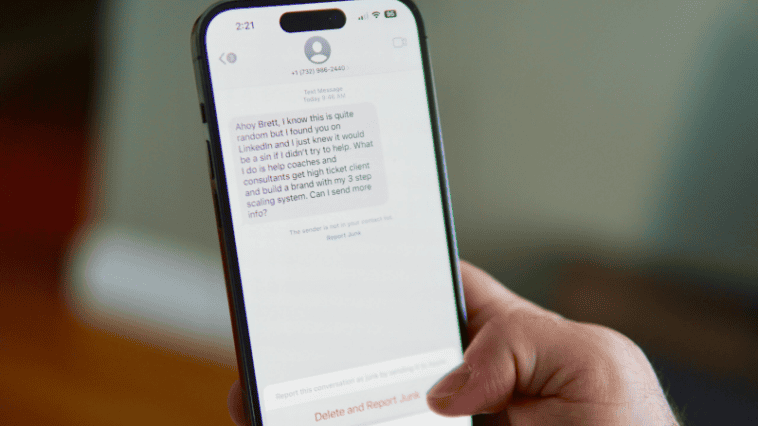
Federal agencies are warning about a surge in fake job offers sent via text message. These scams have been draining bank accounts and stealing Social Security numbers (SSNs) from people who believed they had landed legitimate remote work.
The Federal Trade Commission (FTC), the FBI’s Internet Crime Complaint Center (IC3), and the Social Security Administration’s (SSA) Office of the Inspector General (OIG) have all issued separate alerts attached to the scam at some point recently.
Pay-to-work is never real
The con typically begins with an unexpected text offering suspiciously easy remote work for good pay. The scammers then build trust through personable and friendly ongoing conversations before veering to requests for money, often framed as fees, deposits, or equipment costs.
At this point, before the victim has a chance to be wary, the perpetrators create a heightened sense of immediacy around this seemingly promising job by talking about how the openings are few and signing up would need to happen quickly. The scheme often ends with the victim either sending money or handing over personal data, and sometimes both.
The consistent warning issued across all the agencies regarding something like this is that a real recruiter would never ask you to pay money to begin a job.
The money-stealing version typically unfolds in much the same way, where a stranger reaches out with a vague but well-paid remote position. The victim is then pointed to a platform where small tasks supposedly generate earnings on a dashboard. To withdraw these assumed funds, the victim must first deposit money, usually in cryptocurrency, to “cover fees” or unlock the next payout tier. Unsurprisingly, the required deposits keep increasing, but the earnings never arrive.
The FTC calls this the gamified job scam. Its Data Spotlight report tied the crypto losses from these scams to record-high consumer complaint numbers.
Another version of this kind of scam targets the identity of the victim instead of their cash. As described in an FBI public service announcement, criminals pose as employers and request Social Security numbers, driver’s license copies, and banking details, presenting the requests as background checks, onboarding forms, or training fees. The data is then exploited for tax fraud, fake credit applications, and benefit theft long after the phony job disappears.
“Someone telling you to pay money to get money you supposedly earned is a sure sign of a scam,” the FTC said in its release on rising consumer reports.
When scammers pretend to be the feds
The SSA’s Office of the Inspector General, in an earlier alert, raised a related concern. The office warned about fake job offers that falsely claim ties to Social Security or other federal programs. The office stressed that Social Security does not recruit for private jobs and does not ask applicants to pay for training, equipment, or expedited processing.
The agencies all recommend the same practical defenses. Folks should treat unsolicited job offers with skepticism and verify the prospective employer through its official website. They must also refuse any requests for upfront payment, whether it’s labeled a security deposit, software license, training kit, or transaction fee, and hold off on sending scans of driver’s licenses, passports, or voided checks until the hiring process has been independently verified.
Anyone already caught up in any one of these schemes is urged to act fast. The FTC advises victims to document the messages, file a report through its complaint portal, and immediately contact their bank or crypto platform to try to freeze any transfers.
The IC3, on the other hand, seeks detailed reports, including wallet addresses, phone numbers, and domain names. Meanwhile, the SSA’s Office of the Inspector General urges those who handed over a Social Security number to monitor their credit, consider a fraud alert, and report any suspected misuse of benefits.
Sources: FTC, FTC Data Spotlight, SSA, IC3, BBB, The Financial Wire