
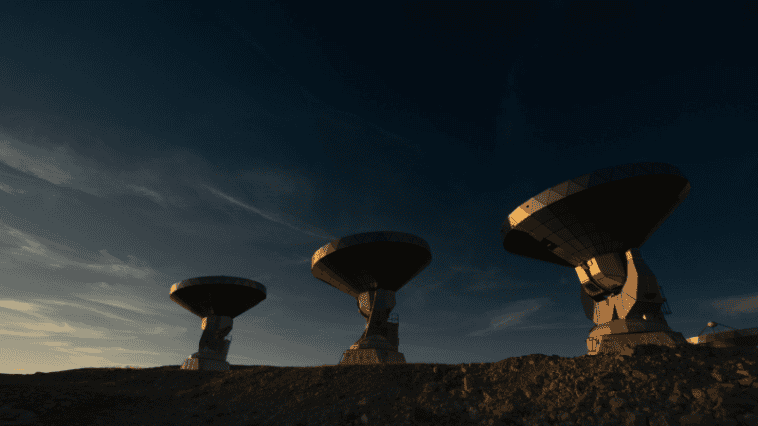
For decades, scientists have scanned the stars for even the faintest whisper of intelligent life. Now, with fresh government revelations about mysterious skies stirring up fresh excitement, a major international body has laid down some ground rules for the day that whisper finally arrives.
Scientists from the International Academy of Astronautics (IAA) have outlined what to do if aliens ever get in touch, and their top instruction is a strange one. Don’t answer.
The group’s refreshed Declaration of Principles, an eight-point set of post-detection protocols for those who monitor the sky for signals, arrived shortly after the U.S. government released two rounds of once-classified UAP files consisting of old FBI records and unidentified military footage into public view.
The release titled ‘Declaration of Principles Concerning the Conduct of the Search for Extraterrestrial Intelligence (SETI) – 2026 Update,’ coordinated through a formal announcement by the SETI Institute, serves as the first major overhaul of these guidelines in over 15 years, designed to address modern threats like AI-generated misinformation and deepfakes.
Silence first, questions later
If a signal ever turns up, the protocol requires it to be thoroughly picked apart by independent teams on separate instruments before anyone can attempt to call it real, a process that could take months or even years. Should the signal prove authentic, the public and the United Nations would be informed.
The most attention-grabbing provision declares: “Pending the outcome of such consultations, no reply should be sent,” with all discussions required to go through the UN. Nothing will get sent back until those talks conclude.
There’s a quieter worry threaded through the release. Anyone who blows the whistle on real contact is bound to be accused of making it up, which is why the guidelines call for shielding those people from harassment and the career damage that usually follows. The rumor mill is the other concern, as a false alarm that’s been let loose online could rattle the planet with little provocation.
To steer through such scenarios, the academy plans to create an international committee whose sole focus is assisting people in processing the reality that we are not alone.
The prospect of alien contact feels less far-fetched lately. Pilots and intelligence officers continue to go on record about mysterious orbs and UFOs, while the Pentagon has largely stopped dismissing such reports.
As Defense Secretary Pete Hegseth put it while announcing the latest declassifications: “It’s time the American people see it for themselves.”
Sources: IAA, Pentagon UAP Portal, SETI, NYP