
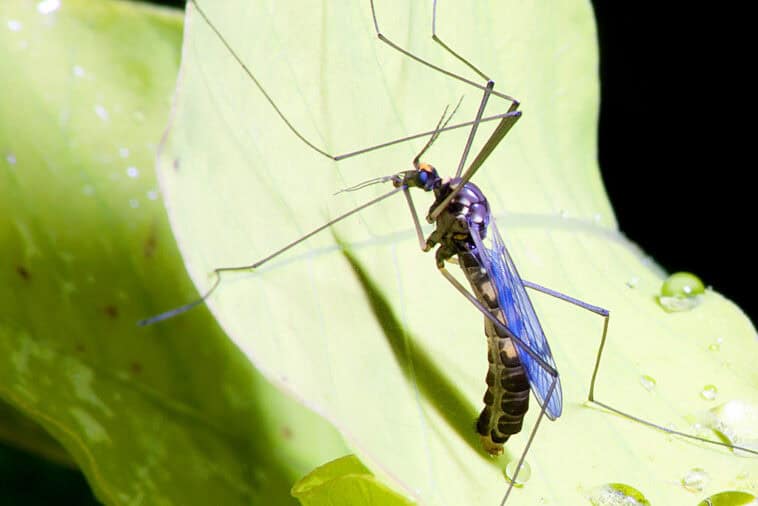
Google is trying to release up to 32 million mosquitoes in California and Florida.
The plan is part of a relatively quiet Google project called Debug, developed by Verily (Google’s parent firm Alphabet’s life sciences arm), and the company is currently waiting on federal approval to take it forward. The pitch, in the project’s own words, is to “stop bad bugs with good bugs.”
A bit of context on why anyone would want to do this. The CDC (Centers for Disease Control and Prevention) counts mosquitoes as the deadliest animal on the planet. Out of the more than 3,500 mosquito species worldwide, one stands out as the heavyweight in many contexts: the Aedes aegypti, which spreads dengue fever, Zika, and Chikungunya.
Debug has previously focused much of its work on the Aedes species, achieving strong results in Fresno, California, field trials with reductions in biting females of up to 68% in 2017, over 95% in 2018, and 84% in 2019.
However, this specific proposal targets Culex quinquefasciatus (the southern house mosquito), which is known vectors for West Nile virus and Saint Louis encephalitis.
“They’re a difficult problem to solve,” Google Debug wrote on its project homepage, noting that most mosquito-borne diseases don’t have a reliable vaccine or treatment. “Attacking mosquitoes with pesticides is unsustainable because they’re becoming less effective over time and can be toxic, [and] clearing standing water is not enough because people can never find all the places that mosquitoes breed.”
“We need a new approach,” the company concludes.
The approach in question involves more mosquitoes. The good bugs are the same species as the disease-spreading mosquitoes. These good bugs are lab-bred male mosquitoes infected with a naturally occurring bacterium called Wolbachia. When they mate with wild females, the resulting eggs do not hatch, preventing the next generation from being born.
Because male mosquitoes cannot bite or transmit disease, releasing them simply reduces the population of harmful mosquitoes over time.
Natural methods, modern scale
The team is pretty insistent that this is not a genetic engineering project as the technique uses a naturally occurring bacterium and does not involve chemicals, toxins, or genetic modification. Similar approaches have been proven safe and effective against other insect pests for many decades.
The initiative draws on the team’s combined scientific and technical skills, along with support from global partners, to breed and release the helpful males that curb the spread of disease-carrying mosquitoes.
What sets Google’s version apart is the additional engineering layer built on top. The team is using data analytics, sensors, and automation to scale up something called the Sterile Insect Technique (SIT), a proven concept that is older than Google itself.
The project involves close coordination with national and local governments, community leaders, and research institutes before any releases take place. The team plans to spend time in the communities where they intend to operate so the scientists “understand local concerns and considerations.”
For now, the initiative is sitting in front of the Environmental Protection Agency (EPA), which is reviewing Google’s Experimental Use Permit (EUP) applications under the Federal Insecticide, Fungicide and Rodenticide Act (FIFRA).
Details of the review were made public in a Federal Register notice, which reveals that the proposal calls for up to 16 million mosquitoes to be released in Florida in the first year and another 16 million in California in the second year.
Sources: Debug, KTLA 5, Debug Fresno Trials, Federal Register