
A Swedish study is shaking up what doctors thought they knew about Alzheimer’s risk and diet, and for millions of people with a specific gene variant, the news is surprisingly good.
Researchers at Karolinska Institutet in Sweden followed more than 2,100 adults over 60 for up to 15 years, tracking what they ate and how their minds held up over time. The people carrying high-risk APOE gene variants (the strongest known genetic risk factor for Alzheimer’s and other dementias) who ate the least meat had more than double the dementia risk of those without the variants.
Increasing the meat intake to around 870 grams a week essentially eliminated the doubled risk.
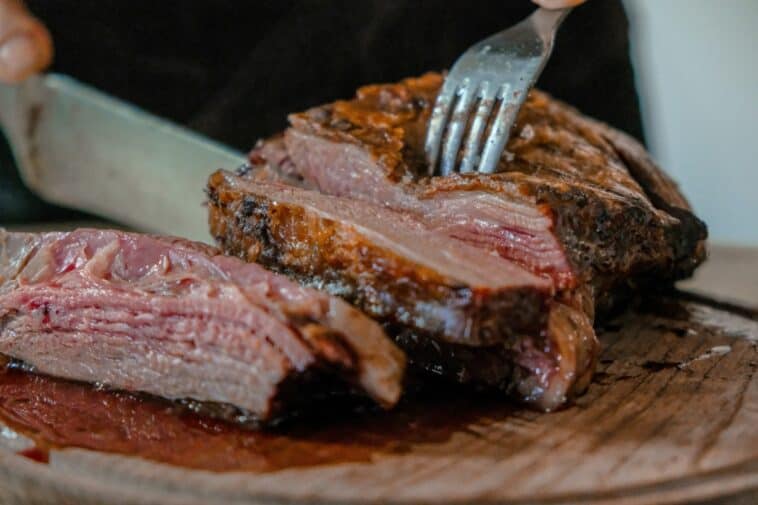
That said, the type of meat made a real difference, however. Processed meat didn’t help anyone, as higher amounts of it were tied to worse outcomes across the board, gene variant or not. The lower dementia risk showed up specifically with unprocessed meat, and carriers who ate more of it also had a lower risk of death from other causes over the course of the study.
Lead researcher Jakob Norgren has a theory for this genotype-specific benefit. The high-risk APOE variant is actually the oldest form of the gene humans carry, one that was around long before people started farming. For hundreds of thousands of years, the people carrying it lived almost entirely on animal-based foods. Norgren thinks some of that biology may still be active today.
Essentially, although the study tracked people over time, it didn’t run controlled experiments, so the direct cause isn’t nailed down fully yet, and more research is yet to come.
Sources: Science Daily, JAMA Network, Karolinska Institutet