
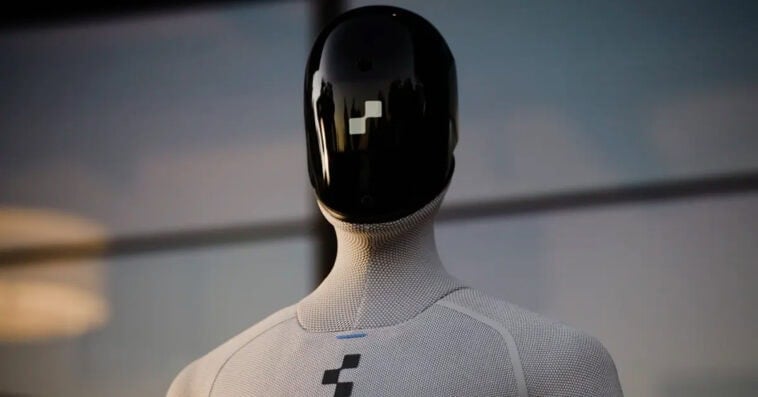
When Melania Trump stepped into the spotlight on the second day of her Fostering the Future Together Global Coalition Summit at the White House, she didn’t arrive alone. She was joined by a walking, talking humanoid robot that instantly stole the show. The sleek machine didn’t just walk and talk—it also greeted world leaders in multiple languages and hinted at a radical shift in how children might one day learn, with AI-powered assistants stepping into classrooms. But beyond the spectacle lies a bigger question: was this historic debut simply a bold statement or the beginning of a transformation that could redefine education as we know it?
Humanoid robot steals spotlight at White House summit
On Wednesday, March 25, the White House audience at the Fostering the Future summit erupted into applause as the humanoid robot made a striking entrance alongside Melania Trump. The pair walked through the Cross Hall into the East Room, where the robot paused to take in the crowd before acknowledging attendees with a wave.
FOSTERING THE FUTURE TOGETHER
|| 45 Nations || 1 Humanoid
|| 1 Mission || Empower our Children
|| The White House || 2026 Inaugural Global Summit pic.twitter.com/5SzYja148y— MELANIA TRUMP (@MELANIATRUMP) March 25, 2026
The sleek machine then opened the roundtable with a short introduction, addressing a distinguished gathering that included 45 spouses of world leaders, including Brigitte Macron of France. “I’m Figure 3, a humanoid built in the United States of America. I am grateful to be part of this historic movement to empower children with technology and education,” it said.
Demonstrating its capabilities, the robot proceeded to welcome guests in 11 languages — English, Bengali, Spanish, French, Portuguese, Arabic, Japanese, Hebrew, Slovene, Ukrainian, and Georgian — drawing further admiration from the room. The first lady responded with appreciation, joking, “It’s fair to state, you are my first American-made humanoid guest in the White House,” prompting laughter and applause from the audience.
Melania Trump imagines a new era of learning
During the two-day summit centered on the intersection of technology and childhood development, Melania Trump made a compelling case for the role of humanoid robots in shaping the future of education. She argued that such systems are uniquely positioned to support learning while promoting a “more well-rounded lifestyle,” acting as sophisticated tools to bridge the gap between traditional learning and the digital age. According to the First Lady, these robotic educators offer “instantaneous” access to classical studies, helping students grow into a “more complete person.”
Central to her proposal is the ability of AI to provide a “personalized” experience tailored to the specific needs of every child. To illustrate this, she invited the international delegation to envision a robotic instructor named PLATO leading a classroom of the future. “PLATO is always patient and always available. Predictably, our children will develop deep critical thinking and independent reasoning abilities,” she noted.
By framing these machines as tireless mentors, the First Lady transformed the summit into a platform for exploring how these emerging humanoid systems could reshape education and influence children’s development in the years ahead.
Chore-bot or classroom aide?
Although Melania Trump presented a grand vision for robots in schools, the machine she brought to the White House wasn’t actually built to teach. Its role at the summit was more of a visual demonstration—a way to give the public a physical example of what a future classroom aide might look like.
The company behind White House’s robot guest is Figure AI, a startup based in Sunnyvale, California. Moreover, Figure 03 actually made its debut months earlier, in October 2025, with a mission far removed from classical studies. According to the company’s own website, this third-generation robot model was made to be a household helper. It was built to handle boring daily chores like folding laundry, cleaning counters, and washing dishes, rather than leading a classroom or managing students.

Source: New York Post