
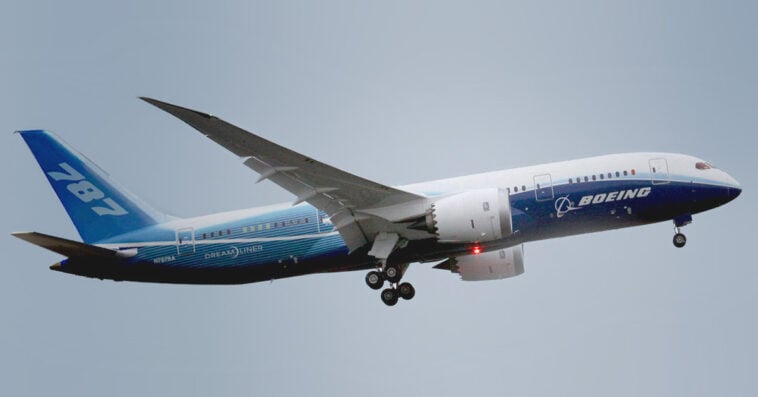
Boeing has officially retired ZA004, the last 787‑8 Dreamliner test aircraft, closing a chapter that forever changed the skies. For 16 years, this jet wasn’t just a plane; it was a flying laboratory, testing innovations that redefined long‑haul travel, from fuel-efficient engines to lightweight composites that unlocked new nonstop routes. Keep reading to discover how Boeing’s retirement of the Dreamliner test jet ZA004 marks the end of an era, and what its legacy means for the future of flight.
Why Boeing retired ZA004
Registered as N7874, the ZA004 Dreamliner test aircraft joined Boeing’s flight test program in February 2010 and went on to log more than 2,250 flight hours over 670 flights —not carrying passengers, but carrying sensors, engineers, and experimental hardware. In 2011, it celebrated a major program milestone by completing the 1,000th flight for the 787 series.
But all good things must come to an end, and for ZA004, that end was dictated by economics. As the 16-year-old airframe approached a massive maintenance milestone, one that would have required a multi-million-dollar engineering overhaul, Boeing made the pragmatic decision to retire the veteran jet.
Its final journey took it from Boeing Field in Seattle to its permanent home at Pinal Airpark in Marana, Arizona, a renowned long-term storage and reclamation facility. In a poetic closing of the circle, the ferry flight was piloted by Captains Heather Ross and Craig Bomben, the same duo who sat in the cockpit for the aircraft’s very first flight nearly two decades ago.
Reflecting on the aircraft’s dual identity as a relic and a pioneer, Ross, who was the jet’s first chief project pilot, noted: “To the casual observer, it looks like an old aeroplane, but it’s always been the future.”
While ZA004 will now be harvested for parts to support the active global fleet, its true DNA lives on in every carbon-fiber wing and quiet engine nacelle currently in the sky. For instance, as of early 2026, there are approximately 1,250 Boeing 787 Dreamliners in service worldwide, operating across 85+ countries and serving more than 500 destinations.
The Legacy of ZA004
While most airplanes are built to carry passengers, ZA004 was built to carry the weight of an entire industry’s future. For 16 years, this specific Boeing 787-8 served as a high-tech laboratory in the sky, perfecting everything from high-speed aerodynamics and engine thrust to noise reduction and long-range safety standards.
The aircraft’s most defining moment arrived during a 2010 crisis. On November 9 of that year, an in-flight fire on another test plane (ZA002) forced an emergency landing and grounded the entire Dreamliner fleet. With the program’s survival on the line, ZA004 was chosen to lead the recovery. Though it was the third jet to join the test fleet, its data was so vital that Boeing actually fast-tracked its first flight ahead of its predecessor, ZA003.
Between December 2010 and January 2011, it served as the “proof of concept” for redesigned electrical systems and software. Its successful flights restored global confidence, allowing Boeing to resume testing and secure official safety certification by August 2011. This paved the way for the first passenger delivery to All Nippon Airways just one month later.
Aside from solving problems, ZA004 also pioneered sustainability. In 2014, it became Boeing’s second ecoDemonstrator, testing over 25 cutting-edge technologies, including:
- Ice-repellent wing coatings to improve safety and drag.
- Recycled carbon fiber doors to reduce manufacturing waste.
- Wireless sensors to eliminate miles of heavy internal wiring.
- Precision landing systems to help aircraft save fuel by flying more direct paths.
Even as recently as 2025, the veteran jet was still flying, helping certify the newest Rolls-Royce Trent 1000 XE engines, designed for greater durability and lower emissions.
As John Murphy, the 787’s chief project engineer, noted: “Sixteen years of service with The Boeing Company – that’s a legacy few test aeroplanes achieve. Test airplanes, like ZA004, don’t just prove what’s possible. They make the future real by translating design concepts into everyday safety, efficiency, and capability. ZA004’s legacy lives on in every 787 Dreamliner flying today and those yet to be delivered.”
Source: Aerospace Global News