
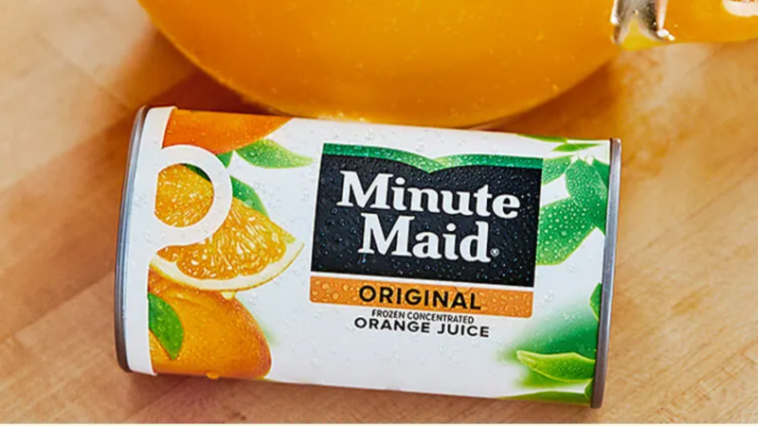
The ritual of pulling that cardboard can from the freezer, popping the metal lid, and watching that frozen cylinder of concentrate plop into a pitcher is pretty much a core memory for many of us. Add water, stir as if your life depended on it, and boom, breakfast was served.
That era is officially over ’cause Minute Maid is pulling its frozen juice cans from shelves in the U.S. and Canada.
The change affects the brand’s long-running line of frozen concentrates, including orange juice, lemonade, limeade, pink lemonade, and raspberry lemonade. Coca-Cola, which owns Minute Maid, reportedly confirmed that the products are being discontinued in the first quarter of the year.
The company’s decision was driven by changes in consumer demand. Frozen juice has steadily lost shelf space as shoppers shift toward refrigerated cartons and ready-to-drink options. The soft drinks manufacturer now wants to refocus on formats that better match what consumers want.
More Than Just Changing Tastes
The frozen cans have been part of American kitchens for decades, but sales have faded. Many retailers now stock fewer frozen beverages overall, prioritizing items with faster turnover.
The timing also comes as the orange juice market struggles. Consumption has declined in recent years, while production has dropped sharply in Florida. Citrus greening, a bacterial disease that damages trees and affects flavor, has cut the state’s orange output by more than 90% since it was first detected, according to state agriculture data.
Prices have followed an uneven path. After surging to record highs in mid-2025, orange juice futures have fallen more than 58% over the past year, according to Trading Economics figures.
The Origins of a Kitchen Ritual
Frozen juice concentrate has deeper roots than most grocery items. It was developed during World War II after researchers looked for a better way to supply vitamin C to U.S. troops. Lemon powder was already in use, but often went uneaten. Frozen concentrate proved easier to consume and preserve.
After the war, the product moved into mass production and became a breakfast staple, especially in the postwar decades. Families mixed it at home, one can at a time.
That routine has been disappearing for years.
Minute Maid says the frozen line will remain available only while the current stock lasts. After that, the freezer doors will stay closed.
Sources: CBC, Good Housekeeping