
At CES 2026, Roborock isn’t just coming for dirty carpets in North America — they’re coming for overgrown grass, too, and they’re doing all those chores efficiently and thoroughly enough to satisfy even the most keen-eyed grandmas.
After impressing us last year by sticking a sock-removing robotic arm on the Saros Z70 vacuum, they’ve come to Las Vegas this year with updated vacuums and a bigger push into robot lawnmowers that promise to keep homes looking their best while allowing us humans a little more rest.
Roborock Saros 20 and Saros 20 Sonic
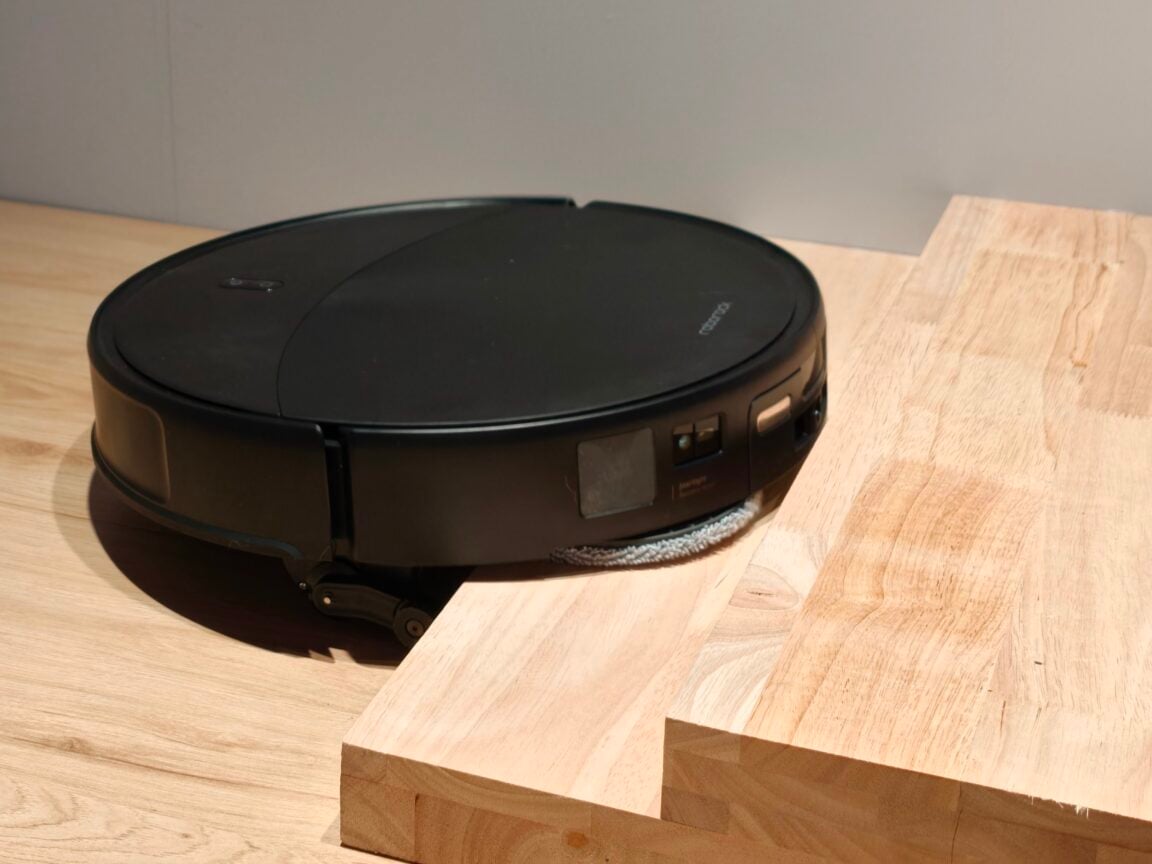
The Saros 20 and Saros 20 Sonic are follow-ups to the Saros 10, Roborock’s flagship robot vacuum and mop. While the chassis is close to the same size as the Saros 10, there are a lot of changes under the hood that make these bots more thorough and efficient.
Roborock put emphasis on upgrading the vacuum’s mapping and navigation capabilities this year. The StarSight Autonomous System is an upgrade over the old LiDAR detection system, now recognizing more potential obstacles that the vacuum can take into account when planning routes and mapping rooms. Once those obstacles have been detected, the AdaptiLift system, which uses a small arm to push the vacuum up over obstacles, can now clear obstacles up to 4.5cm high.
Cleaning capabilities have also gotten a lift. The extendable FlexiArm brush is still here to get into corners and edges, and the DuoDivide main brush still excels at loosening up dirt without getting a bunch of hair tangled in itself. Once that dirt has been loosened up, none of it should be left behind — the vacuums now have 35,000 Pa of suction power, a pretty massive number and a significant upgrade over last year’s models.
And, like before, the Saros 20 models can also mop hard floors, with wet mops that retract when the vacuum is cleaning carpet. The Saros 20 Sonic will put more emphasis on hard floors, with an extendable mop that can scrub more vigorously and reach corners and edges of hard floors more effectively.
Once cleaning is done, the vacuum heads back to its dock, where it’ll get its own spa day. The dock can clean the mop and brushes more vigorously than before — the charging dock has a cleaning station that now uses boiling water, which will do the job of killing bacteria and loosening up oil and grease stuck to the wet mop, before using warm air drying to ensure that bacteria don’t come back during the drying process.
Upkeep is largely automated, too. The dock automatically dispenses detergent, removes mops if the vacuum only needs to go on a dry carpet cleaning run, and refills warm water for mopping runs. I’d say the only thing you’d need to do is refill the water tank and take out the dirty water that accumulates, but even that you can avoid — if you have the right setup at home, it’s possible to have the dock specially installed and hooked up to running water and drainage.
Roborock doesn’t have a release date set for the Saros 20 series yet, but it should become available sometime this year.
Roborock Qrevo Curv 2 Flow
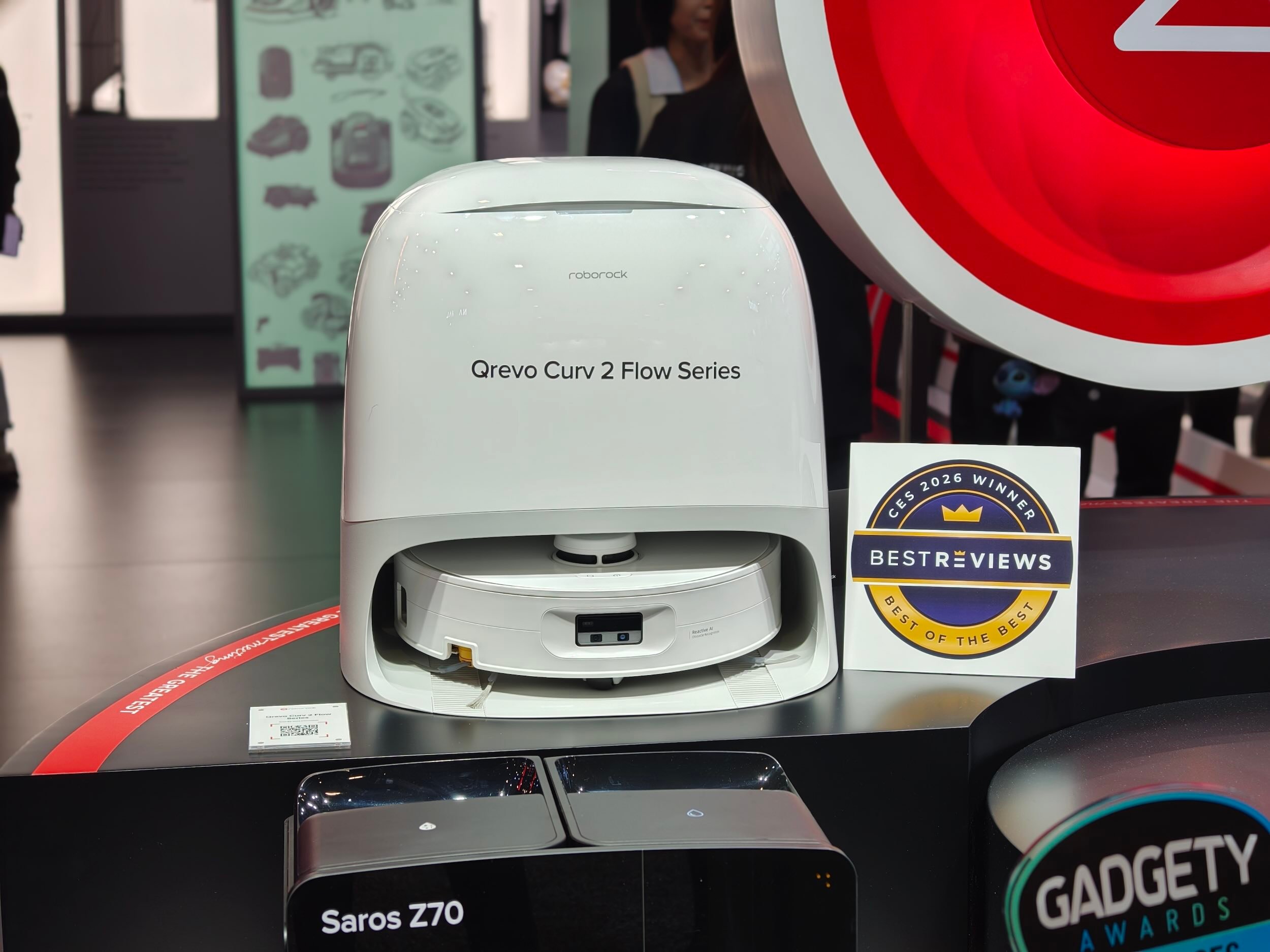
The Qrevo Curv 2 Flow is more of a hard floor specialist, promising to clean floors thoroughly and quickly the first time over, cutting down on operation time. The bot uses an extra-wide roller with increased downward force that mimics the elbow grease you put into scrubbing a floor by hand. That added cleaning pressure is combined with continuous washing of the mop surface by the robot, which dispenses clean water to the mop roller as it rotates, removing dirty water from the mop surface to a separate tank.
As usual for Roborock bots, the mop roller is extendable, enabling the Qrevo Curv 2 Flow to clean edges and corners more effectively. And while it’s a hard floor specialist, this bot can handle the occasional rug in its way. If a rug is detected, the bot can lift itself up a bit and extend a shield over the mop surface to avoid getting the rug wet. The bot then has similar anti-tangle brushes to other Roborock vacuums, and a suction power of 20,000 Pa that is more than enough to pick up any dust that gets kicked up.
The Qrevo Curv 2 Flow also has smarts — not only can it detect hundreds of obstacles and make an efficient floor plan for cleaning, it can recognize what kind of messes it rolls over, relying solely on mopping for hard floor stains and upping the suction power for loose dirt and dust.
Its dock has a similar self-cleaning system to that of the Saros 20, although the cleaning water isn’t quite as hot as that of the flagship model’s. It’s still enough to prevent most bacteria growth, and the same warm air drying system is in use to prevent bacteria growth post-cleaning.
The Roborock Qrevo Curv 2 Flow will be available in the United States starting January 19 for $850 through February 1 as an early bird special, with the price going up to $1,000 after that.
Roborock F25 Ace Pro
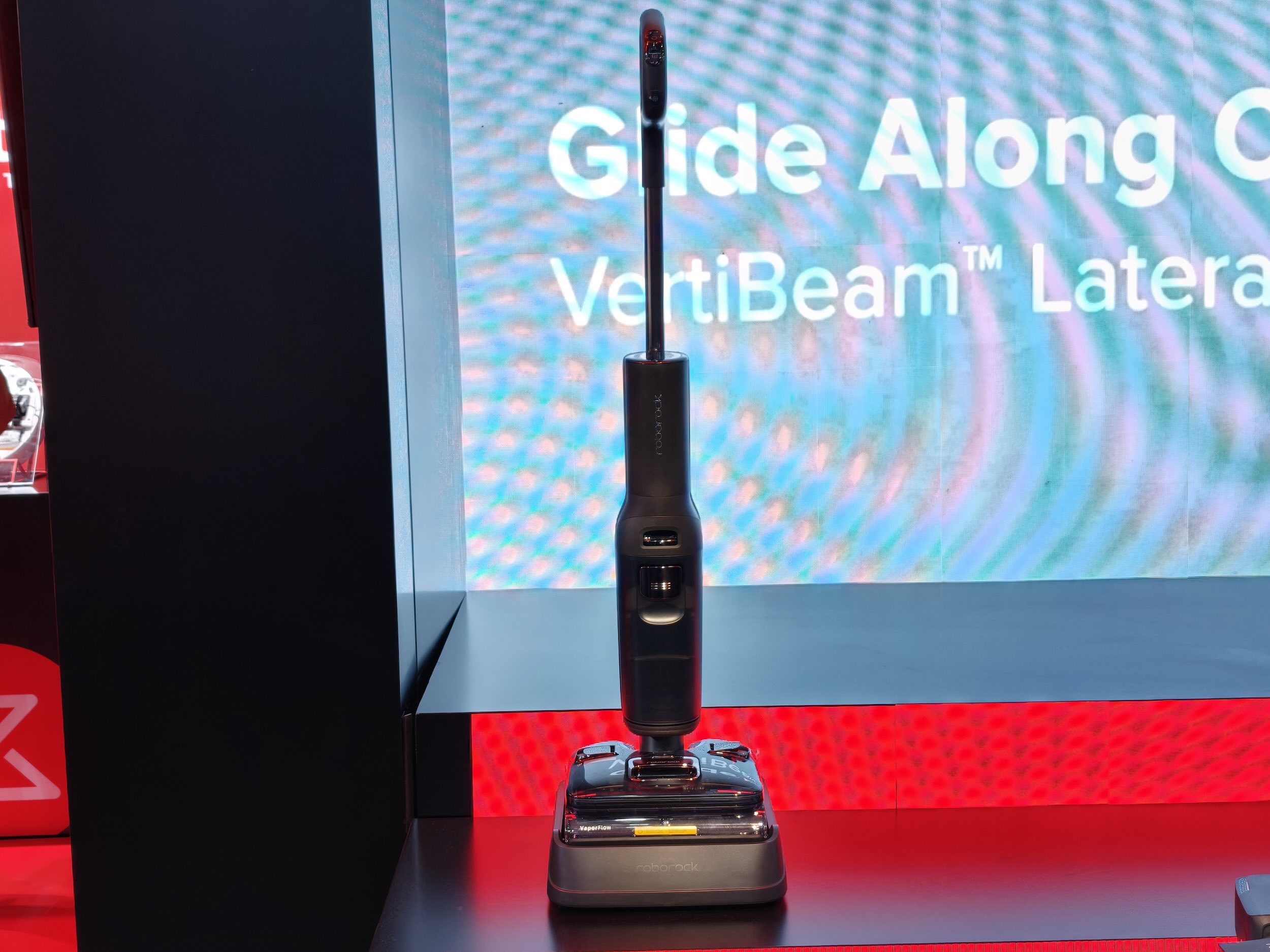
For folks who would rather take cleaning into their own hands, the Roborock F25 Ace Pro is their flagship foam-based stand-up floor washer. Another hard floor specialist, the F25 Ace is designed to motor through tough hard floor stains quickly, making cleaning as quick and painless as possible for the person pushing this wet-dry vacuum around.
The primary way it does that? Foam. The F25 Ace Pro uses a particularly sudsy foam cleaning solution — just a dab of the solution will create enough suds to break down oils and deeper stains, with a high-pressure roller coming in after the foam to mop up the residue in one pass. Meanwhile, dry messes are attacked by 25,000 Pa worth of suction and a quick-rotating anti-tangle brush that sweeps up dirt without getting bogged down by hair.
Like with Roborock’s robot vacuums, the F25 Ace Pro can also detect what kind of messes it’s dealing with, adjusting suction power and water use accordingly. For example, it will lean solely on suction power for dry messes like loose dirt or food scraps while using water liberally for particularly difficult stains. The vacuum also has edge-to-edge cleaning to hit corners, and has motorized wheels that make it easy to guide the vacuum around obstacles. It can even lay fully flat to get under couches and beds.
And, if you really don’t want to get your hands dirty, you can do all that from your smartphone — the Roborock app includes a remote control feature for the F25 Ace, in part enabled by those motorized wheels.
Once the job is done, maintenance doesn’t become another task on the to-do list. The cleaning dock uses near-boiling water to clean the mop surface, preventing bacteria growth while loosening up oil and grease. Hot air for drying further prevents mold and bacteria growth, keeping the vacuum fresh for its next time out.
The Roborock F25 Ace Pro is also getting a January 19 release with an early bird price of $550 through January 30. The price will increase to $700 after that.
Roborock RockMow X1 LiDAR
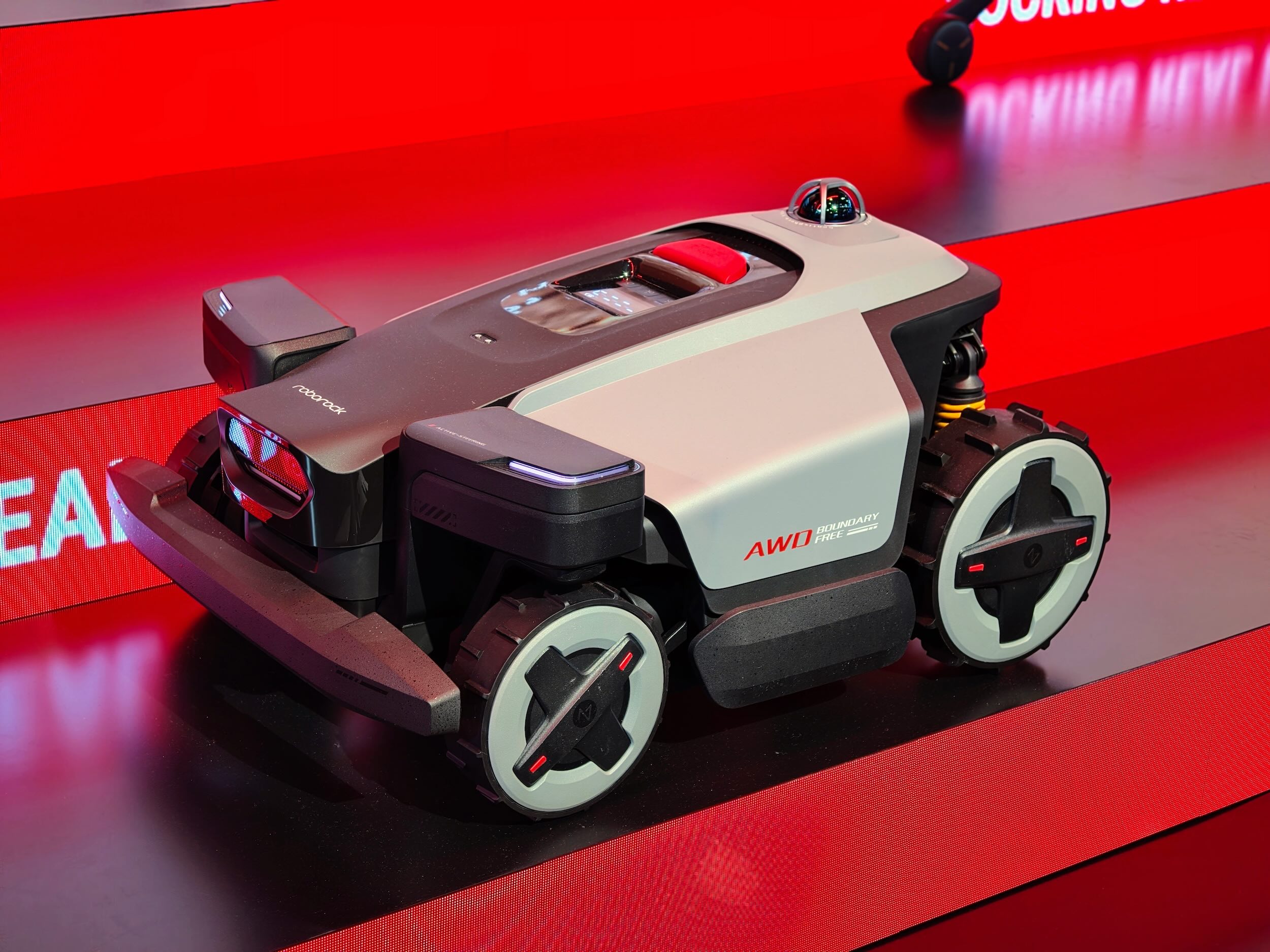
Like all good makers of robot vacuums, Roborock is pushing into lawnmowers as the next robot frontier. Also announced at CES 2026, the RockMow X1 LiDAR is their flagship model, and is designed to handle lawns and gardens with all the rocky decorations and garden gnomes you can throw at it.
The RockMow X1 LiDAR uses 360-degree LiDAR, VSLAM technology, and two cameras to continuously scan and map its surroundings. That means it doesn’t just operate off a pre-set map — the mower can detect and react to new obstacles in its way (like pets), and because that detection is all happening on-device, it can function even with weak signal. Using AI, the mower can even differentiate between obstacles, moving around objects like sports equipment while taking the safe route and turning away from pets and people.
To maintain an even mow, the chassis can drive itself over obstacles like rocks up to 8 cm in height, and can power up inclines. However, the blades themselves are suspended independent of the chassis, and are dynamically adjusted to keep grass cut evenly when the mower is going uphill, downhill, or over obstacles. The steering system is capable of pivoting and changing direction without fully turning, avoiding divots during turns.
While the mower is rated IPX6 to protect it from water damage due to rain, the mower is smart enough to not do a hack job over wet grass, instead docking itself and waiting for conditions to improve. While it’s in the dock, it’s protected from thievery — you can set a PIN using the Roborock app to prevent unauthorized use, and set a geofence for the mower that will cause an alarm to sound out if someone tries to make off with it.
Basically, the RockMow X1 LiDAR can handle just about any garden or lawn, both in terms of complexity and size — it can mow up to a half acre per day. It’ll be doing that for North American lawns sometime this year, although Roborock hasn’t settled on a price or a release date just yet.