
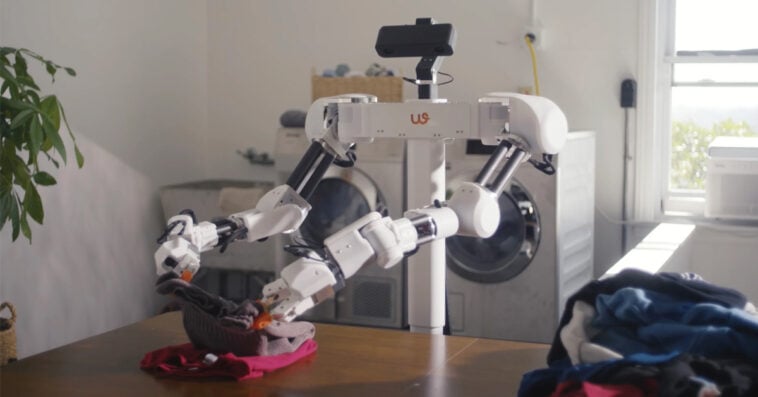
For a staggering $8,000, you’d expect your new household robot to handle the laundry with the cold, calculated precision only a machine can deliver. But what if the “intelligence” behind those perfectly folded towels is actually a person watching through a camera from miles away? The Isaac 0 by Weave Robotics is being hailed as a breakthrough in domestic automation, yet its sleek exterior conceals a humbling truth about the current limits of AI. While it promises a future of effortless living, this high-end appliance remains tethered to a hidden network of remote human teleoperators ready to step in when things get a little complicated. So, is this cutting-edge home robot still worth the investment if it can’t truly operate on its own? Read on to find out.
Isaac 0 aims to reinvent laundry day — with a catch
Weave Robotics is gambling on a bold premise: that the average person’s disdain for laundry day is so profound, they’ll pay nearly $8,000 for a robot that hasn’t quite mastered the job. The 18-month-old Bay Area startup has officially opened the waitlist for Isaac 0. While it’s marketed as the ultimate home folding station, a closer look at the specs suggests we aren’t living in the Jetsons era just yet.
Priced at $7,999 with a $250 deposit, the stationary robot promises to sort and fold everyday garments in roughly 30 to 90 minutes per load. But beyond the headline-grabbing price tag lies a more telling snapshot of where home robotics truly stands in 2026. According to the company’s announcement, Isaac 0 won’t handle oversized blankets, bed sheets, or inside-out items. And despite its high-tech pitch, the robot isn’t fully independent. Remote teleoperators remain on standby to step in and guide more complicated folds when needed.
The challenge highlights a stubborn obstacle in home automation: manipulating soft, irregular materials. Unlike rigid objects, fabric shifts, bunches, stretches, and overlaps in unpredictable ways. Different textiles respond differently to movement, and even advanced computer vision systems struggle to distinguish sleeves from pant legs in a pile of laundry.
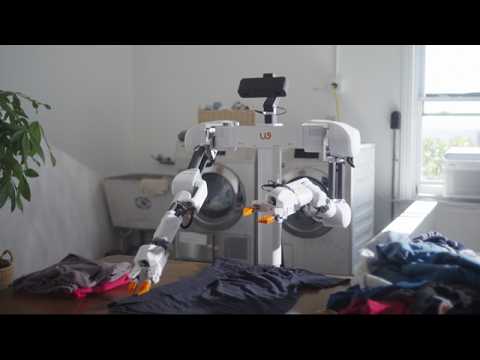
Customers as early test pilots
Weave appears to be betting that tech enthusiasts and early adopters are willing to pay a premium for a glimpse of the future — even if that future still needs a helping hand. By placing Isaac 0 in real homes now, the company gains something arguably more valuable than immediate perfection: real-world data. The success of this strategy hinges on how quickly Weave can scale back its dependence on remote teleoperators and expand the robot’s capabilities beyond folding basic garments. At this stage, Isaac 0 feels less like a polished appliance and more like a high-priced pilot program, with customers effectively helping fund its refinement.
This human-in-the-loop model mirrors the early rollout of self-driving vehicles, which promised full autonomy while quietly relying on remote oversight and safety operators. It’s a practical compromise: launch the hardware now, gather data continuously, and let the AI evolve over time.
Weave’s decision to limit Isaac 0’s debut to the Bay Area also suggests a deliberate, measured approach. By concentrating early adopters in one region, the company can more easily manage remote teleoperators, provide hands-on support, and gather meaningful real-world feedback. In many ways, this initial rollout really functions as a live testing ground, allowing Weave to troubleshoot, adjust, and improve before attempting broader expansion.
Source: The Tech Buzz